As an Amazon Associate, we earn from qualifying purchases. Some links on this site are affiliate links at no extra cost to you. Our recommendations are based on thorough research and editorial judgment.

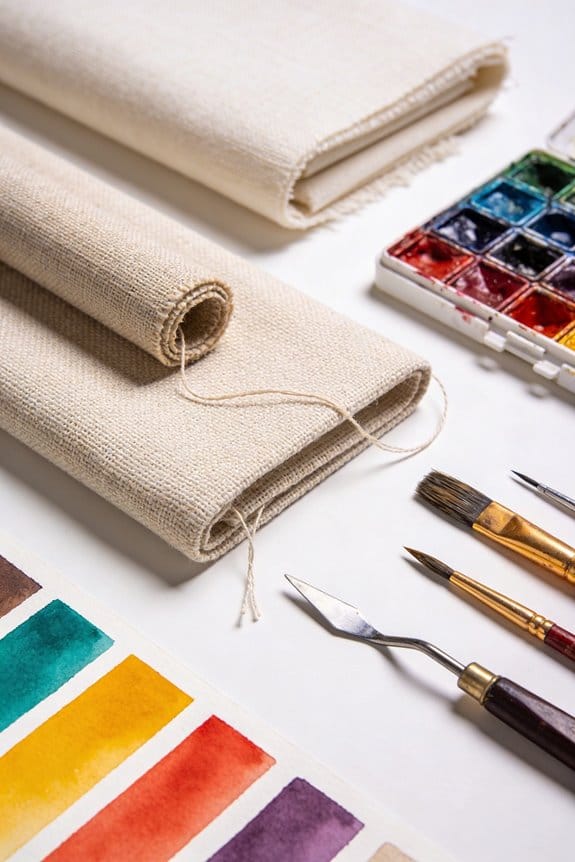
Linen vs. Cotton Canvas: Differences in Weave and Longevity

When we’re comparing linen and cotton canvas, we notice key differences in weave and longevity. Linen, with its unique slubs and plain or twill weaves, offers strength and durability, lasting up to 75 years or more with proper care. Cotton canvas, made with a basic plain weave, is more affordable and versatile, perfect for experimentation. However, it may sag over time. Understanding these factors helps us choose the right canvas for our art, and there’s more to reflect on this topic.
Key Takeaways
- Linen features strong plain or twill weaves, enhancing durability and longevity compared to cotton’s basic plain weave, which may sag over time.
- Linen can last up to 75 years or more with proper care, while cotton typically requires more frequent replacements, especially in larger artworks.
- The unique texture of linen supports fine details and multiple paint layers, whereas cotton’s absorbency enhances color vibrancy for acrylic paints.
- Proper preparation techniques, including sizing and priming, are crucial for both canvas types but are particularly vital for preserving linen’s archival quality.
- Cotton canvas is more affordable and widely available, making it ideal for beginners, while linen is a worthwhile investment for long-term, significant artworks.
The Essential Differences in Canvas Weave Types
You may be interested

When you’re deciding between linen and cotton canvas, you might be wondering what the real differences are. The weave type plays a huge role. Linen often features either a plain or twill weave, which gives it amazing strength and durability. These weaves result in a stable, textured surface that’s perfect for artists who appreciate a bit of character in their work. On the other hand, cotton duck canvas generally sticks to a more basic plain weave. While it’s thicker and denser, it doesn’t have that same rigid quality as linen.
So, what’s the deal with texture? Linen comes with unique slubs in its fibers that add personality, while cotton maintains a more uniform look. When it comes to painting, linen really takes the lead due to its tighter weave, which allows for greater detail—especially when you’re using heavier paints. If you’re working with cotton, keep in mind that its more absorbent surface might soak up too much color, which could dull the brightness of your artwork.
Choosing the right canvas can seriously impact how you express your creativity. Take a moment to think about what you want to achieve in your art. Are you going for texture, strength, or a smoother finish? The right choice could make all the difference in your artistic journey. For projects requiring absorption and texture similar to canvas, artists often turn to cold press watercolor papers for their versatile surface and durability.
Why Choose Linen Over Cotton for Longevity?

Have you ever thought about how the materials we choose for our artwork can impact its lifespan? Choosing linen over cotton canvas can really make a difference when it comes to durability. Linen, which is made from long flax fibers, is actually 30-50% stronger than cotton. This means that your artwork can handle wear and tear much better and, with the right preparation, linen will last up to 75 years without showing signs of degradation.
One of the standout features of linen is its amazing archival quality. Unlike cotton, linen resists acidification, which is crucial for preserving your pieces over time. If you’re a fan of heavy layers of acrylic paint, you’ll love how linen’s texture allows for superior paint adhesion. So, why does this matter? It means your artwork can maintain its vibrancy longer, which is what we all want as creators.
Here’s the trick: linen also has less color shift when exposed to UV light—about 15% less than cotton. You want your art to look just as bright and bold years down the line, and choosing linen can help with that. Additionally, using acid-free materials like acid-free mat boards alongside linen canvases further protects your artwork by preventing deterioration and preserving quality.
Recommended Products
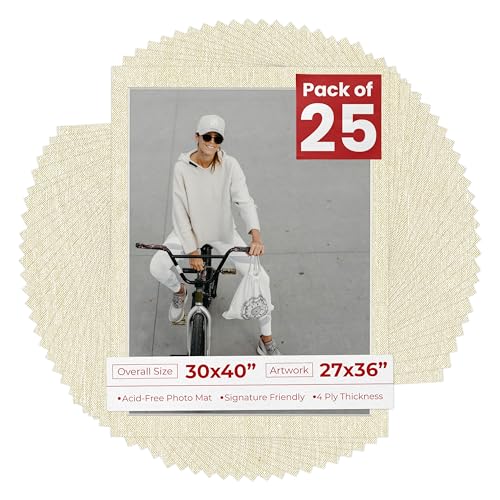
25 SINGLE MATS without backing or mat bags, Featuring a picture opening for a 27x36 inch photo, to fit in a 30x40 inch picture frame. Photo openings are beveled cut 0.5" smaller than the art size advertised to overlap the photo and help keep it securely in the frame.

25 SINGLE MATS without backing or mat bags, Featuring a picture opening for a 22x30 inch photo, to fit in a 24x36 inch picture frame. Photo openings are beveled cut 0.5" smaller than the art size advertised to overlap the photo and help keep it securely in the frame.

25 SINGLE MATS without backing or mat bags, Featuring a picture opening for a 20x24 inch photo, to fit in a 24x36 inch picture frame. Photo openings are beveled cut 0.5" smaller than the art size advertised to overlap the photo and help keep it securely in the frame.
Cotton Canvas: Affordable and Versatile Choices
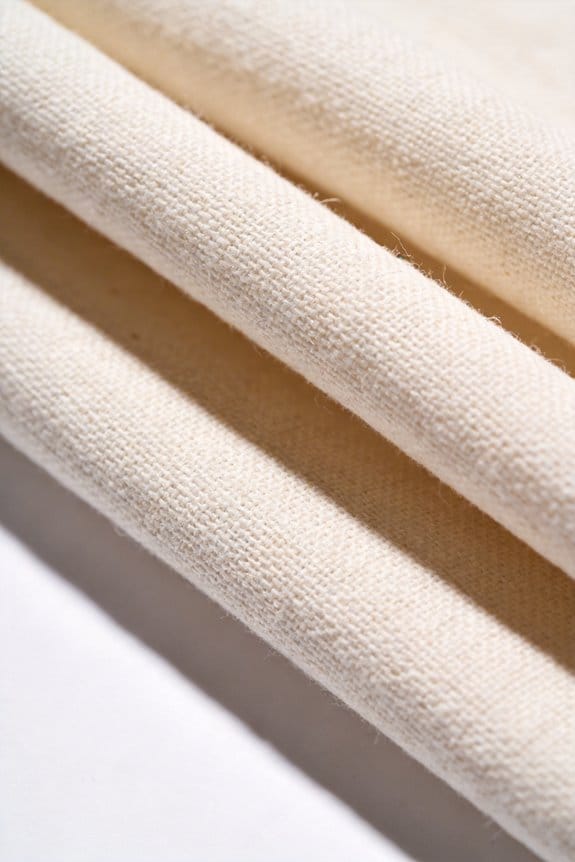
Many artists lean towards cotton canvas because it’s budget-friendly and adaptable for different styles. If you’re just starting out or looking to save some cash, cotton canvas can be a solid option. It comes in a range of textures and weights, making it suitable for almost any artistic expression you want to try. Plus, since cotton canvas is absorbent, it works wonders with acrylic paints, really making those colors pop.
Now, here’s the trick: stretching cotton canvas over frames is a breeze since it has lower elasticity. However, let’s talk about durability. Over time, especially with larger pieces, cotton canvas can stretch or sag, which might mean more frequent replacements for you. So, it’s essential to weigh these pros and cons before making your choice.
Looking to enhance your canvas experience? Focus on these points:
- It’s affordable and versatile.
- Great for acrylic paint.
- Easier to stretch over frames.
- May need replacement after a while.
For those seeking added longevity and strength in their canvases, considering linen canvas rolls might be beneficial since linen offers exceptional durability compared to cotton.
Understanding what you’re getting into can really help you pick the right canvas for your projects. So, what type of artistic adventure are you planning next?
Recommended Products
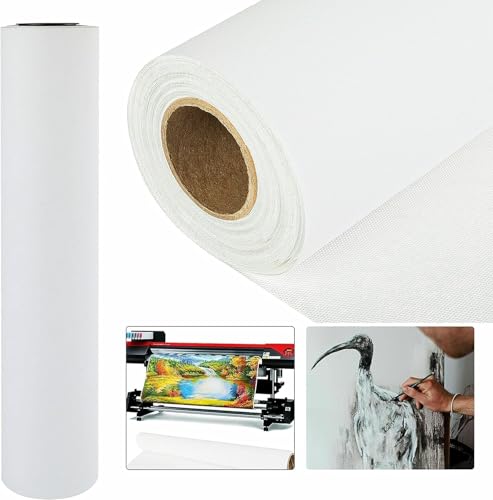
Superior Print Quality: Enhanced with a high-resolution, waterproof coating, our canvas rolls ensure your prints stand out with brilliant clarity and vivid colors. The matte surface is perfect for various artistic and professional applications.Designed to support wide format inkjet printers, Available in widths of 24, 36, 44, and 60 inches with lengths of 60 feet, 20 yards, and 33.3 yards to suit diverse printing requirements.

Superior Print Quality: Enhanced with a high-resolution, waterproof coating, our canvas rolls ensure your prints stand out with brilliant clarity and vivid colors. The matte surface is perfect for various artistic and professional applications.Designed to support wide format inkjet printers, to suit diverse printing requirements.

1-Year Warranty on Glass Window Bond
The Influence of Canvas Weave on Painting Techniques
Have you ever wondered why some paintings just seem to pop while others feel flat? The difference might be the canvas weave. Understanding how canvas weave impacts painting techniques can really up your game and give your art that extra flair.
The type of weave in linen canvas plays a big role in texture and absorbency, which is key for creating those varied brushstroke effects you might be looking for. It also helps with paint adhesion, especially if you work with detailed oil techniques. Linen canvas has these little slubs that give it a unique tooth. In contrast, cotton canvas is smoother and more uniform.
If you’re working on a piece that involves heavy brushwork, I recommend going for heavier linen canvases that range between 7 to 15 oz/yd². Why? They offer better stability and can handle multiple paint layers without sagging, which means you can build up texture without worrying about your canvas giving out. Plus, linen’s superior elasticity helps maintain tension when stretched, keeping those intricate details intact.
So, how do you choose the right canvas? It really comes down to what you want to express in your art. The best part is, by selecting the right canvas weave, you can tailor your painting techniques for durability and artistic flair. Many artists also consider the durability and longevity differences, such as how 100% linen canvases offer exceptional long-lasting quality compared to cotton alternatives.
In short, the weave of your canvas matters more than you might think. What kind of art are you excited to create next?
Recommended Products

· Extra Fine Grain Linen Canvas – Quadruple Primed & Ready to Paint Professional-grade linen canvas for oil painting, acrylic, and gouache. Features a smooth portrait surface with 4 layers of gesso for rich color payoff, superior paint grip, and gallery-level detail. Ideal for fine art and commissions.

· Premium Medium Grain Linen Canvas – Ready to Paint, No Prep Needed Triple-primed for immediate use with oil, acrylic, gouache, tempera, and more. Built for serious artists, studios, schools, and paint events. No warping, no curling — just clean, strong performance.

Durable Medium Weight: This 11 oz. primed linen canvas provides a sturdy and medium texture, ideal for professional oil painters seeking a reliable long canvas for painting large artworks
Essential Preparation Techniques for Lasting Canvas Quality
Have you ever wondered why some artwork just seems to stand the test of time while others fade or crack? It all comes down to how well you prepare your canvas. Trust me, proper canvas preparation is a big deal if you want your art to last.
First up is sizing. This step is crucial because it protects those delicate flax fibers from damage caused by paint. You can go the traditional route with Rabbit Skin Glue, or opt for modern choices like pH-neutral PVA Size, which gives you extra stability and longevity.
After you’ve sized your canvas, it’s time to prime it with gesso. This is where things get really interesting. Applying gesso helps control how much paint your canvas absorbs and adds a little texture, which is essential for paint to stick. Think of it like giving your canvas a good foundation before building your masterpiece. If you follow these steps closely, you can boost your artwork’s durability significantly—some even say it can last up to 75 years!
To keep your tools in top shape throughout this process, it’s important to use a reliable airbrush cleaner to maintain efficient application and avoid clogs.
Ultimately, proper prep means your pieces will stay vibrant and intact, letting you enjoy them for generations. So, what do you think? Are you ready to give your canvas the love it deserves?
Recommended Products


Acid-free neutral pH PVA adhesive

Acid-free adhesive with a neutral pH
When Should You Choose Cotton or Linen Canvas?
Choosing between cotton and linen canvas for your artwork can be a bit tricky. It really depends on what you’re after. If you’re working on a budget and just starting out, cotton canvas is a solid choice. It’s affordable, widely available, and you can find it in various textures that are great for experimenting. Plus, when you’re painting with acrylics, cotton’s absorbent nature can make those colors really pop.
Now, if you’re thinking about creating something significant that you want to stand the test of time, linen canvas is where you should put your money. It has incredible durability and archival quality, meaning it could last up to 100 years if you take care of it. The texture of linen is fantastic for oil painting too, as it helps with those fine details.
Wondering about stability? Bigger pieces can be tricky with cotton; it tends to sag and warp over time. Linen is much more stable, so it’s perfect for larger works.
For enhancing the longevity and flexibility of your acrylic paintings on fabric, using a fabric medium can be highly beneficial.
Recommended Products

Versatile Primed Canvas Roll: Our Spectrum Universal Acrylic Primed Unstretched Cotton Canvas Roll is available in weights from 8 oz to 15 oz, offering a perfect base for oil and acrylic painting; The extra-large canvas is ideal for various artistic projects

[ Combo Pack ] Set includes: 1 Pixy Canvas Floater Frame + 1 Stretched Canvas for Your Paintings. Together, they form the perfect duo for both seasoned and budding artists. Experience quality and aesthetics, all in one pack

Artist: Cecile Baird, Subject: Still Life
Frequently Asked Questions
Is Linen More Durable Than Canvas?
Yes, linen’s properties often make it more durable than canvas. Its weave techniques enhance fabric strength, offering greater wear resistance. While maintenance routines can vary, understanding cost analysis and use cases helps guide our choices effectively.
How Long Will Cotton Canvas Last?
Cotton canvas typically lasts about 30 years with proper canvas care. By considering durability factors, maintenance tips, and fabric selection, we can make cost comparisons and assess environmental impact while optimizing our artwork’s longevity through effective usage scenarios and dyeing methods.
What Lasts Longer, Linen or Cotton?
Linen lasts longer than cotton due to its superior fabric strength, wear resistance, and UV resistance. It also excels in moisture absorption and fading potential, making it a more reliable choice for various usage scenarios.
Is Cotton or Linen Better for Canvas?
For canvas applications, we find linen often excels in texture differences and color retention, but cotton’s cost comparison and lighter weight offer versatility. We should consider maintenance tips and environmental impact when making our choice.