As an Amazon Associate, we earn from qualifying purchases. Some links on this site are affiliate links at no extra cost to you. Our recommendations are based on thorough research and editorial judgment.


The Shelf Life of Art Supplies: Do Paints Expire?

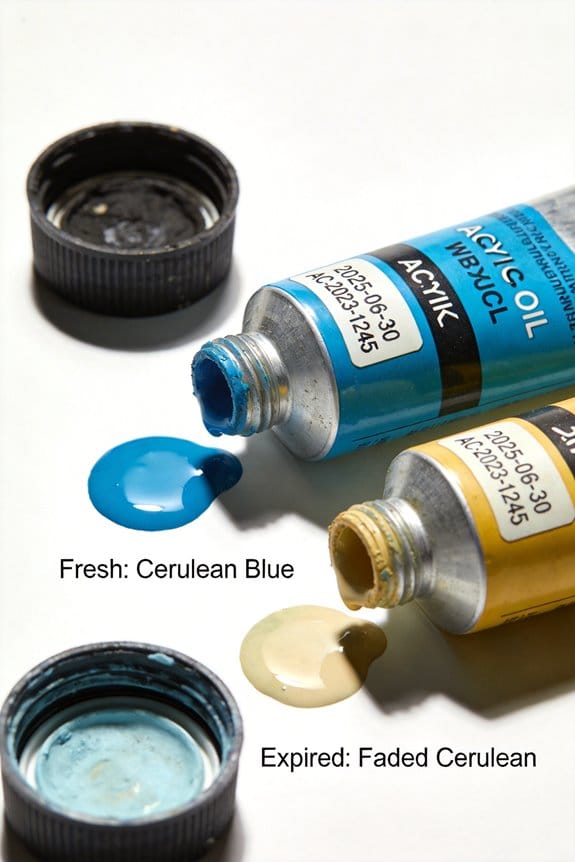
Paints do expire, and knowing their shelf life helps us use them wisely. Unopened latex paints last around 10 years, while opened ones last 2 to 5 years. Oil-based paints can last up to 15 years unopened. Signs of expired paint include bad smells, separation, and a rubbery texture. If we keep paints in cool, dark places, we can extend their life. If you want to discover more about storing and reviving old paints, let’s continue!
Key Takeaways
- Unopened latex paint can last up to 10 years, while opened cans have a lifespan of 2 to 5 years.
- Oil-based paints remain usable for up to 15 years when sealed, and about 10 years once opened.
- Signs of expired paint include sour smells, separation, thick texture, and poor adhesion.
- Proper storage at 60-80°F and away from light can significantly extend paint longevity.
- Digital tools and labeling can help track expiration dates and manage your art supplies effectively.
Understanding Paint Shelf Life: What You Should Know
You may be interested


When it comes to paint, how often do you think about its shelf life? You might be surprised to learn that unopened latex paint typically lasts around 10 years, while opened cans only hold up for about 3 years. On the flip side, oil-based paints have a pretty impressive lifespan, lasting up to 15 years when sealed tight.
Here’s the trick: using proper paint preservation techniques really makes a difference. Keep your paint in stable temperatures and away from extreme conditions. It’s as simple as that! Tightly sealing the lids on your cans goes a long way in keeping air and moisture out, which can help prevent your paint from going bad.
So, why does this matter? Regularly checking for signs of expired paint, such as bacteria growth or changes in texture and smell, is key. You want to ensure that you’re using quality paint for your projects, after all!
The best part is that by understanding these factors, you can maximize your paint’s usefulness and achieve great results every time. Make it a habit to check on your supplies periodically, and don’t hesitate to toss anything that looks off.
Additionally, choosing art supplies with UV and weather resistance can help prolong the life and vibrancy of your finished artwork.
How to Store Your Art Supplies for Longevity
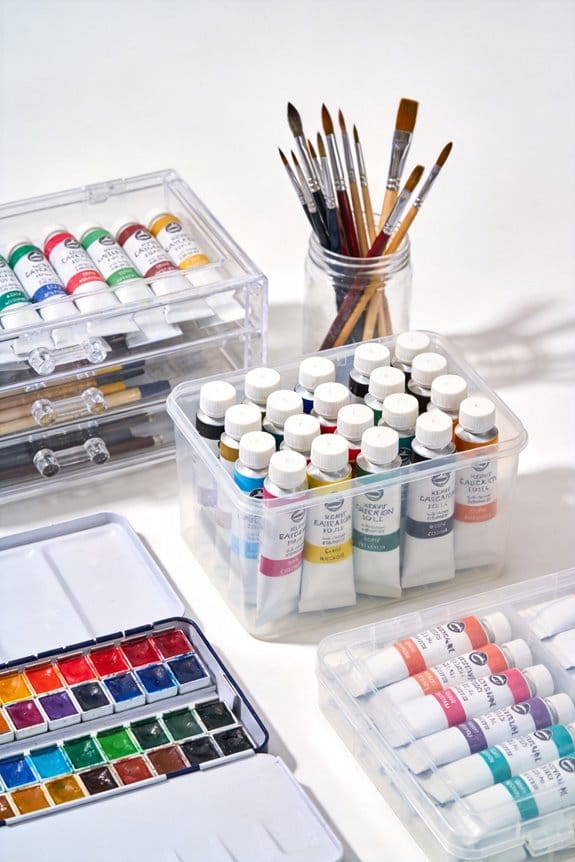
Understanding how to store art supplies properly can make a big difference in their lifespan. Let’s dive into some practical tips to keep your paints and materials in top shape.
First off, consider how you organize your paints. Oil paints do best when they’re kept in cool, dark areas. On the other hand, acrylics are comfortable at room temperature. Watercolors? They need a bit of humidity, but direct sunlight is their enemy. Trying to store your paint tubes cap down? That’s a smart move! It keeps air out and helps maintain their quality.
Don’t forget about humidity and temperature control. Consistent temperatures are key—extreme heat or cold can lead to damage. When it comes to canvases and papers, make sure you’ve got a solid system in place. Clear bins or drawer organizers help you see exactly what you have without digging through everything.
Worried about paint transferring from one canvas to another? Using padded dividers can be a lifesaver. They keep your artworks separate and safe.
So why does this matter? Well, your art supplies are an investment. By following these simple storage tips, you ensure your beloved materials stay fresh and ready for your next creative venture.
In the end, it all comes down to maintaining the integrity of your supplies. What storage tricks have you found helpful? It’s also worthwhile to choose the right oil paint thinner to preserve the quality of your oil paints during use and storage.
Recommended Products

Bulk Primary School Supplies Pallet – 112 school supply boxes, 56 piece student kit per box, ideal for kindergarten, 1st grade, 2nd grade, classroom distribution, donations

DURABLE STORAGE TOTES: The Akro-Mils 12 Gallon KeepBox is made from industrial-grade plastic; These storage bins withstand heavy use and the textured bottom ensures a no-slip grip, preventing unwanted movement during storage or transport
Ideal for preschool and kindergarten teachers!
Paint Expiration Times: A Comparison
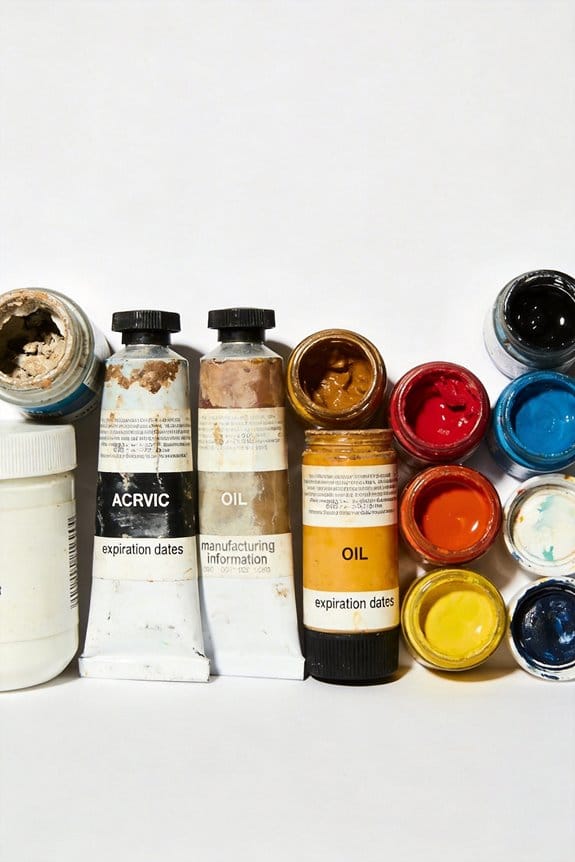
Every artist knows the frustration of reaching for a paint can only to discover it’s gone bad. It’s an unfortunate reality, but knowing how long your paints last can really save you some headaches. For instance, if you’ve got some latex paints stashed away, they can hang on for up to 10 years when unopened. Once you crack them open, you’ve got about 2 to 5 years of workable life, provided you seal them tightly after use.
Now, let’s talk about acrylics. If you use water-based acrylics, they can surprisingly last up to 10 years after opening—just make sure they’re stored in a cool, dry place. On the flip side, oil paints are a whole different story. Unopened cans of oil can last an astonishing 15 years! Once you break the seal, you can expect around 10 years of vibrant color as long as you care for them correctly.
To maximize the longevity of acrylic paints, it’s also important to consider storage conditions, particularly keeping them sealed and away from extreme temperatures.
So, why does this really matter? Understanding how long your paints will last helps you plan better and can even keep your creative juices flowing. It’s all about being mindful of your paint’s shelf life so you can avoid those last-minute dashes to the store for new supplies.
In a nutshell, keeping track of your latex and oil paints can have a big impact on your art. What’s your strategy for managing paint supplies?
Recommended Products

[PREPRINTED MESSAGE] - Preprinted message helps recipient identify if the package was tampered with, making it a tamper-evident tape for added security.

KIT INCLUDES - 2 Paintable Roof Tape 4'' x 25' with Roller, 4 x 10oz Tubes of Self Leveling Caulking Lap Sealant, 1 x 1G Roof Cleaner and 2 x 1G & 4G Silicone Pail

KIT INCLUDES - 2 Paintable Roof Tape 4'' x 25' with Roller, 4 x 10oz Tubes of Self Leveling Caulking Lap Sealant, 1G Roof Cleaner and 1G & 4G Silicone Pail
Signs of Expired Paint: Shelf Life Indicators
Have you ever opened a can of paint, only to realize it’s gone bad? It can be frustrating, especially when you’re ready to dive into a project. Luckily, there are some signs that can help you figure out if that paint is still good to use or if it’s time to toss it.
First off, pay attention to the smell. Fresh paint usually has a mild odor, but if it smells sour or like vinegar for latex paints, or rancid for oil-based options, it’s likely passed its prime. That’s a clear red flag!
Next, take a good look at the paint itself. If you see liquid sitting on top with solid bits settled at the bottom, that’s a sign of separation. It’s a good indicator that the paint has broken down. Another thing to watch for is the texture. If it feels thick and rubbery, you might be dealing with spoiled paint.
And what about color? If the paint has faded or looks uneven, that’s another sign it’s time to let it go. So, keep an eye out for these telltale signs. They can save you the hassle of using expired paint on your next project.
In short, trust your senses. A little sniffing and checking will ensure you’re working with quality paint. It’s also important to note that acrylic paints labeled as non-toxic often have additives that can affect their shelf life and usability, so always check the label for guidance. What’s the last project you tackled? Did you run into any surprises with your paint?
How Light and Temperature Affect Paint Shelf Life
Have you ever wondered why your paint seems to go bad before you use it all? Light and temperature are two big factors that can really mess with the shelf life of your paint.
Here’s the trick: light can actually speed up the drying time of certain colors. For instance, Cadmium Red Medium dries in just 16 days when exposed to light, while it takes a whopping 135 days to dry in the dark! It’s wild how different the drying times can be based on light exposure. So, what does this mean for you? Keep your paints out of direct sunlight to prolong their life.
Temperature is another critical player when it comes to paint quality. Try to store your paint in a spot that stays between 60-80 degrees Fahrenheit. Extreme heat can make it go bad faster, and if it gets too cold, especially to freezing temps, you might find your unsealed paint going bad in just 1-2 years if it’s left unattended in a freezing garage.
To keep your paint fresh, find a cool, dark place to store it, and be mindful about how much light it gets. It’s these little steps that can really extend the life of your art supplies, saving you money and time in the long run. Additionally, using the right materials for art can also improve the durability and longevity of your finished pieces.
Revive Old Paint: Effective Tips
Reviving old paint might feel like a daunting task, but it can actually be quite simple. If you’re working with acrylics, just add distilled water a drop at a time. Hot water can work wonders by liquefying the paint, but make sure to stir it thoroughly. The best part is, you don’t need any fancy thinners!
For oil paints, it’s all about the right solvent. Add the thinner drop-by-drop, just like with acrylics. But beware of animal oils—they can really slow down the drying process, and you definitely don’t want that to mess up your flow.
Noticing some lumps in your paint? Here’s a tip: sieve it through a fine mesh for a smoother finish. By keeping it simple and following these straightforward steps, you can breathe new energy into your old paints and spark some inspiration for your next project!
Recommended Products

Secures 12U of 19 in. rack equipment up to 20.5 in. deep

VERSATILE STORAGE: Handcrafted solid pine cabinet measures 39" W x 17" D x 42.2" H; ideal for living rooms, dining areas, or entryways; features 2 glass-paneled doors and adjustable shelves for customizable organization.

🎚️𝟯-𝗜𝗡-𝟭 𝗣𝗢𝗪𝗘𝗥 𝗦𝗘𝗟𝗘𝗖𝗧𝗔𝗕𝗟𝗘: Switch between 300W, 400W, and 500W to produce up to 78000 lm of powerful light, replacing 2000W MH/HPS lamps. One fixture, three power options.
Is It Safe to Use Expired Paint? Quality Considerations?
Expired paint might seem like no big deal, but it can actually lead to some serious headaches. Believe it or not, health risks come into play—things like bacteria and mold can develop over time, releasing nasty fumes and messing with your indoor air quality. Plus, if the paint’s consistency has changed and looks more like cottage cheese or jelly, don’t expect an easy application.
Here’s the thing: using expired paint usually results in poor adhesion and inconsistent colors. This can leave you with finishes that peel and streak. So, before you jump in, give the paint a good once-over. Look for foul smells, separation, or any signs of mold.
When in doubt, it’s a smart move to toss that expired paint. Why risk your health or ruin your project when you could just buy a fresh can? After all, a smooth paint job is worth the effort. What’s your experience with using old paint? Keep in mind that proper storage and understanding drying time considerations can help maintain paint quality for longer.
Best Practices for Storing Dry Art Supplies
Are your art supplies taking over your space? It can feel overwhelming when scraps and tools pile up, especially when you’re ready to create. The first step is to declutter. Go through your supplies and toss anything that’s dried up or damaged—think warped molds, sticky tools, or colors that have seen better days.
Once you’re down to the essentials, it’s time to organize. Try sorting your items by type, like separating out pigments from tools, and then group them by size. This makes it easier to find what you need when inspiration strikes. For keeping molds and smaller tools in shape, clear plastic bins can work wonders. You might want to label drawers too, so you know exactly where everything is without rifling through boxes.
Truth is, space can be a real challenge. If you’re short on room, consider installing pegboards or adjustable shelves. These can free up valuable surface area and make your supplies more visible and accessible. Keep your most-used tools close by, and if you can, grab a rolling cart. It’s a simple way to move supplies around as needed—no more bending and stretching just to grab a paintbrush. Many artists find that choosing a top art supply rolling cart enhances both storage efficiency and mobility in their creative space.
So why go to all this trouble? When your supplies are organized, it cuts down on the stress, letting you focus on what you love: creating. Plus, it feels great to work in a clean, well-organized space.
In a nutshell, take the time to get your dry art supplies sorted today. You might just find the creative flow you’ve been missing! What are some of your favorite ways to keep your supplies in check?
Recommended Products

Quality Storage Bins: This 12-pack of storage containers with lids provides endless storage and organization for closets, garages, bedrooms, and attics

ABUNDANT STORAGE: Durable birch hardwood storage cabinet with 20 compartments provides plenty of storage space for lots of toys, puzzles, games, classroom supplies or art tools.
Twelve by Twelve by Eighteen Tall Pedestal. One Piece, No Assembly Required.
Keep Track of Expiration Dates: Organizing Your Supplies
How often do you pull out your art supplies only to find they’re expired or dried up? It can be frustrating, right? Keeping track of expiration dates is key to making sure your materials are fresh and ready for that next creative burst.
Start with some simple digital tools. Asset management software can help you monitor not just your paint levels but also send you reminders when items are reaching their expiration. If you’re more into hands-on methods, think about labeling your supplies with their expiration and purchase dates. Color coding works wonders here; a quick glance can tell you which items need to be used soon.
Don’t underestimate a good old-fashioned inventory notebook. Cataloging your items can make a real difference. Go ahead and include details like reorder needs so you’re never caught short during a project. Set up some regular calendar checks as well; a little reminder here and there can make it easier to keep tabs on which supplies are nearing their expiration.
So why is this all worth the effort? Because organizing your supplies not only keeps your workspace neat but ensures you can create stress-free art. Getting into the habit of tracking expiration dates means less waste and more quality time spent making art. Additionally, knowing the paint quality and consistency that degrades over time can help you decide when to retire your paints for optimal results.
Next time you start a new project, you’ll be glad you took the time to manage your supplies. What techniques do you find helpful for keeping your art supplies in top shape?
Recommended Products

80,000 "BEST BY" LABELS: Optimize efficiency with 10 sleeves containing 8 rolls each, with each roll having 1,000 pre-printed "BEST BY" labels—totaling an impressive 80,000 labels. Minimize downtime with ready-to-use labels designed for quick and accurate date stamping, keeping your operations running smoothly.

GET STARTED IN MINUTES: Simplify your labeling process with a complete all-in-one solution designed to help you begin labeling right away. Everything works together out of the box, saving time on setup, reducing interruptions, and helping keep daily operations organized and efficient.

32,000 "USE BY" LABELS: Optimize efficiency with 4 sleeves containing 8 rolls each, with each roll having 1,000 pre-printed "USE BY" labels—totaling an impressive 32,000 labels. Minimize downtime with ready-to-use labels designed for quick and accurate date stamping, keeping your operations running smoothly.
Common Questions About Paint Shelf Life and Storage?
Have you found yourself staring at old cans of paint, wondering if they’re still good? It’s a common dilemma. Different types of paint have different shelf lives, so it’s helpful to know what you’re working with. If you’ve got latex paint, it can last up to 10 years if it’s unopened. On the other hand, oil-based paint is a champ, staying good for about 15 years when sealed tight.
Once you crack that can open, things change a bit. Latex paint is best used within two years of opening, while oil-based paint can hang around for up to 10 years if you seal it properly again. So, how do you keep your paint in tip-top shape?
Here’s the trick: store your paint in well-ventilated areas where the temperature is just right, ideally between 60°F and 80°F. Using airtight containers helps keep moisture at bay. For spray paint, it’s super important to store them upright and away from humid spots. Truth is, checking for leaks or rust on your cans can save you a headache down the road.
Additionally, when working indoors, choosing low odor solvents can improve air quality and reduce health risks during painting and cleanup.
A few things to remember:
- Latex paint: good for 10 years unopened, 2 years once opened.
- Oil-based paint: good for 15 years unopened, up to 10 years once opened if resealed.
- Proper storage is key: Keep the paint in a temperature-controlled environment and use airtight containers.
Frequently Asked Questions
Can Expired Paint Be Used for Non-Art Projects?
We can’t safely use expired paint for non-art applications; risks like mold and harmful fumes make it unsuitable. Let’s focus on creative recycling with fresh materials instead for our projects. Safety first!
How Can I Tell if My Markers Are Still Good?
To check if our markers are good, we should assess their performance and ink consistency. If they flow smoothly, maintain vibrant color, and smell fresh, they’re likely still usable. Otherwise, it’s time to replace them.
Is There a Universal Way to Test Paint Freshness?
Yes, there are freshness indicators we can use. We should check paint consistency through stirring, smell for off odors, visually inspect for changes, and conduct a patch test to confirm its usability.
Can Paint Shelf Life Vary by Brand?
Yes, paint shelf life does vary by brand. Through our brand comparisons, we often find that higher-quality options offer considerably better paint longevity, ensuring our artistic tools remain viable for longer periods.
Are There Specific Signs of Expiration for Watercolors?
Have we noticed any signs of our watercolors expiring? Fading colors and inconsistent texture are clear indicators. If we spot these changes, it’s time to part ways with that beloved tube or pan.


