As an Amazon Associate, we earn from qualifying purchases. Some links on this site are affiliate links at no extra cost to you. Our recommendations are based on thorough research and editorial judgment.


Understanding Complementary Colors and Optical Vibrancy

When we think about complementary colors, we’re referring to pairs directly opposite each other on the color wheel, like red and green. These colors create a strong visual impact through contrast, making our designs pop. For instance, using a 70/30 ratio helps maintain balance, where one color dominates the design while the other supports it. By considering the brightness and saturation of these colors, we can enhance our work meaningfully. Stick around to discover practical tips and examples.
Key Takeaways
- Complementary colors are located opposite each other on the color wheel, such as red and green or blue and orange, creating stark contrast.
- The juxtaposition of complementary colors enhances visual interest and can elicit emotional responses from viewers, energizing or calming them.
- Artists like Matisse and van Gogh effectively utilized complementary colors to add visual impact and focus within their artwork.
- Balancing complementary colors is crucial; using variations in brightness and saturation can prevent overwhelming the viewer.
- Employing a 70/30 ratio for color dominance and incorporating neutral tones can enhance balance while maintaining vibrancy in designs.
Understanding Complementary Colors: A Basic Overview
You may be interested



Have you ever looked at a color wheel and wondered why some colors just seem to pop when they’re together? That’s all about complementary colors, which are sitting directly opposite each other on that wheel. Think red and green, blue and orange, or yellow and purple. When you pair these colors, you not only create a striking contrast but also add a whole lot of vibrancy to your images.
So, what happens when you mix complementary colors? The best part is that they really enhance depth and make everything feel more alive. This contrast can bring highlights and shadows to life in ways that flat colors just can’t. Plus, don’t forget, how we perceive these colors might shift based on factors like their brightness and how saturated they are.
For example, you might feel a burst of excitement from that bold red and green, while blue and orange might give you a more calming vibe. So, why does this matter? Understanding how to use complementary colors can help you draw attention right where you want it. Whether you’re designing a room, creating artwork, or even choosing an outfit, these combos can make your choices more dynamic and engaging.
Try this: When you’re working on something visual, play around with these complementary pairs. See how they affect the overall look and feel. And remember, there’s no one-size-fits-all approach. Each pairing can evoke different emotions and reactions. Using acrylic flow mediums can further enhance the vibrancy and smooth blending of complementary colors in your artwork.
In recap, complementary colors are your best friends for making designs captivating. Next time you pick colors, think about how their opposition can create that visual magic. What will you create with your newfound knowledge?
The Color Wheel: Your Guide to Complementary Pairings
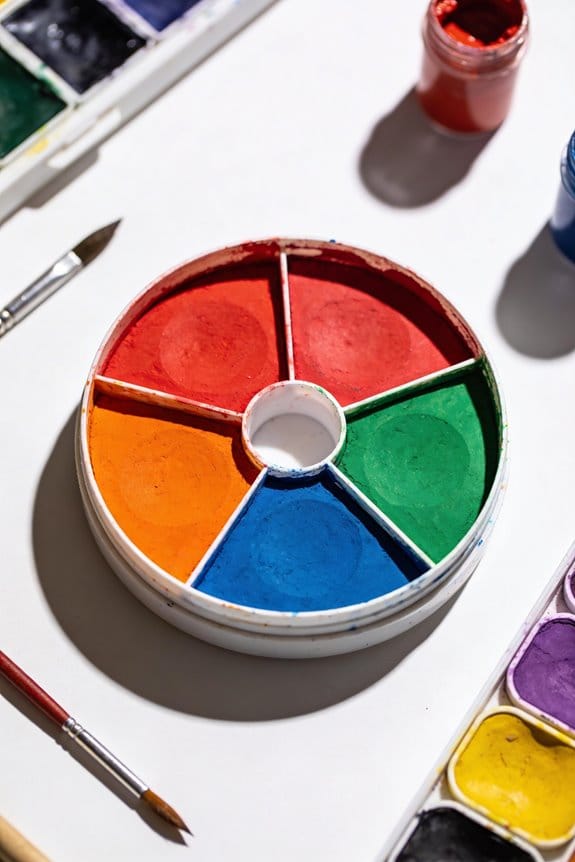
Ever find yourself staring at a blank canvas or design project, unsure of how to make that color choice? Understanding how colors work together can make a world of difference. The color wheel is a handy tool for this; it breaks colors down into primary ones like red, blue, and yellow, and shows how they relate to secondary and tertiary colors.
Complementary colors, for instance, sit directly opposite each other on the color wheel. This means they naturally create a strong contrast that can really draw the eye. Think about red with green, blue with orange, or yellow with purple. When you combine these colors, you’re not just slapping paint down; you’re creating a visually engaging experience that grabs attention.
So, why does this matter? When you use complementary color schemes, you’re not only adding visual interest but also influencing the emotions of whoever’s looking at your design. For a design project, here’s the trick: focus on a few key elements you want to highlight and apply these pairings carefully. It can make your work feel more balanced and inviting.
One more thing to consider is tinting and shading. By adjusting the lightness or darkness of a color, you can achieve different dynamics in your design. This technique allows you to play with colors a bit more, maximizing your creative potential.
In short, grasping the basics of the color wheel and complementary colors can seriously elevate your design work. Why not give it a try? You’ll probably discover new color combos that you love!
Also, using high-quality pigments in your acrylic paints ensures that your color mixes retain vibrancy and clarity, which is essential when working with complementary colors.
Recommended Products


SAMSUNG USA AUTHORIZED - Includes 26 Months Extended Protection in ADDITION to the Included FULL Manufacturer Protection

Traditional Design: The Traditions Dining Collection by Hanover includes 6 stylish and comfortably cushioned cast aluminum swivel rocker chairs and cast aluminum table
How Do Complementary Colors Create Visual Impact?

Have you ever looked at a design and felt immediately drawn to it? One secret behind that captivating effect is the use of complementary colors. These colors sit opposite each other on the color wheel, and when paired together, they create a striking contrast that grabs your attention.
Here’s the trick: using complementary colors can really enhance the main shades in your design. For instance, red and green, or blue and orange, work so well together that they can actually make the dominant color pop even more. This kind of contrast doesn’t just look nice; it also stirs up emotional responses and creates a more engaging experience for anyone viewing your work.
So, why does this matter? Well, the dynamic interaction between complementary colors can sharpen clarity and focus, guiding viewers straight to the most important parts of your design. It’s amazing how a simple color choice can lead to a deeper connection with your audience.
To get started, consider these ideas:
- Try using one color as your main focus and pick its complement for smaller accents.
- Think about how these combinations might affect mood—some colors can evoke warmth while others can cool things down.
- Don’t hesitate to experiment; the beauty of design is in the exploration.
Truth is, when you mix complementary colors wisely, you’re adding layers and dimension to your visuals. This can lead to a more effective user experience overall. Also, high pigmentation in colors plays a crucial role in making complementary contrasts more vivid and impactful. So, how might you incorporate this knowledge into your next project?
Top Complementary Color Combinations You Need to Know
Have you ever stared at a blank page and felt overwhelmed by color choices? I totally get it. Choosing the right color combinations can make or break your design. If you’re looking to elevate your skills, knowing a few key complementary color combinations can really help out.
Red and green is a classic combo, especially popular around the holidays. But don’t stop there. Blue and orange? They’re perfect for summer vibes, creating that eye-catching contrast that draws the eye. And let’s not forget about yellow and purple; this pair balances warm and cool tones beautifully.
If you’re up for something a little different, how about trying red-orange with blue-green? Or yellow-orange paired with blue-violet? These subtler combos can add depth to your color palette. Remember, complementary colors are found directly opposite each other on the color wheel, so think about what captures attention best.
When you play with these high-contrast pairings, your artwork can not only pop but also convey emotion. Take a cue from greats like Van Gogh and Matisse, who masterfully used contrast to create memorable pieces. Just like how ergonomic design features can enhance the precision of sculpting tools, understanding and applying complementary colors can significantly improve the impact of your artwork.
Recommended Products

Patio Dining Set for 10 Includes: 1 x dining table (104.33"L x 38.58"W x 29.13"H), 10 x dining chairs (20.08"L x 20.87"W x 77.5"H), and 10 x cushions.

Crown Top and Raised Scrolled Trim
𝐌𝐎𝐈𝐒𝐓𝐔𝐑𝐄 𝐏𝐑𝐎𝐎𝐅 𝐃𝐔𝐑𝐀𝐁𝐈𝐋𝐈𝐓𝐘: Crafted from sturdy Oak wood and plywood, our bathroom vanity with sink offers reliable moisture resistance, this double door bathroom cabinet sink ensures long lasting use
The Importance of Complementary Colors in Effective Design
Have you ever looked at a design and felt instantly drawn to it? That’s often thanks to complementary colors. These colors sit across from each other on the color wheel, creating bold contrasts that grab attention. Using shades like red and green or blue and orange can make your designs pop, spark emotions, and stick in people’s minds.
When you mix complementary colors in your work, it’s like finding the right balance in a recipe. It helps everything come together without feeling cluttered or overwhelming. Think about what you want to emphasize. By using these colors wisely, you can guide your audience’s focus right where you want it.
Here’s a tip: don’t just throw colors together randomly. Instead, put thought into how they interact. For example, if you want someone to notice a call to action, using a bright color next to a dark one can make that element stand out.
Honestly, complementary colors are more than just pretty—they’re powerful tools in design. They help highlight critical elements, ensuring your message is clear. When your color choices support your design, the whole piece can resonate much better with viewers.
To keep your creative process organized and your artwork in optimal condition, consider investing in art drying racks that help maintain clarity and prevent damage while your designs dry.
How Do Complementary Colors Make Us Feel?
Have you ever noticed how certain colors just seem to energize you or maybe even calm you down? It’s pretty interesting how complementary colors can stir up strong feelings. When you pair opposites on the color wheel, the result is often a striking contrast that really jumps out.
If you’re looking to add some life to your designs or even your home, try using warm complementary colors. They can evoke feelings of enthusiasm and warmth that draw people in. On the flip side, cool complementary pairs can create an oasis of calm and tranquility. This balance can make any space feel comforting, encouraging you to linger and explore.
So, why does this matter? Well, studies have shown that contrasting colors actually activate different photoreceptors in our eyes. This not only increases visual interest but also makes focal points way more compelling. Honestly, it pulls us in and makes us want to look closer.
When you’re designing a room or creating art, understanding how these colors work together can help evoke the right emotions. You can create a space that not only looks good but feels good too. Remember, it’s about finding that harmony that makes everything resonate beautifully. Using tools like the pocket color wheel can simplify identifying these relationships and enhance your creative process.
Using Complementary Colors in Art and Design
Have you ever looked at a piece of art and felt instantly drawn to it? That could be the magic of complementary colors at work. These colors, like red and green or blue and orange, sit directly across from one another on the color wheel. This means they create a high contrast that really grabs attention and adds visual interest.
Think about artists like Henri Matisse. He used these vibrant contrasts to convey a sense of joy in his works, while Vincent van Gogh often painted with clashing colors to create tension. So why does this matter for your own designs? When you incorporate complementary colors, you can add depth and draw the viewer’s eyes right where you want them, whether it’s a focal point or a key detail.
But here’s the catch: balance is crucial. Too much saturation can make your designs feel chaotic, and that’s not what you want. To keep things lively without overwhelming your audience, try playing with different brightness levels. By varying how intense or muted these colors are, you can maintain that vibrancy while still making sure your work shines in a pleasant way.
The best part is, you don’t have to be an expert to use complementary colors effectively! Just keep these concepts in mind, and don’t be afraid to experiment. After all, art and design should be fun! So next time you’re creating, why not give complementary colors a try? It might just elevate your work to a new level. Also, using high-quality acrylic paints can help you achieve richer colors and better layering for your designs, enhancing the color vibrancy and depth.
Recommended Products

🎨 THE BRAND: Schmincke has been producing the best, finest artists' colors Made in Germany since 1881 and they are available in over 60 countries. The range includes watercolors, acrylics, oil colors, pastels, gouache colors, airbrush colors and much more.

📝 NEW FORMULA 📝 - Our goal with Speedpaint was to create the first true single-coat acrylic plastic paint solution. To achieve this, this set of acrylic paints needed to offer superior coverage, vibrant saturation and a smooth, rustproof finish. By using an advanced resin, we were able to achieve the superior characteristics of Speedpaint while also making the paint more durable.

Comprehensive 36-Color Set - The Alphanamel Monster Pack Enamel Paint Set includes 36 vibrant, oil-based colors in convenient 2.5 oz bottles. Perfect for hobbyists, model enthusiasts, and professional artists, this set offers a wide array of hues for various creative projects, from intricate details to large-scale works.
Common Mistakes to Avoid When Using Complementary Colors
Using complementary colors can be a bit tricky, can’t it? One of the most common mistakes is trying to use them in equal amounts. Trust me, that can lead to a jumble of colors instead of the beautiful balance you’re aiming for. Try this: choose one color to be your star and let the other play a supporting role.
Another thing to watch out for is brightness. If you’re not careful with saturation and tone, it can easily overwhelm the viewer. Highly saturated colors might look nice and vibrant, but they can also cause discomfort. Softer tones, on the other hand, often create a more inviting look. So, think about how the brightness of your colors interacts with each other.
And hey, don’t forget to test those colors in different lighting! It can completely change how they appear. Remember, complementary colors are all about harmony; “complimentary” is just about giving compliments—keeping them straight will make your color conversations a lot smoother.
For artists looking to maintain color vibrancy and durability, using pigments with UV and weather resistance can ensure your artwork stays true over time.
Recommended Products

[DEEP POUR EPOXY] FlowCast Epoxy Resin kit developed for projects like River/Ocean Tables, Flower Preservation/Encapsulation, Resin Lamps, Dioramas, and other deep pour and large casting applications.

[HIGH-PERFORMANCE COATING] Developed for Table Top Coating, Pour Away Fluid Arts, Ocean and Beach Resin Art. Decorative Tabletops Coating, Wood Finishing, UVPoxy provides a high-gloss, water-clear finish, enhancing the perfection of your project.

Artwork Size : Measuring 39"x86", this large wall art is perfectly sized to fit a variety of spaces, from cozy corners to large feature walls. The versatile size makes it a stunning focal point in any room.
Tips for Balancing Complementary Colors Effectively
How do you find the right balance when playing with complementary colors? It can be a bit tricky, but there are some tried-and-true methods that make it easier.
First, aim for that sweet 70/30 ratio. This means letting one color—often a strong primary—take the lead while the other serves as a fun accent. This method keeps things visually appealing without overwhelming anyone’s senses.
Next, think about how saturated each color is. If you use a more muted tone, it can really help blend the two together. So, when you’re choosing your shades, consider their intensity. And don’t forget about the emotions colors can evoke! Mixing warm and cool tones can create a lively contrast that draws people in.
You might want to test your colors in different types of lighting, too. The way a color looks can change dramatically based on the light, so grab a few samples and see how they work in various settings.
Here’s a quick tip: incorporating some neutral tones can be a lifesaver. They act as a bridge between the bold colors, making everything pop while keeping the overall look balanced. You want your palette to shine, but without one color stealing the show.
Another way to enhance your complementary colors is by using an acrylic paint medium to adjust the finish and texture for more dynamic visual effects.
To sum it up, playing with complementary colors can lead to a stunning visual experience if you keep these tips in mind. So, what colors are you excited to experiment with next?
Recommended Products

【Easy Installation】At least 1/2" bigger than measured opening to allow doors to open. 60x36 Inch Surface Wall Mounted medicine cabinets for bathroom is easy to install and operate with User instructions, which are wrapped with a strengthened package carefully to better protect the cabinet body. (Only support Hard wired)If there is any damage to the lights or doors during use, please don't worry, we can provide free replacement doors. For any doubts and questions, please feel free to contact us via Amazon email.

Recommended by the Skin Cancer Foundation for blocking 98% of harmful sun rays

Premium 100% Linen Material: Constructed from specially processed linen, offering durability and a natural medium tooth texture for optimal paint adhesion
Frequently Asked Questions
How Do I Find My Complementary Colors?
Let’s not beat around the bush—finding our complementary colors starts with the color wheel. By applying color theory and mixing, we can create visual harmony in fashion coordination and interior decor, enhancing our artistic expression.
How to Figure Out Complementary Colors?
To figure out complementary colors, we use the color wheel and explore color pairings. By applying color theory and design principles, we create visual impact and emotional response through effective saturation adjustments, enhancing our artistic expression and harmony.
What Do Complementary Colors Mean?
Complementary colors symbolize a dance of contrast within color theory, creating harmony and balance. By positioning opposites on the color wheel, they enhance our artistic expression, evoke emotions, and elevate the aesthetic appeal of our designs.
What Are the 4 Attributes of Color?
The four color attributes we should consider are hue, value, saturation, and temperature. Together, they shape color harmony, influence emotional impact, and convey symbolism and meaning, enhancing our visual experiences in design and art.