As an Amazon Associate, we earn from qualifying purchases. Some links on this site are affiliate links at no extra cost to you. Our recommendations are based on thorough research and editorial judgment.

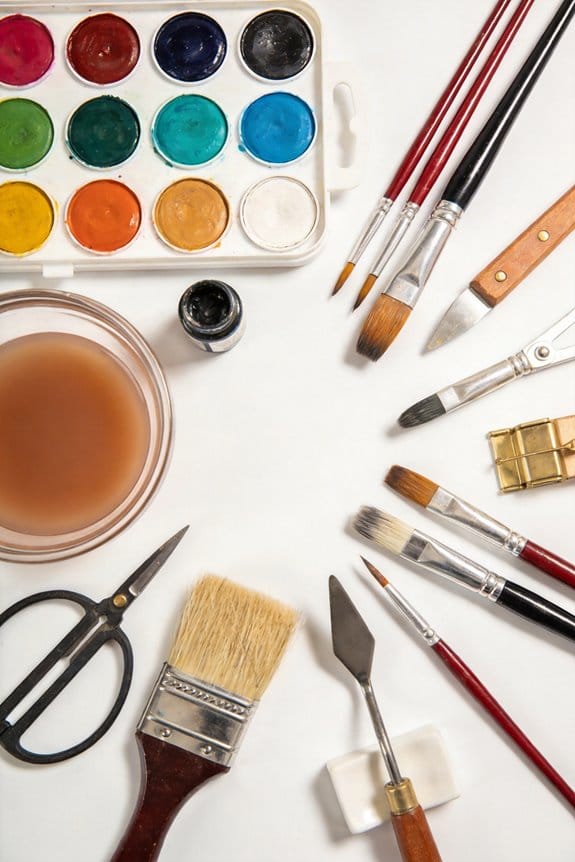
How Temperature and Humidity Affect Art Supply Performance

Temperature and humidity play essential roles in our art supplies’ performance. For instance, high heat can cause paints to dry too quickly or yellow, while low humidity can lead to cracking. We should aim for a stable temperature of 68-72°F and humidity levels of 40-55%. This prevents materials from becoming brittle or moldy. Storing supplies correctly can extend their life. If we keep going, we’ll uncover practical tips for maintaining these ideal conditions and avoiding common pitfalls.
Key Takeaways
- High temperatures can cause paints to dry quickly and adhesives to weaken, compromising performance.
- Low temperatures can make acrylic paints brittle, increasing the risk of cracks.
- Ideal humidity levels between 40-55% prevent mold growth and warping of materials.
- Temperature fluctuations lead to stress in art supplies, causing tiny fractures and performance issues.
- Proper storage in airtight containers can help maintain stability and prolong the quality of art materials.
How Temperature Affects Your Art Supplies
You may be interested

Have you ever noticed how your art supplies seem to act up with shifting temperatures? It’s a real issue that can slide under the radar. High heat can ruin your favorite materials. For instance, pigments might yellow over time and adhesives can weaken, particularly with organic-based supplies like oil paints. On the flip side, low temperatures can make acrylics brittle, leading to those dreaded cracks. So, what’s the best way to protect your investments?
To help keep your art supplies in top shape, aim for a storage temperature of about 68-72°F. This temperature range helps minimize unwanted chemical reactions, so your supplies stay reliable. Avoid exposing wax-based materials to high heat, which can change how they perform. Here’s the trick: if you notice any supplies fading or changing textures, it might be time to rethink their storage conditions.
You might be wondering why this matters. Well, fluctuations in temperature can cause stress in materials like canvas, which could lead to tiny fractures you can’t even see. Those little issues can add up over time and affect the final outcome of your artwork, which isn’t something you want, right? A little care in temperature management goes a long way. When storing supplies, considering the size and capacity of your storage organizer can also help maintain optimal conditions by preventing overcrowding and promoting air circulation.
Humidity’s Effect on Art Supplies
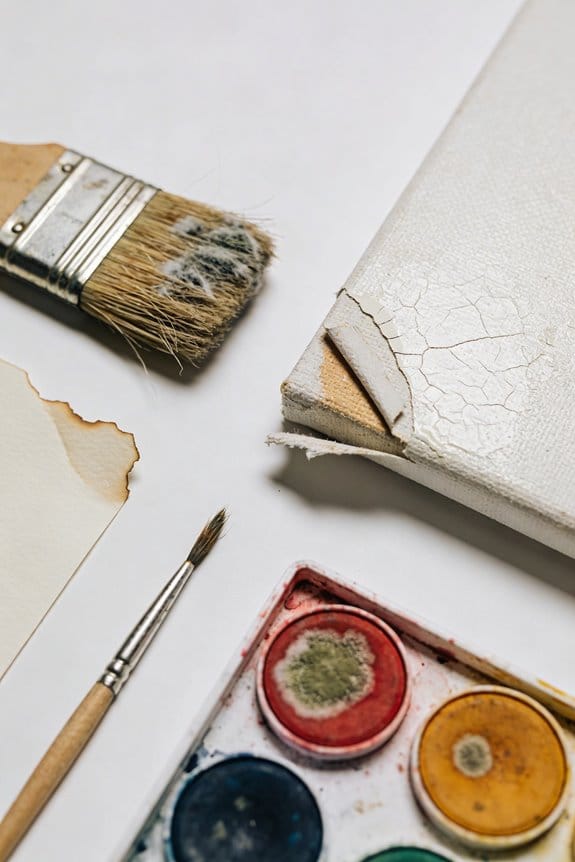
Have you ever noticed how your art supplies behave differently depending on the weather? It turns out, humidity plays a big role in how your materials perform, just like temperature does. When humidity levels soar above 60%, you’re inviting mold to the party, especially if you’re using paper or canvas. That can lead to some serious, irreversible damage to your art supplies.
On the flip side, low humidity, dipping below 35%, can dry out paints way too fast. This leads to cracking and uneven application, and frankly, that can be a real pain when you’re trying to bring your creative vision to life. So, what’s the sweet spot? Aim for a relative humidity level between 40-55%. It creates a comfy environment for your supplies and helps keep them in tip-top shape.
You might not think about it, but too much moisture in the air can also warp wooden tools and easels. That’s definitely not something you want to deal with mid-project.
The best part is, maintaining these ideal humidity levels can vastly improve your experience and results when creating art. Additionally, proper storage in sturdy containers designed to prevent moisture exposure helps preserve the quality of materials such as colored pencils.
So, how will you set up your creative space to keep those supplies happy? Remember, a little effort in monitoring the environment goes a long way in protecting your work.
Common Humidity and Temperature Issues in Art Supplies
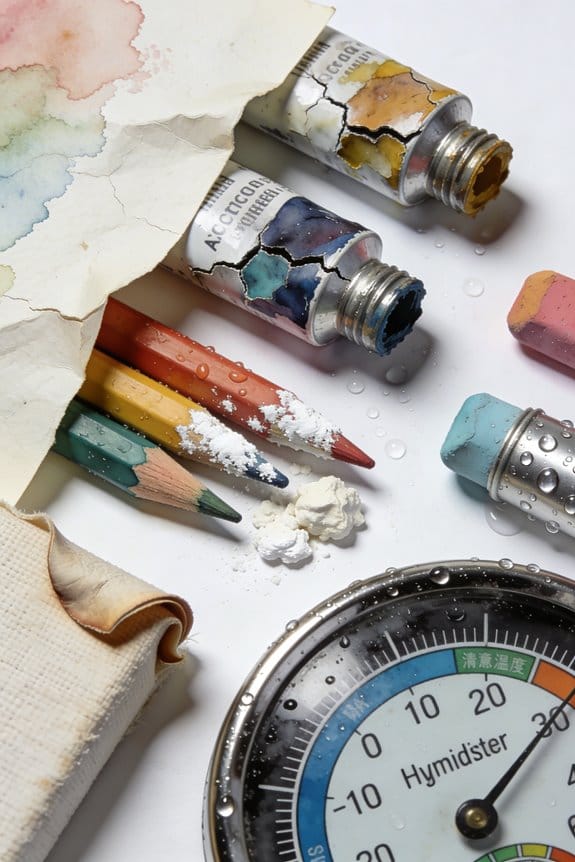
Ever notice how your art supplies sometimes just don’t perform the way you’d like? Environmental factors can really throw a wrench in your creative flow. High temperatures can make oil paints dry way too fast. This can hurt their texture and even lead to cracks. On the flip side, if it’s super humid, your watercolors might get overly soggy, turning your masterpiece into a muddy mess. Then, when humidity is low, acrylics can dry up instantly, making it tough to blend colors and risking a brittle finish.
Temperature swings aren’t much help either. They can lead to issues where solvent-based markers either dry out or get all clogged up, which interrupts that smooth ink flow we need. It’s frustrating, right? These might seem like minor annoyances at first, but they can really mess up your supplies. Organic materials like pastels and charcoal can break down if they’re not kept in the right conditions.
Proper storage and choosing the right paint type for your project can help mitigate these effects and improve performance. To keep your supplies in check, here are a few tips:
- Store your paints in a climate-controlled space if possible.
- Try using a dehumidifier or humidifier to maintain a stable environment that suits your medium.
- When working outdoors, consider temperature and humidity forecasts before starting a project.
Frankly, being mindful of these factors can help you keep creating without those annoying interruptions. What’s your go-to trick for keeping your art supplies in good shape?
Recommended Products

Smart portable breadbox with lid that becomes a cutting board

【Maintains a Stable 62% Relative Humidity】Wisesorb 62% Humidity Control Packs help maintain a consistent humidity level inside sealed containers, reducing moisture fluctuations and helping preserve the freshness, texture, and quality of stored items. Each 8g packet is designed for approximately 1 oz (28 g) of contents and is suitable for both personal and bulk storage applications.

【High Quality Packaging Material, Melt Sealing, Transparent Back Window】: Silica gel packs utilize good material as packaging material, good breathability, dust free and does not contain binder or solvent. Utilize melting sealing to ensure rigid seal, so as to make it easier to be pushed into packaging bag. The use of ink-free laser printing technology to avoid traditional ink printing, so as to improve product safety. Transparent back seal allow you to see the sorbent inside.
Best Practices for Maintaining Ideal Conditions
Do you ever wonder why some art supplies seem to last forever while others go bad so quickly? Keeping your materials in the best possible condition is all about the environment they’re stored in. If you want your paints and papers to perform at their peak, it’s crucial to maintain a stable temperature between 68-72°F. This helps slow down those pesky chemical reactions that can ruin your supplies.
Another detail that shouldn’t be overlooked is humidity. Aim for relative humidity levels between 40-55%. This range can make a world of difference, preventing mold and keeping your paper from warping or becoming too brittle. Honestly, no one wants to pull out a canvas and find it’s been affected by damp or dry air.
Here’s the trick: avoid sudden temperature shifts. These fluctuations can cause stress, leading to microfractures in your supplies. And while it might seem harmless to leave your materials near a sunny window or heating vent, it’s best to keep them away from direct sunlight and heat sources. Your art will thank you for it!
Using climate control systems or monitors is another great way to keep tabs on your storage environment. Regularly checking these aspects ensures your art supplies stay in prime condition, ready to be used whenever inspiration hits.
In short, keeping your art materials in the right environment is key to their longevity. Think about how you store your supplies—are you taking the right steps to protect them? It’s worth the effort to maintain an optimal space for all your creative tools. Using airtight containers to store paints helps prevent drying out and skinning, further preserving your supplies’ quality.
Recommended Products

ANTI-CLOGGING TECHNOLOGY: The FINE print head institutes a tubular ink delivery system, this generates faster print speeds and reduces the possibility of clogging. Temperature: 59 - 86 F° (15 - 30 C°)

An advanced AI grow tent kit with dynamic controls and built-in components; everything you need to achieve the perfect grow—all housed in a state-of-the-art tent.

Preset Desiccant Regeneration and Air Circulation - This advanced unit features an intuitive design incorporating preset settings for efficient desiccant regeneration and dry air circulation. This ensures optimal performance, allowing for consistent moisture control and prolonging the lifespan of your stored items
Tips for Properly Storing Art Materials
Ever feel like your art supplies are more fragile than your ideas? Keeping them safe and sound isn’t as complicated as it might seem. A good rule of thumb is to store your materials at a temperature between 68–72°F. Why? Because stable temperatures help minimize chemical reactions that could cause your supplies to degrade over time.
Humidity plays a big role too. Aim for relative humidity levels between 40-55%. High humidity can lead to mold growth, especially on paper and canvas, which we’d all like to avoid. Here’s a tip: use airtight containers with desiccants—those little packets that absorb moisture. They can make a world of difference in managing humidity.
Make sure to keep your supplies away from heat sources, direct sunlight, and drafts. All those factors can lead to temperature spikes that could damage your art materials. Regularly checking your storage conditions with a climate monitor is a smart idea. This way, you can keep everything in the sweet spot and ensure your supplies are ready when inspiration strikes. Additionally, storing items like silicone in airtight containers can significantly extend their shelf life and preserve their quality.
Recommended Products

Collar Tag Sensor-Activated Personalized Meals: Each cat wears a unique RFID tag. The feeder opens only when the designated cat approaches, keeping others away from food they shouldn’t eat. (Only supports the included RFID collar tag.) Adjust the lid speed to suit your cat's comfort level.

【Portable and Durable Silica Gel Aluminum Desiccant Containers】: Silica gel aluminum can is designed with convenience and durability in mind. Each canister measures 4 x 2 x 0.5 inches, providing a compact size that is easy to carry and store. The high-quality aluminum construction ensures the canister remains firm and sturdy, protecting it from dents and damage. With their independent and portable design, these small silica gel tin canisters are a convenient solution for your storage needs.
【Easy Remote Care for Loved Ones】Help your loved one take medicine on time, even when you're far away.Use the app to set dosing times, check if pills were taken, and get alerts for missed doses.They stay independent. You stay at ease.Our companion app is easy to use, requires no subscription, and includes automatic software updates
Common Mistakes When Storing Art Supplies
Storing art supplies can be tricky, and if you’re not careful, you could end up with dried-out paints or moldy paper. Have you ever opened a container to find your precious acrylics hardened like a rock or your brushes all messed up? It’s frustrating, right?
One big mistake is keeping your art supplies in places that are too hot. If the temperature goes over 75°F, those organic materials can break down pretty quickly. Plus, if the humidity hits above 60%, you might find mold growing on your paper or canvas. So, what should you do?
- Use airtight containers for your paints and inks. This simple step can really help keep moisture at bay.
- Keep your items away from direct sunlight or heat sources. Those oils and acrylics can sweat, making them run when you finally get to use them.
Another common error is not paying attention to the overall environment where you store everything. Have you noticed how temperatures and humidity levels can change suddenly? This fluctuation can put stress on your supplies, leading to cracking and a decline in quality over time.
Honestly, taking a bit of time to set up a good storage system can save you a lot of headaches down the road. It all comes down to being mindful – think about the space where you keep your art things. Make gradual adjustments and you’ll be amazed at how much longer your supplies will last. For example, when working with certain art media, choosing tools made from durable materials like aluminum alloy or stainless steel can help preserve their performance despite environmental fluctuations.
How to Prevent Damage During Transportation
Transporting art supplies might not be the first thing on your mind, but it’s super important if you want to keep everything in tip-top shape. So, how can you prevent damage during the journey? One solid idea is to use temperature-controlled containers. Extreme heat or cold can wreak havoc on materials like acrylics and oils. Also, keeping the relative humidity between 40-55% in these containers is a must to steer clear of moisture issues like mold or drying out.
Here’s the trick: use acid-free packing materials. These can make a big difference, especially in high humidity situations, as they help prevent any nasty chemical reactions. And don’t even get me started on direct sunlight! If you can, avoid it at all costs; it can lead to fading and degradation of those lovely pigments you’ve got.
Now, if you really want to go the extra mile, think about using climate-monitoring gadgets during transport. These can track temperature and humidity levels, allowing you to make quick adjustments if things start to go south. This way, you can ensure your art supplies arrive safe and sound, ready to inspire your next creative endeavor. Additionally, using non-toxic acrylic flow mediums can help maintain paint consistency and prevent damage caused by temperature fluctuations during transport.
Recommended Products

Standard-Depth Design - Enhance your home with a standard-depth refrigerator that complements any kitchen design with increased interior capacity

【Easy Installation】At least 1/2" bigger than measured opening to allow doors to open. 60x36 Inch Surface Wall Mounted medicine cabinets for bathroom is easy to install and operate with User instructions, which are wrapped with a strengthened package carefully to better protect the cabinet body. (Only support Hard wired)If there is any damage to the lights or doors during use, please don't worry, we can provide free replacement doors. For any doubts and questions, please feel free to contact us via Amazon email.

North American Power Compatibility: Designed for 120V/60Hz North American outlets. A dedicated 20A circuit is recommended. Do not connect the machine to 220-240V power.
Choosing Materials for Various Environmental Conditions
When it comes to choosing your art supplies, have you ever thought about how they’ll hold up in different environmental conditions? Materials react differently to things like humidity and temperature, and trust me, it can make a big difference in the longevity of your artwork. Organic materials, like acrylics, might let you down in high humidity and extreme heat, while synthetic options generally stand up better over time.
For instance, if you’re working in a humid space, pigments can fade quicker than you’d like. Storing them in low relative humidity (think around 40-55% RH) will help keep their color vibrant for longer. Watercolors and paper have their own struggles too. They can warp or become brittle if the humidity fluctuates a lot. And let’s not forget about canvas—it can sag in damp conditions, while wood can start to swell and crack.
So, here’s the trick: opt for archival-quality supplies designed for stable environments. You’ll want materials that can handle those regulated settings to keep your artwork looking as good as the day you created it.
Honestly, taking these precautions may seem like a hassle at first, but it’ll save you headaches down the line. You want your artwork to last, right? A little preparation goes a long way in ensuring it stays vibrant and intact, despite whatever conditions come your way.
In addition, selecting the right brush size and quality can also help maintain the performance of your tools across different environments.
In the end, it’s about protecting your creative expressions. What’s your experience with environmental challenges when it comes to your art supplies?
Recommended Products

Zip Dry is a premium, archival quality paper glue that is acid and lignin free, perfect for creating memorable scrapbooks, photo albums and other various paper crafts.

MADE IN USA. Canvas Prt Size: W 24 x H 20 with a depth of 1-1/2 for a gallery quality appearance This ready to hang piece is ideal for enhancg your home office or studio decor requirg no additional framg

ACID-FREE: Neutral PH glassine paper that is great for protecting documents, drawings, photographs, and negatives against dust and abrasion.
Frequently Asked Questions
How Do Temperature and Humidity Affect the Painting Process?
Have you ever wondered how temperature and humidity influence our painting process? They affect brush behavior, drying time, and paint consistency, impacting color mixing and surface preparation, ultimately shaping our artistic techniques and results.
Is 50% Humidity Too High for PLA?
No, 50% humidity isn’t too high for PLA. It maintains ideal conditions for performance consistency, avoiding filament degradation and moisture absorption. Proper storage guarantees print quality, even influencing drying times positively in our projects.
How Much Does Humidity Affect Performance?
Can we really ignore humidity effects on our art? Moisture levels impact paint adhesion, drying rates, and medium viscosity, ultimately affecting our artwork’s longevity, surface finish, and color retention. Let’s keep it balanced!
What Is the Best Humidity for Art?
The ideal humidity for art’s between 40-55%. This range balances moisture levels, ensuring ideal paint consistency and drying time, while preserving canvas integrity and aiding medium selection in our workspace’s conditions.


