As an Amazon Associate, we earn from qualifying purchases. Some links on this site are affiliate links at no extra cost to you. Our recommendations are based on thorough research and editorial judgment.

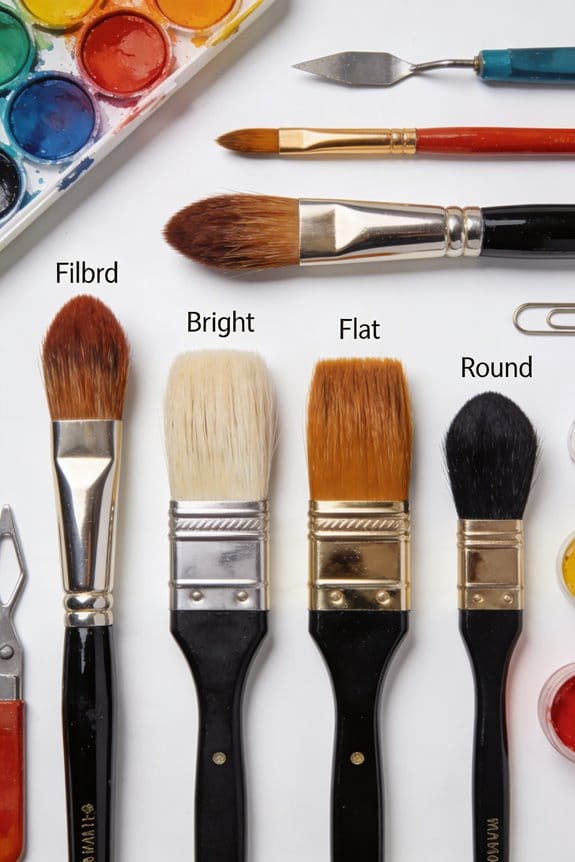
Understanding Brush Shapes: Filbert, Bright, Flat, and Round

Understanding brush shapes—filbert, bright, flat, and round—helps us choose the right tool for our artwork. Round brushes are excellent for fine details, while flat brushes excel at covering larger areas quickly. Bright brushes work well with thick paints, allowing for bold strokes. Filbert brushes blend colors smoothly, creating soft edges. Each brush serves a unique purpose, so experimenting with these shapes can enhance our techniques. Let’s explore how these brushes can transform our painting experience together.
Key Takeaways
- Filbert brushes feature a rounded edge, making them perfect for smooth blending and creating soft, natural shapes in artwork.
- Bright brushes have short, stiff bristles suitable for bold strokes and handling thicker paints effectively.
- Flat brushes offer versatile use, ideal for covering large areas while also enabling fine details and smooth blending.
- Round brushes are designed for precision, excellent for intricate outlines and controlled washes with varying line thickness.
- Each brush shape impacts artistic technique, influencing line quality and overall painting style; experimenting with them enhances creativity.
Understanding Different Types of Paint Brushes and Their Uses
You may be interested


What’s the deal with choosing the right paint brush? It can be overwhelming, right? But the truth is, picking the right brush can really shape your painting experience. There are at least five main types that you’ll want to get familiar with, each serving a unique purpose.
Round brushes are a great starting point. They’ve got tightly packed bristles that can create different line thicknesses, making them perfect for outlines and details. If you’re looking to add fine details, consider using a rigger brush. These brushes are long and thin, and they’re excellent for lettering or touching up small areas.
Then there are flat brushes, which are your go-to for filling larger spaces or making bold strokes. If you’re feeling adventurous with thick paints, bright brushes work wonders with their short, stiff bristles. Ever tried a filbert brush? Its rounded top is fantastic for soft edge blending. And let’s not forget about fan brushes; they’re fantastic for creating textures, like fluffy clouds in a sky.
So, why does this matter? Because using the right brush can really impact the overall look of your work. And don’t forget about brush care—cleaning your brushes properly is key to preserving them and improving your painting techniques. Investing in brushes with ergonomic handles can also help reduce hand fatigue during long painting sessions.
In short, knowing your brush types can make your painting journey a lot easier. Which brush do you think you’ll try first?
The Unique Benefits of Round Brushes for Detail Work
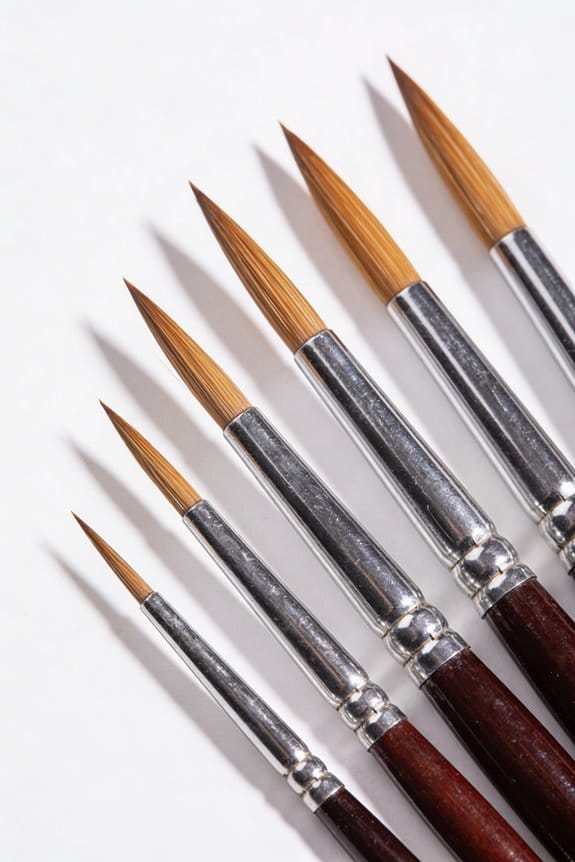
Ever find yourself frustrated by the little details in your artwork? You’re not alone! Getting those fine lines and delicate highlights just right can be a challenge, but round brushes can really help out.
Round brushes are fantastic for detail work. Their thin, closely packed bristles are perfect for precision techniques. You can easily create intricate outlines and fine lines without much effort. Plus, if you need to do a controlled wash, these brushes have your back. The best part is you can vary the thickness of your lines just by adjusting the pressure you apply. This makes your artwork dynamic and visually interesting.
Another benefit? Those pointed tips! They let you access those tiny, hard-to-reach areas that might otherwise be a pain to cover. Whether you’re adding highlights or some decorative elements, round brushes make the job easier. You’ll be surprised at how they can help achieve those fine details that truly elevate your paintings. Additionally, choosing brushes with high-quality nylon bristles enhances paint absorption and precision, making them ideal for various mediums.
Recommended Products

✅ SunsetPerformanceFabric machine washable slipcovers will become your new best friend | Comfortable, easy to clean slipcovers that will continue to look as good as the day you bought it | Heavy duty, yet soft to the touch, our moisture repellent 98 percent polyester/2 percent nylon fabric is breathable adding an extra degree of comfort
ENDURING STYLE. Inspired by elements of Italian design, the Medina Series delivers a timeless look of creativity and class with durable construction that's perfect for virtually any modern office environment.

Powerful functions-This Carpet Extractor can spray, rinse and dry at the same time, making cleaning efficient.
When to Use Rigger Brushes?
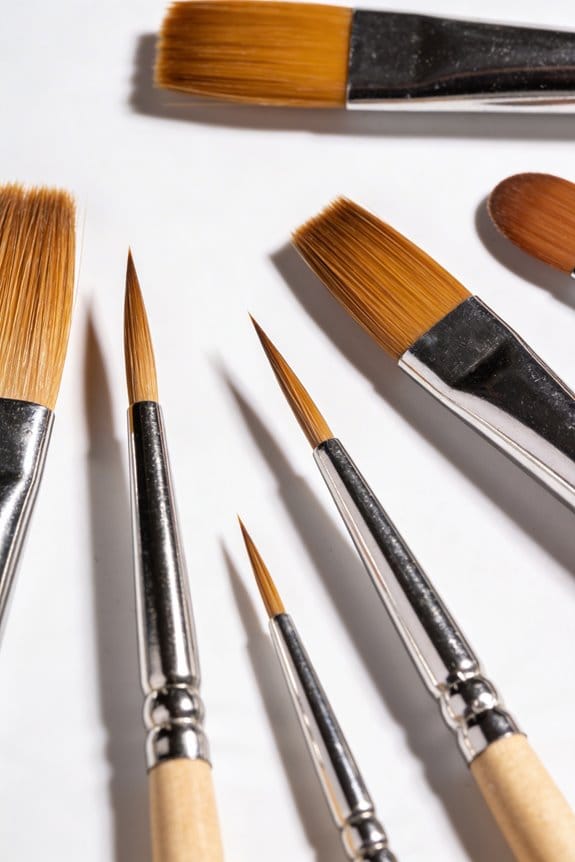
Have you ever been in the middle of a painting session and thought, “When should I really reach for my rigger brush?” These brushes are super handy for specific tasks.
They shine in fine detailing work, like lettering and calligraphy, thanks to their longer, thinner shape. If you need to create long, smooth strokes, a rigger brush can hold more paint than your average brush, making it perfect for precision work. Plus, they’re fantastic for spot touch-ups and delicate retouching when you want to get into those intricate areas without messing things up.
Here’s the trick: by adjusting your pressure, you can create varying line thicknesses, which is key for keeping your paint flowing smoothly. In watercolor painting, these brushes are especially great for outlining and highlighting, giving your artwork that polished, finished look. So the next time you need to focus on precision, give a rigger brush a try!
Truth is, knowing when and how to use these brushes can really elevate your art. Have you used a rigger brush before, or does this inspire you to give it a shot? Choosing the right brush size based on brush size selection can further enhance the precision and coverage of your work.
Versatile Uses of Flat Brushes
Flat brushes are a must-have for any artist looking to make their mark. If you’ve ever tried to cover a big canvas, you know how frustrating it can be to use a tiny brush, right? Flat brushes allow you to lay down a base coat quickly and efficiently, making it easier to tackle larger areas without getting bogged down. They come in various sizes, so you can easily find one tailored for both medium and large surfaces.
One of the best things about flat brushes is their versatility. Use the edge to create fine lines and details, which gives you the ability to mix bold strokes with intricate effects. They’re particularly handy when you want to achieve a textured finish or lay down thick paint without any hassle. For a practical example, think about painting a sunset. A flat brush allows for smooth color blending, which is key to capturing that soft glow.
So, why does this matter? When you can create both broad areas and precise details with just one tool, you save time and make your artwork pop. It’s honestly a win-win! If you haven’t added flat brushes to your toolkit yet, now might be a good time to consider it. You’ll find they open up many possibilities for your projects. Additionally, choosing brushes with ergonomic handle designs can reduce hand fatigue during long painting sessions, enhancing your creative experience.
To wrap it up, flat brushes are crucial for any artist. They let you mix efficiency with creativity, which is what we all strive for in our art, right? What will you create with your flat brush next?
Recommended Products

Crystal chandelier parameters: Color: Black + Clear Crystal, diameter 40 inches x height 50 inches, weight: approximately 78 pounds, material: K9 crystal+metal, adjustable chain length 40 inches to ensure that the crystal pendant light can be hung at the appropriate height. Light bulb requirement: 31 x E12 (excluding light bulb), maximum 40W.

Important Note: Deco TV Frames are made exclusively for Samsung The Frame TV and are not compatible with any other TV models. They serve as an elegant replacement for your Samsung Bezel.

【Modern Crystal Chandelier】Transform your living space into a captivating masterpiece with our elegant crystal tree branches chandelier. This stunning chandelier is designed to impress, featuring a unique tree branch-inspired design adorned with glistening crystals that cast a mesmerizing play of light and shadow.
Easy Bold Strokes With Bright Brushes
When you’re looking to add some strong strokes to your artwork, bright brushes are definitely worth considering. These brushes have short, stiff bristles that make it easier to create bold lines. Their flat, rectangular shape is perfect for filling in medium to large areas quickly, which is great for those expressive strokes we all love. What’s more, the inward-curving tips help you maintain consistent color, especially with those thicker paints.
So, why does this matter? When working with bright brushes, you can achieve short stroke mastery and keep your precision, especially when tackling more detailed areas. They really shine when paired with heavy body paints, making them a must-have for anyone wanting to pack a punch with color and texture.
The best part is you don’t have to worry about losing control during those close-up tasks. Instead, you can focus on your expression and creativity.
Next time you want to make a bold statement in your art, consider reaching for those bright brushes. They might just help you make an impact you didn’t think was possible. What bold strokes will you try next?
Using brushes with high-quality nylon bristles ensures durability and precision while working with thick acrylics.
Recommended Products
Features boar bristles & soft nylon pins

Upgraded Extensible Design: The upgraded version of the horse brush has a upgraded back-plate, it can be bent to tree stumps or fence posts, and also be nailed flat to the fence or walls, to prevent livestock from rubbing against valuable fences, equipment, or buildings
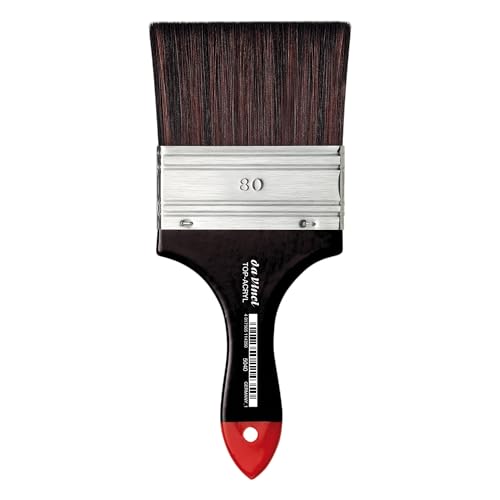
5 diameter construction perfected for washes in watercolor and fluid acrylic
How to Blend Like a Pro With Filbert Brushes
Ever tried to blend your paints and ended up frustrated with harsh lines? Filbert brushes can totally change that. They’re amazing for blending, and here’s why they’ll become your new best friend.
First off, those narrow, rounded tops make it easy to blend colors and create soft edges. You can use them for everything from sweeping strokes to more detailed touches without feeling like you’re fighting against your brush.
Now, let’s talk about color layering. Applying lighter colors on top of darker ones helps add depth to your work. The trick is to layer gently and take advantage of the brush’s edge to mix colors right on the canvas. This technique can elevate your art in ways you might not expect. So, why does this matter? Because a little practice with this can lead to some stunning results.
Cleaning your filbert brush between colors is also super important. Keeping the colors pure helps maintain that vibrant look you want. A quick rinse can make a world of difference, ensuring your blends stay true to life.
Additionally, choosing the right brush size can greatly impact your control and precision while blending.
To sum it up, filbert brushes offer you the smooth blending you’ve been looking for. They’re versatile, easy to work with, and will definitely help you step up your painting game. Have you tried blending with a filbert brush yet, or are you ready to give it a shot?
Recommended Products

🎨 BRUSH SET IN WOODEN BOX: A curated set of six filbert brushes housed in an elegant wooden case — perfect for artists who appreciate craftsmanship and organization.

Box of 72 packs of 3 = 216 Brushes Total - 100% Synthetic Bristle provides smoother finish

ULTRA MINI: These brushes were created for artists who use watercolor or acrylic paint. They feature golden Taklon filaments mounted onto pearly-white handles. Their ultrafine tips are good for creating tiny details and offer lots of control.
Create Textural Effects With Fan Brushes
Ever feel like your artwork is missing that special something? If you’ve been blending with filbert brushes, you’re off to a good start, but it’s time to explore fan brushes for a fresh take on texture. These brushes have bristles that fan out, making them fantastic for adding depth and complexity to your work.
Here’s the trick: don’t be afraid to experiment. With fan brushes, you can simulate natural elements—from the fluffiness of clouds to the intricacy of foliage. The unique shape lets you easily mimic the irregular patterns found in nature. By adjusting the pressure you use on the brush, you can create everything from delicate details to bold strokes. For example, if you’re trying to capture the feel of grass, a fan brush can create the perfect texture that adds life to your paintings.
So, why does this matter? Mastering different pressures with your fan brush can really help enhance your art. Play around with light strokes for soft textures and heavier pressure for more pronounced lines. This versatility means you can truly define your pieces, bringing a sense of realism to whatever you’re creating.
The best part is, anyone can give this a shot—no special techniques required! Just grab a fan brush and let your creativity flow. So, go ahead and dive into the world of fan brushes; you might just find a new favorite tool for capturing nature’s beauty in your art. What new textures will you create?
To keep your fan brushes effective and long-lasting, incorporating regular cleaning practices is essential for maintaining the bristle quality and performance.
Tips for Choosing the Right Painting Brush Shape
Have you ever struggled to find the right brush for your painting project? Choosing the right brush shape can really impact your experience and the outcome.
Start by considering the level of detail you need in your work. If you’re aiming for fine lines or tiny details, a round brush is your best friend. But if you’re working on larger areas and want bold strokes, flat brushes are the way to go. They really shine when it comes to covering more ground quickly. Ever wanted to blend colors smoothly? That’s where filbert brushes come in, making those soft edges so much easier.
If you’re working with thicker paints, bright brushes are a solid choice because their stiff bristles help manage the heavier texture. Don’t forget about how you grip the brush; a comfortable hold will definitely improve your painting technique.
For adding texture, fan brushes are fantastic! They can effortlessly mimic elements found in nature, which can bring a unique touch to your artwork. So, why does this matter? Well, the right brush shape not only enhances how you apply colors but also makes the whole process more enjoyable.
As you think about your next painting project, remember that your brush selection makes a difference. Experimenting with different shapes can help you achieve the results you want. What brush shape will you try next? An ergonomic design can also make a significant difference in comfort and control during painting.
Recommended Products

Rhapsody Kolinsky Sable Artist Brushes: Crafted from the finest Kolinsky, these full belly watercolor brushes feature split-proof 3x0 points with excellent responsiveness, spring and resiliency; Designed for demanding professional watercolorists, these well-balanced brushes deliver fine, controlled detail

PURE KOLINSKY-TAJMYR SABLE ARTIST PAINTBRUSH - Considered the very best hair for watercolor painting, only the best male kolinsky hair is used for the Reserve series brushes providing watercolor artists with an exceptional point and liquid retention

【High Quality Material 】Our Black Chandelier Light Fixture use quality and durable Metal material,anti-corrosion and rust, strong and durable.double head clear crystal shades with premium Stunning K9 crystal,Each piece is expertly quality inspection to ensure durability and elegance,The multifaceted surfaces catch and reflect light from every angle, casting a mesmerizing glow that transforms our space into a luxurious haven.
Frequently Asked Questions
What Is the Difference Between a Flat and a Round Filbert?
As the saying goes, “variety’s the spice of life.” A flat brush offers bold strokes, while a round filbert gives us versatility for both detailed work and soft edges—truly the best of both worlds.
What’s the Difference Between a Flat Brush and a Bright Brush?
The difference between flat and bright brushes lies in their brush techniques and painting styles. Flat brushes suit bold strokes and broader coverage, while bright brushes excel at short, controlled strokes for texture and depth.
Which Foundation Brush Is Better, Flat or Round?
We think it’s all about preferences, really. Flat brushes boast bold strokes for full coverage, but round brushes offer intricate blending techniques. So, choosing one depends on whether we crave a flawless finish or a soft glow.
What Is the Shape of a Filbert Brush?
A filbert brush has a unique shape, featuring a narrow body with a rounded top. Its characteristics make it perfect for blending and detailing, which we can use effectively for natural elements like flowers and leaves.


