As an Amazon Associate, we earn from qualifying purchases. Some links on this site are affiliate links at no extra cost to you. Our recommendations are based on thorough research and editorial judgment.


Understanding Spring and Snap in Watercolor Brushes

Understanding snap and spring in watercolor brushes helps us choose the right tools. Snap means how quickly a brush returns to shape after bending, which aids in detailed strokes. A strong snap, often found in synthetic brushes, allows precise control. Spring refers to flexibility when pressure is applied—firmer spring works best for fine details. Knowing these traits guides our brush choices, enhancing our painting techniques. Let’s explore specific brush types that suit various styles further.
Key Takeaways
- Snap refers to the brush’s ability to return to its original shape quickly after bending, aiding in controlled strokes.
- Spring describes a brush’s flexibility under pressure, affecting how it maintains shape during application.
- High snap brushes, like synthetic ones, provide excellent control but may hold less water for washes.
- Brushes with firmer spring, such as sable, are ideal for detailed work and fine lines.
- Understanding both snap and spring helps artists choose the right brush for their specific painting techniques.
Understanding Snap and Spring in Watercolor Brushes
You may be interested


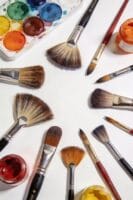
When it comes to watercolor brushes, have you ever wondered why some seem to perform better than others? Snap and spring are the two big features you should keep in mind. Snap refers to how quickly a brush bounces back to its original shape after you bend it. This is especially important in creating detailed strokes, because a brush with good snap offers excellent control. However, don’t forget – brushes with high snap tend to hold less water.
Then there’s spring, which describes how flexible a brush feels under pressure. Different spring types can change how smoothly you can create those zigzag strokes or unique textures. For detailed work, a firmer spring is your go-to, while a softer spring is best for those extended techniques where you want a bit more flow.
So, why should you care about this? Understanding these features can truly help you pick the right brush for your project. If you want your watercolors to pop with vibrancy and definition, the right combination of snap and spring is key.
In short, spend some time figuring out what works best for you. What’s your favorite brush for detailed work? Also, remember that brush size selection plays a crucial role in determining the right brush for different techniques, influencing both snap and spring performance.
Why Synthetic Brushes Excel in Performance

What’s the deal with synthetic brushes in watercolor painting? If you’ve ever found yourself frustrated with brushes that just don’t perform, you might want to consider making the switch.
One of the biggest perks of synthetic brushes is their durability. Unlike natural hair brushes that tend to swell or lose hair, these synthetic fibers keep their shape and strength—even when they’re soaking wet. This means they won’t just flop over or lose their bristles when you’re trying to create that perfect stroke. Plus, high-quality synthetics made from nylon or polyester really hold up over time, often outlasting their natural counterparts. Isn’t that a nice relief when you invest in your art supplies?
These brushes also have an impressive elasticity. They bounce back to shape after each stroke, so you can count on them to deliver the same quality every time. You’re also going to appreciate how they handle paint. They provide a smooth and consistent flow without that annoying extra moisture that can ruin your work.
So, why does this matter? Well, if you’re tackling different techniques, synthetic brushes can give you the versatility you need. Whether you’re a beginner or a seasoned artist, these brushes offer so many practical benefits that they simply deserve a spot in your kit.
In addition, brushes with double-crimped ferrules reduce shedding and keep bristles securely in place, enhancing durability and performance.
In short, synthetic brushes are worth considering for your watercolor adventures. Have you tried them yet?
Recommended Products

[STAIN RESISTANT & NON-SHEDDING]: Expertly machine-woven from enhanced synthetic durable fibers that are stain resistant and have a virtually non-shedding 0.25-inch thick pile

Available in round size 5/0, 3/0, 2/0, 2, 4 and 6

Russian blue squirrel hair is of the highest quality and holds a large volume of water which makes it excellent for mop and wash techniques
Picking the Right Brush for Your Style

Choosing the right brush for your watercolor style can really affect your artwork. Have you ever struggled to get the wash you wanted? Well, thinking about the shapes and sizes of brushes can make a big difference.
Round brushes are fantastic for both washes and fine details. If you’re after broad strokes or those crisp edges, flat brushes are the way to go. Think about what you need based on your tasks. A size 6 round brush is pretty versatile and can tackle a lot, while a 3/4 inch flat brush will cover larger areas quickly without losing time.
Wondering how to add those fine lines? Rigger brushes, with their long and thin bristles, are perfect for that. And let’s not forget about adding texture! Specialty brushes like mop and fan types can really help with that versatility you might be looking for.
Finally, don’t overlook the materials. Kolinsky sable brushes, for instance, have an amazing snap and are fantastic for smoother strokes. When you combine the right brush shapes with the right sizes and materials, you’ll get the results you want. Professional watercolor brushes such as the Winsor & Newton Professional Watercolour Sable Brush offer unmatched precision and durability for fine detail work.
Recommended Products

Ebony Splendor: The Ebony Splendor Short-Handled Brush mimics the feel and performance of fine red sable brushes, providing a luxury experience for watercolor artists; Each brush is meticulously handmade and inspected to ensure superb edges and split-proof tips

✈️ COMPLETE TRAVEL SET: A six-brush collection designed for portability and versatility — ideal for artists seeking a wide size range in a compact format.

✒️ LETTERING BRUSH SET IN WOODEN BOX: A curated collection of six round square lettering brushes designed in collaboration with El Diletrista — perfect for sign painting, calligraphy, and expressive letterforms.
Snap vs. Spring: Brush Comparisons
Have you ever found yourself wondering why some watercolor brushes seem to work magic while others leave you frustrated? Understanding the differences between snap and spring in brushes can really enhance your painting skills.
Snap is all about how well a brush bounces back to its original shape after you bend it. Synthetic brushes, like the Winsor and Newton Cotman, are a solid choice for snap. They offer great precision for detailed strokes, which means you can hit those delicate edges without stress. But what about spring? That’s where things get interesting. Spring refers to a brush’s ability to hold its shape even when you’re pushing hard on it. Sable brushes shine in this area and are known for their exceptional spring, allowing for smooth shifts in your strokes.
So, how do you figure out which characteristic suits your needs? Test snap by flicking the brush—if it snaps back quickly, you’re in good shape. For spring, try making flexible stroke movements. Each trait brings something unique to your painting technique, making it easier to achieve the look you want.
In the end, knowing the difference between snap and spring can really inform your brush choice. Brushes made from Kolinsky sable are particularly prized for their ability to combine excellent snap with superior spring. What tips or tricks have you picked up in your watercolor journey?
Recommended Products

Rhapsody Kolinsky Sable Artist Brushes: Crafted from the finest Kolinsky, these full belly watercolor brushes feature split-proof 3x0 points with excellent responsiveness, spring and resiliency; Designed for demanding professional watercolorists, these well-balanced brushes deliver fine, controlled detail

Rhapsody Kolinsky Sable Artist Brushes: Crafted from the finest Kolinsky, these full belly watercolor brushes feature split-proof 3x0 points with excellent responsiveness, spring and resiliency; Designed for demanding professional watercolorists, these well-balanced brushes deliver fine, controlled detail

✈️ TRAVEL-READY BRUSH COLLECTION: A complete set of six round travel brushes ideal for artists who need a full range of sizes in a compact, portable format.
Best Practices to Keep Your Watercolor Brushes in Shape
Ever finish a long watercolor session and look at your brushes, thinking they can wait for another day? Not quite! Taking even a few minutes to care for your brushes can really extend their life and keep them performing well.
Rinse your brushes in lukewarm water right after you’re done painting. This helps wash away the paint before it has a chance to dry. A neat little trick is to swish them around in figure-8 motions. This technique not only cleans them effectively, but also prevents the bristles from getting too bent out of shape. Don’t forget to gently wipe the ferrule and handle with a paper towel—you’d be surprised how easily paint can build up there.
Once they’re clean, reshape the bristles and lay the brushes flat to dry. If you’re storing them, keep them in jars with the bristles facing up. It ensures they maintain their shape and avoid any mishaps. And here’s a crucial tip: don’t let them sit in water! Sitting in water can do serious damage to the wood and the bristles over time.
For optimal upkeep, using brushes with durable synthetic bristles can also improve longevity and maintain brush integrity through cleaning and use.
So why does this care routine matter? Well, it can save you money in the long run by preventing the need for frequent replacements. Following these steps will keep your brushes in great shape, allowing you to enjoy every painting session even more.
Taking care of your brushes doesn’t have to be a chore—it’s a small investment in your art that pays off. What steps will you take today to give your brushes a little extra love?
Frequently Asked Questions
Can Snap and Spring Affect Brush Lifespan?
Yes, snap and spring absolutely affect brush lifespan. By prioritizing brush maintenance and bristle care, we can preserve their functionality, ensuring our brushes stay responsive and effective longer, enhancing our painting experiences and results.
How Do I Clean Synthetic Brushes Effectively?
Cleaning synthetic brushes is like nurturing a delicate flower; we must rinse them gently under lukewarm water, use mild soap to coax out the paint, and reshape for lasting beauty. Let’s care for our tools together!
Are There Any Specific Brands Known for Quality Spring?
When we think about quality spring in brushes, brands like Da Vinci and Princeton come to mind. Their Kolinsky sable and synthetic fibers guarantee excellent brush shape and resilience, making for a dependable painting experience.
What Common Mistakes Do Artists Make With Brushes?
We often make mistakes in brush handling by using incorrect sizes or applying inconsistent pressure. This can lead to uneven washes, overworked areas, and ultimately, a lack of clarity and freshness in our artwork.
How Do Brush Sizes Influence Painting Techniques?
Brush sizes considerably influence our painting techniques and styles. Smaller brushes allow precision in details, while larger ones enable bold strokes. By choosing the right size, we can explore various approaches and enhance our artistic expression.


