As an Amazon Associate, we earn from qualifying purchases. Some links on this site are affiliate links at no extra cost to you. Our recommendations are based on thorough research and editorial judgment.


Cotton vs. Wood Pulp: The Impact on Water Absorption

When we use cotton versus wood pulp paper, we notice key differences in water absorption. Cotton paper absorbs water rapidly, thanks to its cellulose structure, allowing us to control pigment easily. In contrast, wood pulp paper absorbs water slowly, which is great for blending and reworking colors. For instance, cotton can hold up to 25 times its weight in water, offering vibrant outcomes. If we continue exploring, we’ll uncover how these differences affect painting techniques and selection.
Key Takeaways
- Cotton paper absorbs water quickly, enhancing control over paint and color vibrancy due to its cellulose structure.
- Wood pulp paper has a slower absorption rate, allowing for extended blending and reworking of paints.
- Cotton fibers retain up to 25 times their weight in water and offer better paint adhesion, ideal for detailed work.
- Wood pulp paper’s rougher texture enhances granulation effects, providing unique blending opportunities for artists.
- Cost-effective wood pulp paper is more accessible for beginners, while cotton paper is a premium choice for serious artists.
Understanding Water Absorption: Cotton vs. Wood Pulp
You may be interested
Have you ever wondered why some paper feels different when you paint on it? The truth is, cotton and wood pulp paper absorb water in unique ways, which can really change your painting game.
When you use cotton paper, you’ll notice it soaks up water faster. This is thanks to its cellulose structure, which lets the pigment sink in. You’ll have better control over your paints, letting colors pop without turning muddy. If you’re aiming for detailed, precise work, cotton is definitely the way to go.
On the flip side, wood pulp paper has a slower absorption rate. This means the paint tends to sit on the surface longer, allowing it to blend beautifully. If you prefer smooth washes or enjoy reworking colors, wood pulp can be quite handy and it’s often easier on the wallet too.
So, why does this matter? If you’re serious about your art, understanding these differences can really guide your choices. You’ll find that using the right paper can enhance your techniques and help you create the effects you want.
In a nutshell, cotton is great for detailed designs, while wood pulp offers a budget-friendly option to experiment with. Many artists also benefit from using blendable, water-based ink for vibrant applications on such papers.
Which paper do you think fits your style best?
How Cotton Fibers Enhance Water Retention
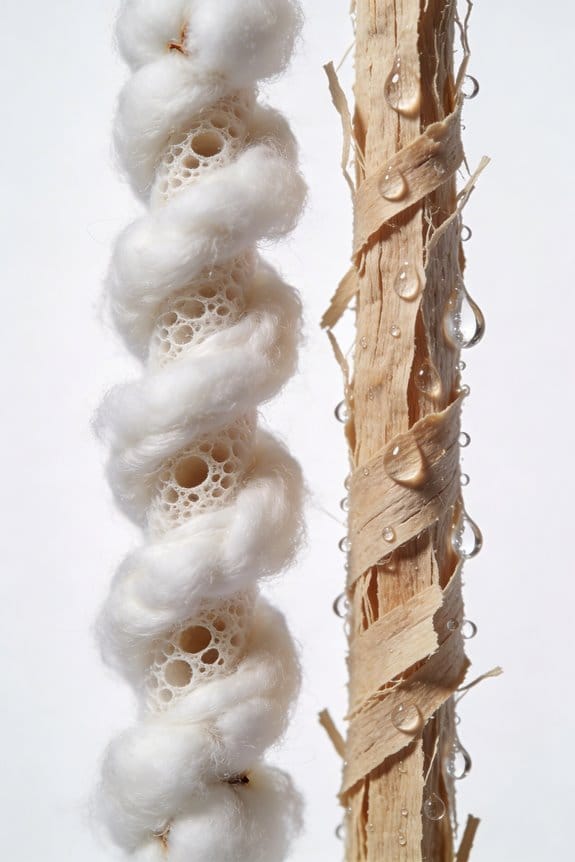
Cotton fibers are pretty incredible when it comes to holding onto water. They’ve got these little hydroxyl (OH) groups that act like magnets for moisture, capable of soaking up to 25 times their weight in water. That’s a big deal when you compare it to wood pulp, which just can’t keep up.
When it comes to watercolor painting, using cotton paper makes a huge difference. The high porosity of cotton paper means it absorbs water quickly, and it has this nice texture that helps the paint stick better. This quality gives artists the freedom to play around with water and pigment, getting just the right look. Plus, even after years, the durability of cotton fibers keeps that water-absorbing magic intact, so your artwork stays vibrant and doesn’t fade away.
Not all papers are created equal, so opting for a 100% cotton watercolor paper can ensure optimal absorption and longevity for your work.
So, why does this matter for you? If you’re painting or working with water-based media, choosing cotton paper can really elevate your work. Honestly, it’s worth considering the benefits of these fibers before you pick up your next sketchbook.
To wrap it up, cotton fibers aren’t just for cozy clothes—they’re also key to great artworks. Have you thought about how your choice of materials impacts your artwork?
Recommended Products

Premium Quality: The New York Central Watercolor Block is made on a slowly rotating cylinder mould, ensuring the best watercolor paper quality; It is ideal for both wet and dry media

Versatile Surface Options: New York Central Watercolor Paper offers rough, cold, and hot pressed surfaces; This 100% cotton watercolor paper is ideal for watercolor, gouache, ink, and fluid acrylics

Hot-Press - 300gsm, 55" x 11 yds.
Effects of Slower Absorption in Wood Pulp

Have you ever been frustrated with how quickly cotton paper absorbs water while you’re painting? While it can be annoying, it turns out that the slower absorption of wood pulp paper might actually work in your favor when it comes to watercolor painting. This characteristic gives you a bit more time to maneuver colors on the surface before everything dries up.
So, what’s the advantage? You get the chance to blend and play with your paints without feeling rushed. If you want to wash away or reapply some paint for adjustments, wood pulp paper allows that flexibility. You can create some cool patterns since the way water seeps in isn’t as fast, making it an interesting challenge for those who love to work with fluid, flowing designs.
Keep in mind, though, that not all wood pulp papers are created equal. The quality can really change how absorbent each type is, which means you might get different results depending on the brand or batch you choose. To avoid any surprises, don’t be afraid to test a few out.
In short, wood pulp paper might just become your new best friend when you’re working with watercolors. Have you tried it yet? What was your experience like? Using paper with high-quality pigments can also enhance your watercolor results.
How Does Paper Type Affect Paint Application?
Have you ever wondered why your paint application doesn’t always turn out the way you envisioned? The type of paper you choose can make a big difference.
When you work with highly absorbent cotton watercolor paper, it’s like the paper is eagerly drinking up the water. This quick absorption helps you maintain control over the paint, letting colors pop and stick around longer. On the flip side, using wood pulp paper means the water takes its time to soak in. This can actually be beneficial, giving you a chance to play around with your colors and create some awesome effects. Just keep an eye on how pigments move, because they can end up where you didn’t plan!
The texture of the paper really impacts how your art looks, too. Cotton paper has a smooth finish that’s perfect for detailed work, letting you capture every little nuance. Meanwhile, wood pulp has a rougher texture, which might surprise you with beautiful granulation effects as the paint settles. Different papers also vary in paper weight, which affects how well they withstand washes and hold pigments during layering.
Recommended Products

Prized Paper - The long fibers in Arches natural white 100% cotton watercolor paper provide timeless beauty and an inimitable touch; this rich water color paper for artists is available in 2 sizes and 3 revered textures: cold press, hot press and rough

Prized Paper - The long fibers in Arches natural white 100% cotton watercolor paper provide timeless beauty and an inimitable touch; this rich water color paper for artists is available in 2 sizes and 3 revered textures: cold press, hot press and rough

Prized Paper - The long fibers in Arches natural white 100% cotton watercolor paper provide timeless beauty; this rich paper is available in 13 sizes and 3 revered textures: cold press, hot press and rough
Using Watercolor Paper: Techniques for Cotton vs. Wood Pulp
When you’re about to start painting, the type of watercolor paper you choose can seriously affect your results. Have you ever noticed how different papers can change the whole vibe of your artwork? Cotton watercolor paper is great because it absorbs water quickly. This means you can use precise techniques to achieve those vibrant colors and intricate details without worrying too much about distortion.
On the other hand, if you’re working with wood pulp paper, you’ll find it absorbs water more slowly. This paper is fantastic for artists who love to mix and layer colors on the fly before everything dries up. The smooth texture of wood pulp does limit your texture options a bit, but it still shines at allowing those layers to pop. When working with cotton, you can manage a more even spread of paint for softer effects.
So, here’s the trick: when you’re using cotton, aim for that even paint spread, but for wood pulp, lean into its friendly layering characteristics. Understanding these differences can truly guide you in picking the right techniques for each paper type. Using 100% cotton papers like those from Arches ensures durability and vibrant color retention in your work.
In the end, your choice in watercolor paper could be the key to unlocking new dimensions in your art. Which type do you think you’ll try next?
Recommended Products
Prized Paper - The long fibers in Arches natural white 100% cotton watercolor paper provide timeless beauty and an inimitable touch; this rich water color paper for artists is available in 2 sizes and 3 revered textures: cold press, hot press and rough


Prized Paper - The long fibers in Arches natural white 100% cotton watercolor paper provide timeless beauty and an inimitable touch; this rich water color paper for artists is available in 2 sizes and 3 revered textures: cold press, hot press and rough
Understanding the Cost Differences: Cotton vs. Wood Pulp
Have you ever stood in an art supply store, staring at watercolor paper, unsure whether to splurge on cotton or save some cash with wood pulp? It’s a dilemma many artists face. Cotton paper is like the luxury ride of the art world; it’s pricier but comes with top-notch fibers that give you fantastic results. On the other hand, wood pulp paper is your wallet-friendly option, often costing less than half of what you’d spend on cotton. For beginners or anyone looking to practice without breaking the bank, this price gap can be a big deal.
So, what does that mean for your art? Cotton paper is praised for its ability to absorb water beautifully and withstand repeated washes without falling apart. But when you’re just starting out or experimenting with new techniques, the cost of cotton can definitely hold you back. Honestly, it’s tough to justify spending a lot when you’re still figuring out your style.
Here’s the thing: brands like Strathmore and Canson have solid wood pulp offerings that won’t let you down. The Strathmore 400 series, for instance, strikes a nice balance between quality and price. It can give you a great painting experience without leaving your wallet empty.
Ultimately, it’s about what fits your needs. Are you ready to dive into cotton for those professional-level pieces, or would you rather stick with wood pulp while you build confidence? It helps to weigh your options carefully. What’s your go-to art supply for watercolor papers? Remember, proper maintenance and cleaning tools can also impact your overall art experience by prolonging the lifespan of your supplies.
Tips for Choosing the Right Paper for Your Work
How do you pick the right paper for your watercolor work? It can feel overwhelming, but don’t worry! One of the key factors to consider is how well the paper absorbs water.
Cotton paper absorbs quickly, making it great for detailed work. On the other hand, wood pulp paper absorbs slower, which allows for reworking techniques. If you’re just starting out or working with a tight budget, wood pulp is often a more affordable option. It’s perfect for practicing without breaking the bank.
You’ll also want to think about the details in your artwork. Cotton paper tends to produce cleaner colors, while wood pulp generates those nice, blended effects. Plus, if you’re considering longevity, cotton paper holds up better over time, keeping your colors vibrant.
Test out a few different brands too. I’ve found that Strathmore 400 series wood pulp hits a sweet spot between performance and price. And here’s a pro tip: check if the options are environmentally friendly. It’s little things like this that can make a big difference in your art journey.
Choosing a paper with acid-free materials further ensures the artwork’s longevity and prevents discoloration over time.
Recommended Products

ARTIST PAINTBRUSH MADE WITH PURE KOLINSKY HAIR - Optima brushes are the perfect oil and acrylic artist brush because they are made with pure kolinsky, using only the best of the male and female hair which create a brush with exceptional softness and natural spring

A sketchbook that has been loved by amateurs and pros for many years
Frequently Asked Questions
Does Cotton Paper Absorb Water?
Yes, cotton paper absorbs water effectively, offering excellent water retention, superior ink absorption, and impressive durability. We appreciate its quick drying speed, which enhances our artistic techniques and maintains the vibrancy of our work.
What Are the Benefits of Using Wood Pulp?
Using wood pulp offers us sustainability benefits and cost efficiency. Its production process consumes fewer resources, reducing environmental impact. By choosing wood pulp, we’re supporting accessible artistry while being mindful of our planet’s future.
What Is the Primary Difference Between Rag Cotton Paper and Regular Wood Pulp Paper?
The primary difference lies in rag paper properties. With cotton fiber advantages, it offers superior durability and moisture retention, while wood pulp paper’s environmental impact and longevity fall short in comparison. We choose carefully for lasting art.
Is Wood Pulp Paper Good for Watercolour?
Yes, wood pulp paper’s unique texture allows us to experiment with various watercolor techniques. While it may lack color vibrancy and have slower drying times, it’s perfect for achieving specific effects and broader artistic expressions.


