As an Amazon Associate, we earn from qualifying purchases. Some links on this site are affiliate links at no extra cost to you. Our recommendations are based on thorough research and editorial judgment.


Decoding Pencil Grades: The Difference Between H and B Graphites

When we decode pencil grades, we see two main types: H and B graphites. H pencils are hard and create lighter lines, perfect for detail work. In contrast, B pencils are softer, producing darker, bolder marks that excel in shading. For projects that need fine lines, choose H grades like 2H or 4H. If you want richer depth, opt for B pencils, especially those rated 2B to 6B. Explore the differences further to enhance your drawing skills.
Key Takeaways
- H pencils contain harder graphite with more clay, producing lighter marks ideal for precise detailing and technical work.
- B pencils are softer, yielding darker lines due to higher graphite content, perfect for shading and expressive art.
- Higher grades of H (e.g., 2H, 4H) maintain their sharpness longer, while B grades (e.g., 2B, 6B) require more frequent sharpening.
- Choosing the right pencil grade enhances artistic expression, as H pencils suit detailed work and B pencils excel in creating depth and richness.
- Understanding paper type and pressure control is essential, as it affects the outcome of marks made with H or B pencils.
What Are Pencil Grades and Why Do They Matter?
You may be interested
Have you ever picked up a pencil and wondered why some mark softer or darker than others? Understanding pencil grades can make a real difference in your writing or drawing experience.
Pencil grades tell you about the hardness or softness of the pencil’s core. For example, “H” pencils are harder, which means they create lighter marks perfect for fine details. On the other hand, “B” pencils are softer and produce darker, bolder lines. The HB grade is the standard, sitting right in the middle—think of it like the classic #2 pencil you probably grew up using. You’ll often see grades like 2H for harder pencils or 4B for softer ones, which show the varying degrees of graphite hardness.
So, why does this matter? Choosing the right pencil can impact how dark your marks are, how often you need to sharpen, and how precise your work ends up being. Here’s the trick: if you’re working on something that requires clean, detailed lines, you might want to reach for a harder pencil. But if you’re going for depth and boldness in your strokes, a softer pencil will serve you better.
When you’re ready to dive into your next writing or drawing project, think about the types of pencils you’re using. Are they high-quality graphite pencils that suit your specific needs? It’s worth considering how your choice can enhance what you’re trying to create.
To get the most out of your artwork, many artists prefer using a wide hardness range to achieve various tonal effects.
In short, understanding pencil grades isn’t just for artists; it can help anyone who writes or draws. So next time you’re at the store, take a moment to find the right grade for your project. What pencil grade are you going to try out today?
Understanding the H Scale: Characteristics and Uses
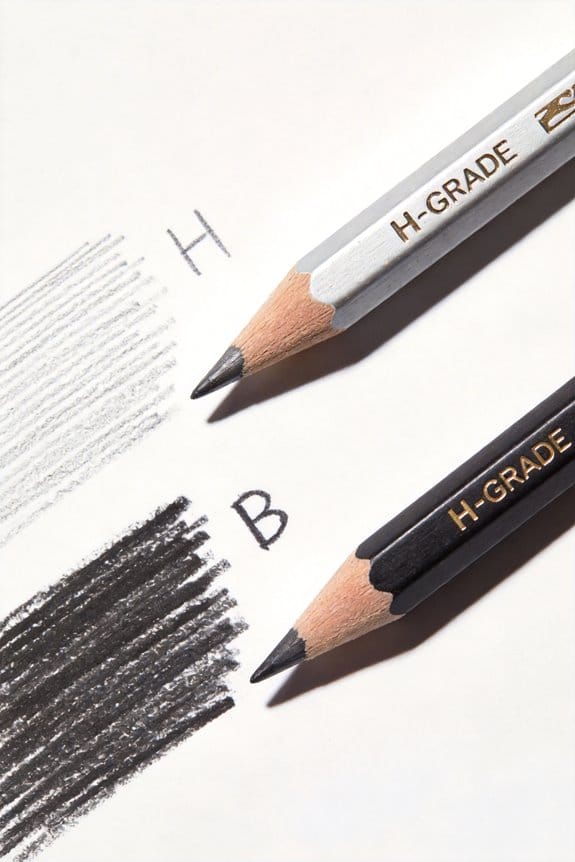
Have you ever found yourself struggling to get those fine lines just right in your sketches or technical drawings? If so, you might want to consider giving H pencils a try. These pencils are made with harder graphite, which means they have a lot of clay mixed in. The result? You get lighter marks that are perfect for precise work.
When it comes to the H scale, higher grades like 2H or 4H are fantastic for creating those delicate lines you need for detailed sketches or technical drawings. Need something even lighter? Reach for a 5H or 6H pencil, especially if you’re working on architectural designs where every detail counts. H pencils also have the added benefit of holding a sharp point longer than their B counterparts, which means you won’t be sharpening them as often. You can easily tackle light sketching, outlining, or shading during your creative process.
So, why does this really matter? Well, using a pencil that fits your work style can make a huge difference in your final results. Try opting for those H pencils next time you’re immersed in a project that demands precision. Honestly, they’ll help you achieve cleaner, more controlled strokes. For digital artists, understanding the pressure sensitivity levels of drawing tablets can complement your skills with precision tools in the digital medium.
In a nutshell, H pencils are perfect for those who strive for accuracy in their work. Why not give them a shot and see how they change your drawing game?
Recommended Products
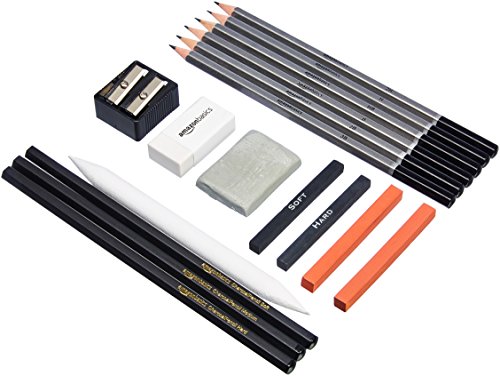
All-in-one 17-piece drawing and sketch supply kit for artists of all skill levels

Large Format: Measuring 4x8 feet (96x48 inches), our dry erase boards offer substantial space for collaboration, teaching, and brainstorming in both office and classroom environments.

Adjustable Height and Mobility: The board features three adjustable height settings and is equipped with smooth-rolling wheels and a locking system for easy mobility and stability.
What Makes H and B Pencils Different?
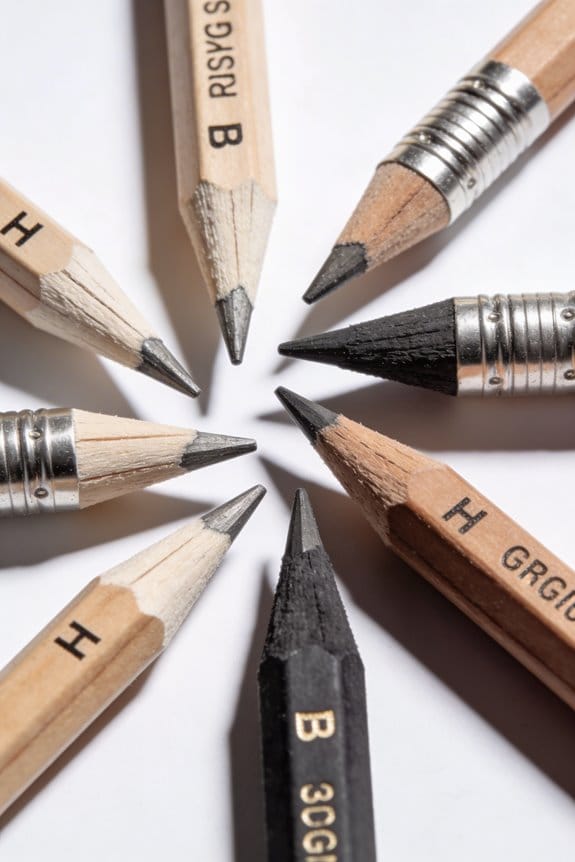
Ever tried sketching and found that your pencil just isn’t cutting it? Understanding the differences between H and B pencils can really enhance your drawing game.
Let’s break it down. H stands for hard, which means these pencils have more clay in them. Because of this, H pencils create lighter marks. This is perfect when you need precision for those detailed technical drawings. On the flip side, we’ve got B pencils, which are softer. The softer graphite makes it easier to produce darker, bolder lines, which is great for expressive shading and artistic work.
So, why does this matter? The hardness and softness of these pencils range from H to B. Higher numbers mean greater hardness or softness. For example, a 4H pencil is tougher than a 2H, while a 4B is softer than a 2B. The HB pencil, sitting right in the middle, is a versatile option that works well for a mix of projects.
Here’s a tip: If you want to experiment, grab a few different pencils and see how they feel on the paper. You might be surprised by how much a simple switch can change your artwork!
Moreover, using a variety of pencil hardness can significantly enhance shading and detail in your drawings.
In short, understanding the distinctions between H and B pencils can make a real difference in your drawings. So, what will you try next with your sketching supplies?
Recommended Products

Pre-Sharpened Convenience: Each pencil is pre-sharpened to save time and effort, making them immediately usable out of the box. These #2 HB graphite pencils provide smooth and consistent writing, ideal for note-taking, test-taking, drawing, sketching, and journaling. The pre-sharpened design ensures precision and accuracy.

Premium Art Materials: Includes 120 Polychromos artists' color pencils, 120 Albrecht Durer artists' watercolour pencils, 30 Albrecht Durer watercolour markers, 60 Pitt Artist pens with flexible brush nib, 4 Pitt Artist Pens fineliner in black (XS, S, F, M), 2 Pitt Artist Pens with 1.5mm bullet nib, 12 Castell 9000 pencils, 6 Pitt Graphite Matt pencils, 5 Castell 9000 jumbo pencils, 5 Graphite Aquarelle pencils, 3 Pitt Graphite Pure pencils, 3 Pitt Graphite Crayons, 4 Pitt Pastel pencils, 4 Pitt Oil-base pencils, 3 Pitt natural charcoal pencils, 3 Pitt compressed charcoal pencils and various accessories.

PORTABLE ALL-IN-ONE DESIGN: Thin, lightweight frame houses a creative studio powered by Android 15 OS w/included creative apps plus Google Play Store access - take professional-grade digital art anywhere without extra equipment
Exploring the B Scale: Softness and Shading
Have you ever struggled to get the right shading in your sketches? The B scale of graphite pencils could be your answer. B stands for “black,” which means it’s all about softer graphite compared to the harder pencils we often reach for.
As you move up the B scale—like from a 2B to a 4B or even a 6B—you’ll notice a big difference in how dark and rich your marks can be. Softer pencils are packed with more graphite and less clay, giving you those deep, expressive lines. If you’re outlining, a 2B pencil might be your go-to. However, if you really want to add drama and tonal depth, grab that 6B—trust me, it can make a world of difference.
Here’s the trick: how much pressure you apply matters a lot. By varying your pressure, you can easily achieve lighter highlights and darker shadows. This flexibility is what makes B pencils a must-have for capturing real depth in your portraits or sketches of nature.
So, why does this matter? When you start experimenting with different B pencils, you’ll find that each one has its own voice. Frankly, mixing them up in your sketches can give your artwork a new life. Just remember to play around with pressure to see how it impacts your shading.
For best results, consider using various lead hardness options to enhance shading and drawing techniques.
When to Use H or B Pencils?
Choosing between H and B pencils can be confusing, right? If you want your drawings to pop, understanding the differences is key. H pencils lean towards technical work and precise lines. They contain more clay, which gives them a firmer feel, making them great for detailed outlines or architectural sketches.
The B pencils, on the other hand, have a higher graphite content. This means they’re your go-to for shading and more expressive drawings. They create darker marks with less pressure, which can really bring your work to life. Have you ever mixed different grades? For instance, using a 2H for sharp outlines and a 4B for those rich shadows can add depth and dimension to your artwork.
Here’s the trick: don’t shy away from experimenting. The best part is that trying out these different grades can help you find what works best for your style. So, why does this matter? Because the right pencil can make a huge impact on your creative process and results.
In short, whether you’re sketching a detailed design or shading a portrait, knowing when to use H or B pencils will enhance your art. And just like digital artists benefit from pressure sensitivity levels in drawing tablets, understanding pencil hardness helps traditional artists control line darkness and texture seamlessly.
What’s your favorite pencil combo, and why?
Recommended Products

🎨 THE BRAND: Schmincke has been producing the best, finest artists' colors Made in Germany since 1881 and they are available in over 60 countries. The range includes watercolors, acrylics, oil colors, pastels, gouache colors, airbrush colors and much more.

🎨 THE BRAND: Schmincke has been producing the best, finest artists' colors Made in Germany since 1881 and they are available in over 60 countries. The range includes watercolors, acrylics, oil colors, pastels, gouache colors, airbrush colors and much more.

DRAWING PENCILS - Set of 12 graphite drawing pencils spanning 6B through 6H for sketching, shading, and technical drafting.
Tips for Maximizing Your Drawing Experience With Graphite Pencils
Maximizing your drawing experience with graphite pencils starts with knowing how to make the most of each grade. If you’re looking to create fine lines, try using an H pencil; they’re perfect for precision. For those darker marks and shading, opt for softer pencils like 2B. Ever wonder why this matters? Well, smoother paper works great with hard pencils, letting you achieve that crisp detail, while textured paper really brings out the character in softer leads.
It’s a good idea to keep a balanced collection of pencils in your drawing kit. You’ll want to have HB pencils for everyday sketches, alongside specific H and B grades to suit your needs. The pressure you apply when you draw plays a huge role, too. Softer pencils can give you darker marks without pushing down hard, which is a real plus when you’re trying to get that perfect shade.
And don’t forget about sharpening! Harder pencils hold a point longer, but those softer ones might need a little more love in the maintenance department. The best part is, when you keep them sharp, your drawings will really pop. Using mechanical pencils with fine tip sizes can also enhance your precision and detail in drawing, making the experience smoother and more efficient.
Recommended Products

High lightfastness and smoothness

Polychromos Artists' Color Pencils are available in 120 colors that are part of a unique color matching system - encompassing all Faber-Castell Art & Graphic products. They contain the highest quality pigments for unsurpassed lightfastness, which is rated on each pencil. They have a buttery smooth color laydown and can be easily blended for layered effects, highlights and transitions. Thick 3.8mm leads are break and water-resistant, smudgeproof and provide permanent, rich color. Provides sh

BRAND Faber-Castell is a world leading manufacturer of top quality, innovative art materials.They have become the go-to brand for artists for centuries, whether professional or hobbyist
Frequently Asked Questions
What Is the Difference Between H and B Pencils?
H pencils are harder and lighter, while B pencils are softer and darker. Understanding pencil hardness helps us choose based on our art style, writing preferences, shading techniques, and artists’ choices for quality comparison across types.
Is H or B Better for Shading?
For shading, B pencils are definitely better due to their softness, allowing smoother blending techniques. Our artistic preference often combines graphite layering with varying tonal ranges, enhancing our sketching styles across different drawing mediums.
Which Pencil Is Harder, 9H or 2B?
In our pencil hardness comparison, 9H is harder than 2B. Understanding these graphite density differences helps us choose the right tools, whether for sketching techniques or writing quality, ensuring students and artists get ideal results.
What Is the Difference Between HB 2B and 4B Graphite?
When we weigh HB, 2B, and 4B, we find softer grades offer smoother shading, while HB balances writing and drawing. Exploring this graphite hardness comparison enhances our artistic journey and enriches our skills!


