As an Amazon Associate, we earn from qualifying purchases. Some links on this site are affiliate links at no extra cost to you. Our recommendations are based on thorough research and editorial judgment.

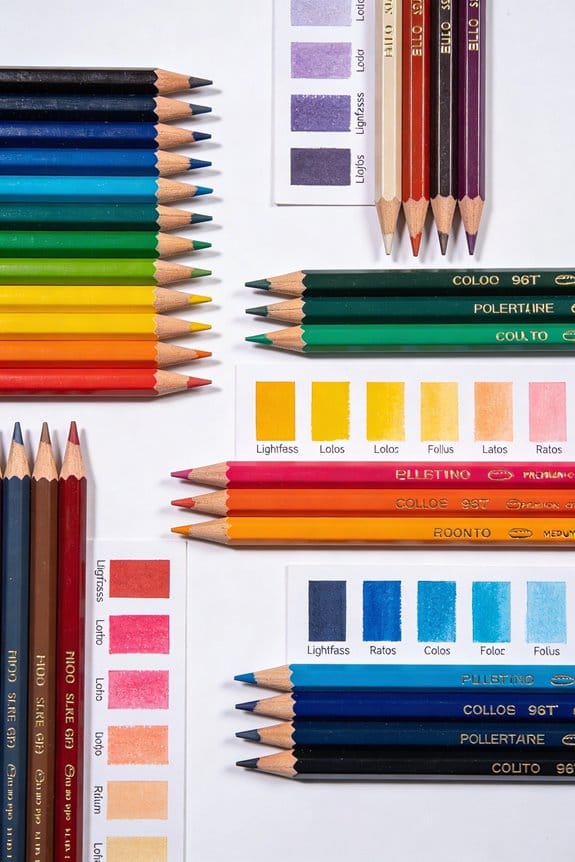
Understanding Lightfastness in Colored Pencils

Understanding lightfastness in colored pencils is essential for us as artists. It tells us how well pigments resist fading when exposed to light. We should look for colored pencils with high lightfastness ratings, specifically those rated I on the ASTM D6901 scale. Some reliable brands include Caran d’Ache’s LUMINANCE 6901 and Derwent’s Lightfast range, which can maintain their color for decades. By choosing the right materials, we can help our artwork stand the test of time. More insights are ahead!
Key Takeaways
- Lightfastness indicates how resistant colored pencil pigments are to fading when exposed to light, ensuring artwork maintains vibrancy over time.
- The ASTM D6901 rating system classifies lightfastness into five levels, with Level I representing excellent longevity for pigments.
- Higher pigment concentration in colored pencils generally results in better lightfastness, making artist-grade pencils preferable for serious artists.
- Personal testing with swatches can help identify color shifts, providing insight into the lightfastness of specific colored pencil brands.
- To protect artwork, display it away from direct sunlight, use UV-protective glass in frames, and store pieces in cool, dark environments.
Understanding the Importance of Lightfastness for Your Artwork
You may be interested

When you’re in the zone creating your artwork, have you ever thought about how light can mess with your masterpiece? Lightfastness is a big deal when it comes to keeping your pieces looking fresh over time. Essentially, it measures how well a pigment can stand up to the fading that happens with exposure to light. Choosing high-quality pigments isn’t just a nice-to-have; it’s a must if you want your art to stay vibrant for decades—sometimes over 100 years. On the flip side, if you go for low-quality options, you might see those colors start to fade in just a few months.
So, how can you decide what’s worth your investment? The ASTM D6901 rating system breaks it down into five categories, from I to V. The higher the rating, the better resistance the materials have against fading. Here’s the trick: pay attention to color. Warmer shades, like pinks and reds, often don’t hold up as well as neutral colors like browns. Prioritizing lightfast materials is a straightforward way to improve the longevity of your art and protect all the hard work that goes into it.
Honestly, it pays off not just in preservation but for clients, too. They expect your work to last, and trust me, they appreciate when it doesn’t fade away. So, whether you’re a casual hobbyist or a serious artist, consider lightfastness as part of your creative process. After all, you want your art to be appreciated for years to come, right?
Additionally, selecting pencils with lightfast ratings ensures you benefit from pigments that maintain their intensity over time, especially important when working with skin tone colored pencils.
What Is Lightfastness in Colored Pencils?
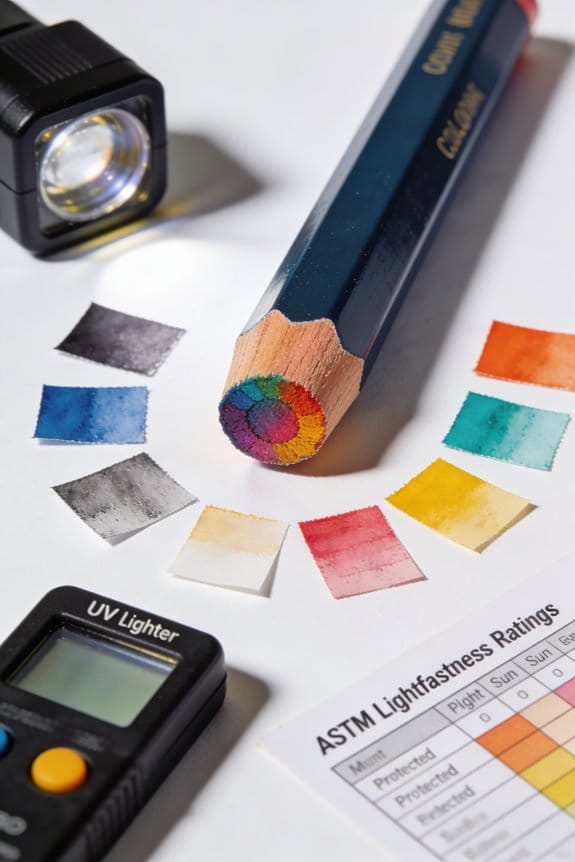
Have you ever finished a colored pencil drawing, only to find that it fades over time? That’s where lightfastness comes in. It’s all about how well those colored pencils resist fading when they’re exposed to light. If you want your artwork to stay vibrant and true to its original colors, knowing about lightfastness is essential.
The pigments in your colored pencils play a huge role in their lightfastness. Generally speaking, pigments are much better than dyes when it comes to maintaining color over time. When shopping for colored pencils, you’ll often find lightfastness ratings on the packaging. These can help you choose wisely.
Did you know that the Blue Wool Scale is one of the best tools for measuring lightfastness? It tells you how stable a pencil’s colors are under UV light. When you get high-quality colored pencils, you can expect them to hold their color beautifully for decades. On the flip side, lower-quality ones might start fading within just a few months.
So, why does this matter? If your artwork is intended for clients or even just for yourself, you want it to last, right? Understanding lightfastness gives you peace of mind that your artistic expressions will stick around for the long haul.
In short, being aware of lightfastness can truly protect your hard work. Additionally, selecting pencils with soft cores can improve layering and blending, which complements the lasting color quality provided by lightfast pigments. Next time you’re picking out colored pencils, keep these tips in mind. What’s your go-to brand for colored pencils?
Measuring Lightfastness: Techniques and Standards
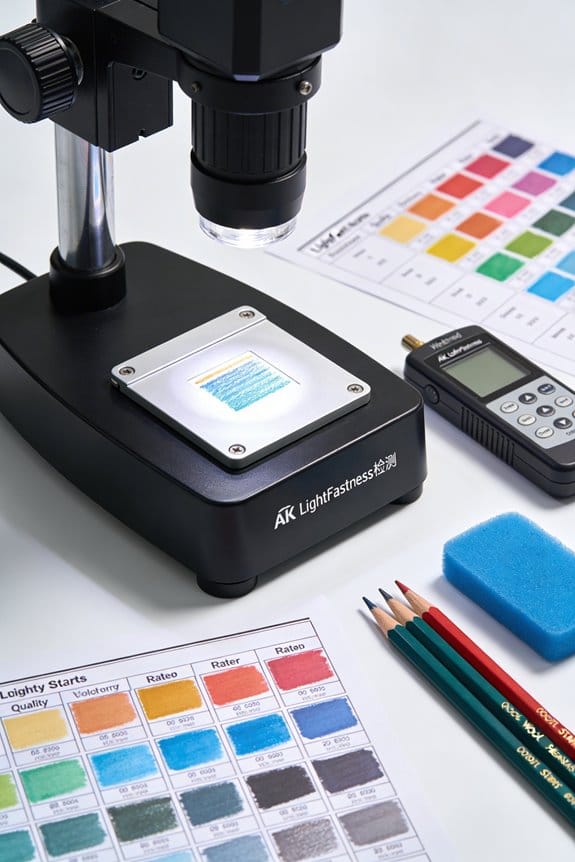
Measuring lightfastness can feel a bit daunting, but it’s super important if you want your artwork to last. Ever wonder how you can ensure those vibrant colors stay just as bright years down the line? Two methods that are popular among artists are ASTM D6901 and the Blue Wool Scale.
ASTM D6901 is pretty technical—it uses a xenon arc lamp that mimics sunlight and measures how colors shift under this light with a spectrophotometer. This approach gives a precise lightfastness rating which can be quite helpful. On the flip side, the Blue Wool Scale is simpler. It rates resistance to fading with levels from BW1 to BW8, so you can quickly see how your colors measure up.
If you’re looking for a practical way to test lightfastness, here’s the trick: take swatches of colored pencils on archival paper and expose them to sunlight for about six months. Keep an eye out for changes in color, specifically looking for a Just Noticeable Fade threshold (you’ll want to note a ΔE greater than 4). So, why does this matter? It can save you from disappointment years later when your artwork doesn’t look quite like you intended.
Understanding brush durability is similarly crucial when selecting art supplies, as it ensures longevity and consistent performance in your creative tools.
In the end, both methods have their strengths and can be useful depending on your needs. It’s all about finding the right balance that suits your artistic style. What have you found works best for preserving your art?
Recommended Products

FEATURES Four removable trays reveal the 100 colours of Luminance 6901, including nine duplicate shades, two blender pencils and one full blender, for a total of 112 pieces. Pencils feature a soft, creamy wax-based core and unmatched lightfastness

BOX OF 100 colours & 1 full and 1 pencil blender, also available in 100 individual colours as well as boxes of 20, 40, 76 and as a Wooden presentation box of 76
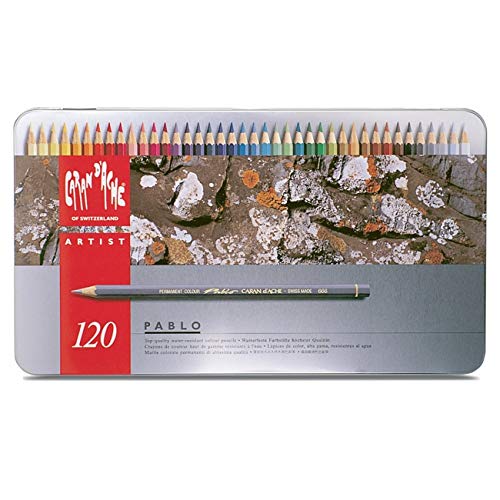
Creamy - soft - water-resistant
Exploring Lightfastness Testing Methods
Have you ever spent hours perfecting a piece of artwork, only to have it fade over time? It’s a real concern for artists who want their creations to last, and the good news is that there are some pretty straightforward testing methods for lightfastness that you can try.
One of the most established methods is the ASTM D6901 test. It uses a xenon arc lamp to mimic natural sunlight exposure. After the test, colors are rated on a scale from I to V, with I being the best at resisting fading and V being the worst. If you’re looking for a reliable way to check your materials, this might be the route to go.
Another helpful tool is the Blue Wool Scale. This scale has eight strips of dyed wool that fade at different rates. For instance, BW1 fades super quickly, while BW8 can hold onto its color for up to 18 months in light. Just imagine knowing how your colors stack up against this scale!
For the hands-on artist, personal testing can also be valuable. You could take colored pencil swatches, expose them to sunlight, and monitor them over six months. Keep an eye out for Just Noticeable Fade (JNF), which happens when the color changes exceed a ΔE of 4. That level of fading can be pretty significant and is something you definitely want to avoid in your work.
So, why does all this matter? Understanding lightfastness can really help you choose the right materials for your art, ensuring that your creations look great for years to come. Using colored pencils with lightfast pigments is especially important for preserving the vibrancy of your artwork over time.
Recommended Products

Ultra fine pigments are used at high concentrations. Rich and vibrant colors, solid coloring and excellent lightfastness

High lightfastness and smoothness

Beautifully Pigmented - The premium colored pencils in this set boast a vibrant, 4mm oil-based lead that provides smooth, effortless strokes of color, an encased in lacquered cedar for style and longevity
Choosing the Best Lightfast Colored Pencils
Choosing the Best Lightfast Colored Pencils
When you’re diving into colored pencils for your art, you want them to be not just colorful, but also tough enough to stand the test of time. So, which brands should you consider? Caran d’Ache and Derwent are among the top names you’ll come across. These brands take lightfastness seriously, using ASTM D6901 testing. Many of their colors score at lightfastness levels I or II, which is pretty impressive.
Take Caran d’Ache’s LUMINANCE 6901 collection, for example. It boasts 81 stunning colors that are rated I. This means you can trust them to stick around for the long haul, so your artwork will look great for years to come. When you’re picking your pencils, don’t overlook the pigment concentration. Higher concentrations mean better lightfastness and more vibrant colors.
Honestly, if you’re serious about art—a professional or even a passionate hobbyist—artist-grade pencils are a must. They help keep your work looking sharp over time. If you’re wondering why lightfastness ratings matter, just think about all the effort you put into your pieces. The last thing you want is for them to fade!
To get the best picks for your projects, take a look at the Blue Wool Scale. It’s a handy tool for evaluating lightfastness ratings. Additionally, using non-toxic formulations in your art supplies ensures safe indoor use while maintaining high-quality results.
Recommended Products

Holbein Artists’ Colored Pencil 30th Anniversary Wood Box Set - Set of 150, 30th Anniversary Wood Box

Albrecht Dürer Artists' Watercolor Pencils are available in 120 colors that are part of a unique color matching system - encompassing all Faber-Castell Art & Graphic products. They contain the highest quality pigments of unsurpassed lightfastness and brilliance, which is rated on each pencil. Thick 3.8mm break-resistant and fully water-soluble leads, can be easily blended when wet and become permanent when dry for rich watercolor effects. Available as individual pencils or in various assort

Use hexagonal pencils wet or dry
Best Practices for Protecting Your Artwork From Fading
Are you concerned about your artwork losing its vibrancy over time? It’s a real issue that can happen if we’re not careful. Here are a few practical tips to help keep your precious pieces looking fresh.
First off, consider where you display your art. You should always place it away from direct sunlight and harsh UV light. Prolonged exposure can seriously wash out those stunning colors you love. Another smart idea? Frame your artwork with UV-protective glass. It’s an easy way to block those harmful rays and can make a significant difference in preservation.
Want to add an extra layer of defense? Think about applying UV varnish over your finished works. This can create a sturdy barrier against fading and keep environmental damage at bay. When it comes to storing your artwork, keep it in a cool, dark, and dry place. Doing so is crucial for maintaining its color integrity.
And hey, don’t forget to change up your displayed pieces from time to time! Regularly rotating your art minimizes light exposure, which helps to lessen the risk of fading.
Additionally, using a non-yellowing finish can preserve the true colors of your artwork without discoloration over time.
Following these simple practices will help ensure your artwork remains beautiful for many years to come. So, what steps will you take to safeguard your cherished creations?
Recommended Products

【All-Weather Durability】Crafted with UV-resistant resin wicker and rustproof steel framing, this modular sofa set thrives in sun, rain, or snow. The weatherproof construction resists fading, cracking, and corrosion, ensuring long-lasting performance in any season. Cushion and pillow fabrics can shake off splashes or drizzle easily, but use the included waterproof cover during heavy rain or extended outdoor storage to maximize protection.

Bulk Pack of 100 for Large Projects: Ideal for art exhibitions, retail setups, and educational purposes, offering extensive coverage for various framing needs.
【All-Weather Durability】Crafted with UV-resistant resin wicker and rustproof steel framing, this modular sofa set thrives in sun, rain, or snow. The weatherproof construction resists fading, cracking, and corrosion, ensuring long-lasting performance in any season. Cushion and pillow fabrics can shake off splashes or drizzle easily, but use the included waterproof cover during heavy rain or extended outdoor storage to maximize protection.
Recommendations for Reliable Art Material Brands
Have you ever noticed that your colored pencils just don’t hold up over time? Finding the right art materials can really affect how your artwork lasts, and it’s essential to choose wisely, especially when it comes to colored pencils.
Try this: look for brands that are known for their lightfastness ratings. Caran d’Ache has the LUMINANCE 6901 collection, and they’re not messing around. With 81 colors rated Lightfastness I, you can count on these bad boys to keep your pieces vibrant for a long time. Faber-Castell’s POLYCROMOS pencils are another solid choice. Their oil-based formulation really ups the durability and lightfastness, giving you peace of mind. Then there’s Derwent’s Lightfast range, which also boasts an impressive Lightfastness I rating, meaning minimal color fading with time.
So, why does this matter? When you’re out picking colored pencils, make sure the packaging has clear lightfastness ratings. Transparency like that helps you choose reliable products to preserve the quality of your artwork for years to come. Caran d’Ache’s use of high lightfastness pigments ensures artists achieve both vivid color and long-lasting results.
In the end, it’s all about making sure your art remains as beautiful as the day you created it. What are your go-to colored pencil brands?
Recommended Products

Polychromos Artists' Color Pencils are available in 120 colors that are part of a unique color matching system - encompassing all Faber-Castell Art & Graphic products. They contain the highest quality pigments for unsurpassed lightfastness, which is rated on each pencil. They have a buttery smooth color laydown and can be easily blended for layered effects, highlights and transitions. Thick 3.8mm leads are break and water-resistant, smudgeproof and provide permanent, rich color. Provides sh

Derwent Lightfast pencils are formulated to be 100% lightfast, meaning that the core is resistant to colour change and will not change for up to 100 years under museum conditions

Holbein Artists' Colored Pencils - Set of 50, Cardboard Box, Pastel Tones
Frequently Asked Questions
What Is the Lightfast Rating of Prismacolor?
Prismacolor lightfastness levels vary, with many colors experiencing Prismacolor color fade over time. Based on Prismacolor artist experiences, we find that these pencils often lack the archival quality needed for professional work compared to other products.
Which Is Darker, a #2 or a #3 Pencil?
A #2 pencil’s typically darker than a #3, making it preferred for shading techniques. When we consider pencil hardness and color intensity, it’s clear #2’s ideal for various art applications and creating bold lines.
Is Lightfastness 2 Good?
Yes, Lightfastness 2’s good for our art! It provides decent fading resistance and color stability, essential for art preservation. We should appreciate its importance while considering material quality for long-lasting creations.
What Are the Lightfastness Ratings for Colored Pencils?
Lightfastness ratings for artist grade pencils come from lightfastness tests, with higher ratings ensuring less color fading. We should consider testing standards like ASTM and Blue Wool Scale for longevity comparisons when choosing colored pencils.


