As an Amazon Associate, we earn from qualifying purchases. Some links on this site are affiliate links at no extra cost to you. Our recommendations are based on thorough research and editorial judgment.

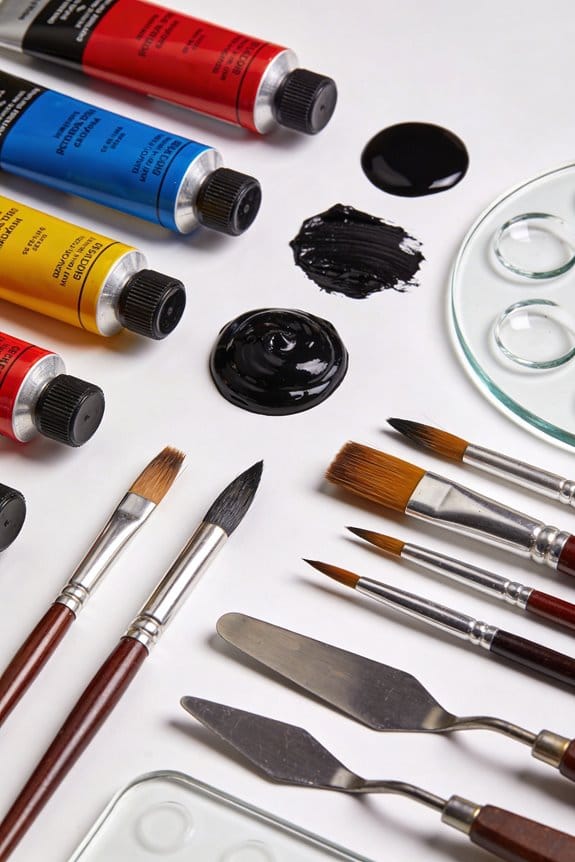
Why Mixing Black Can Be Better Than Buying Black Paint

Mixing our own black paint can be better than buying tube black because it allows us to create unique shades with depth. Tube blacks often appear flat and may include unwanted blue tints. By mixing colors like Ultramarine Blue and Burnt Sienna, we can achieve rich, vibrant blacks. Transparency in colors such as Raw Umber adds complexity. Plus, blending complements helps us explore creative possibilities and enhance our artwork. Let’s explore how to mix these custom dark tones effectively.
Key Takeaways
- Mixing your own black paint creates richer, more complex dark shades that enhance the depth of your artwork.
- Custom mixes allow for unique color combinations, fostering creativity and personal expression in your painting.
- Tube blacks often appear flat and can disrupt the balance of artwork, while mixed blacks can promote harmony.
- Experimenting with dark colors through mixing helps develop a personalized palette and refines your artistic style.
- Custom blends can offer more vibrancy and intensity compared to standard store-bought black paints.
Why Mixing Your Own Black Paint Is Beneficial
You may be interested

Mixing your own black paint is an exciting way to elevate your artwork. Have you ever felt like black from a tube just doesn’t cut it? By blending different colors to make black, you can create vibrant, custom shades that add depth and complexity to your pieces.
For example, mixing in colors like phthalo blue can give you a cool, rich black that works wonders for shadows. This process might seem small, but it encourages you to play with unique combinations. Why stick to straight black when you can mix in hues that resonate with your artistic style?
Art instructors often suggest creating blacks through color mixing. This approach leads to more personal touches in your work, making it truly your own. You’ll find that adjusting the amount of black lets you find that perfect shade that’s dark without feeling lifeless or harsh.
The best part is, custom mixed blacks help soften the severity of tube blacks. This means your artwork gains a more harmonious feel overall. Plus, it’s a fantastic way to boost your color mixing skills. So, are you ready to experiment?
Using a large acrylic paint palette can enhance your mixing experience by providing ample space for blending multiple colors smoothly.
In the end, mixing your own blacks not only enhances your artistry but also gives your pieces a unique flair. So, why not give it a shot?
Drawbacks of Tube Black Paint
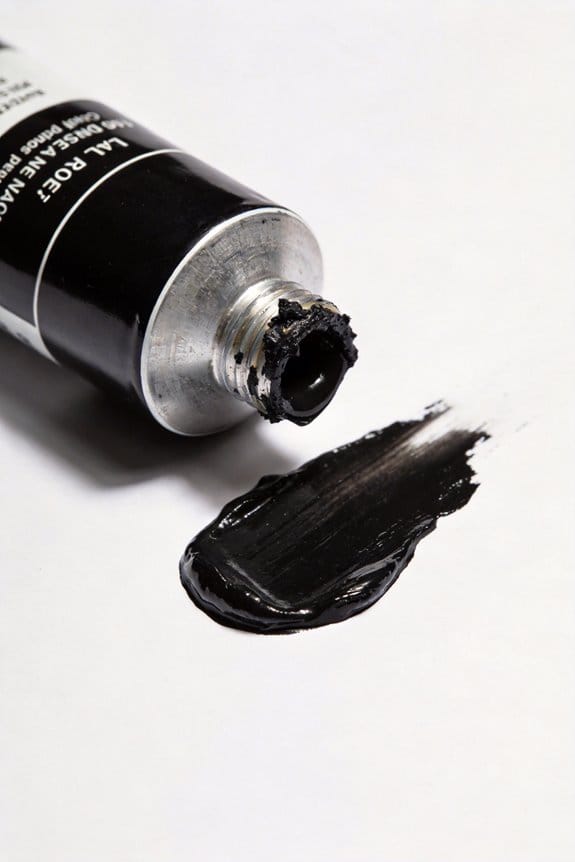
Have you ever noticed how tube black paint can sometimes make your artwork look a bit flat? While it sounds great to grab a tube and go, relying only on pre-mixed blacks can lead to some significant issues. Those tube blacks often lack the vibrancy you’d get from mixing your own shades. Plus, some have a blue tint that can mess with your colors—turning a bright yellow into an unexpected green, and nobody wants that.
Another downside of using tube black is the depth. It can feel like something’s missing in your piece without mixing in other colors to create that richness and dimension. When you rely too heavily on just one shade, like black, it can easily overpower your work, throwing off the balance you’re trying to achieve. So, why does this matter? Limiting yourself to one color stifles your creativity and limits your understanding of how colors interact.
Try this: experiment with mixing blacks using primary colors or other dark hues. You might surprise yourself with the results! Embracing these techniques not only enhances your artwork but also makes color mixing an enjoyable part of your process. Additionally, understanding the pigmentation quality of your acrylic paints can help you create deeper, more nuanced blacks.
To sum it up, while tube black may be convenient, mixing your own variations leads to richer, more dynamic art. Have you given mixing a try yet?
How to Create Beautiful Dark Colors From Your Palette
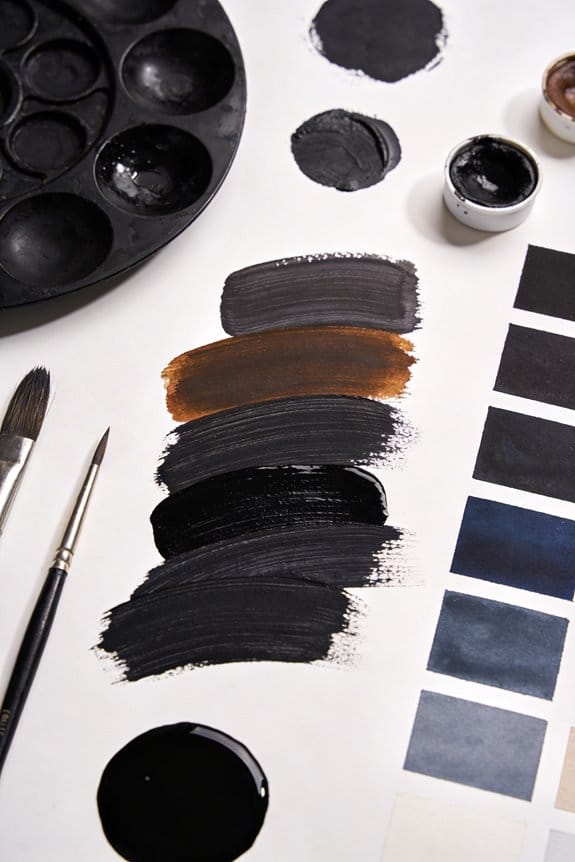
Creating dark colors from your palette can really add depth and character to your artwork. Have you ever wondered how to achieve those stunning, rich tones? Mixing complementary colors is a solid way to start. For example, mixing ultramarine blue with burnt sienna gives you some lovely dark hues.
Adjust the ratios to play with warmth and coolness in your mixes. If you want a cooler vibe, lean more toward ultramarine. On the flip side, adding more burnt sienna will warm things up. It’s all about finding the balance that suits your artistic vision.
Also, think about incorporating transparent colors. Using options like transparent red or blue can add a whole new layer of depth to your mixes. The best part is that mixing these colors doesn’t just give you dark shades; it opens up a world of possibilities for layering and creating interesting textures in your work.
Keeping track of your mixing outcomes is a smart move. You’ll develop a personalized palette of dark colors that reflects your artistic style perfectly. So, the next time you pick up your brushes, remember these tips to help you create unique shades that harmonize throughout your piece.
Honestly, experimenting with dark colors can be such a fun part of the creative process. Have you started mixing your own shades yet? Using an acrylic flow medium can also help improve the smoothness and blendability of these mixed colors in your artwork.
Simple Techniques for Mixing Custom Dark Tones
Finding the right dark tones can be a bit tricky, right? Mixing dark colors can really elevate your artwork, so let’s dive into some practical tips. For instance, combining Ultramarine Blue with Burnt Sienna is a solid way to create a rich black that adds a lot of depth to your pieces. If you’re feeling adventurous, try mixing Phthalo Green with Alizarin Crimson; if you add more Alizarin, it’ll create a warm tone, while Phthalo Green keeps things cool.
Ever thought about using transparent colors, like Raw Umber? They can help you achieve some lovely translucent darks without that flat, lifeless look you often get from pure black paint. Keeping a log of your mixing techniques is super helpful, too. You’ll want to document your experiments so you can tweak things to fit your style more exactly. This kind of trial and error can really help you find your rhythm.
So, why is this worth your time? Mixing dark tones not only expands your color palette but also enhances harmony in your artwork. It allows for a unique expression that really speaks to who you are as an artist. Using high-quality pigments from finely ground pure pigments can also improve the vibrancy and depth of your mixed dark tones.
Next time you’re in the studio, try out these mixing strategies. That little extra effort could completely change how your pieces come together. What dark tones are you excited to mix?
Common Misconceptions About Using Black Paint
Have you ever thought about why some artists steer clear of black paint? It comes down to a few common misconceptions. A lot of folks think black can make their artwork look muddy, but there’s a better way to approach it. Mixing dark tones from complementary colors can actually bring out vibrant effects that you might not expect.
There’s this myth that adding black to your palette automatically leads to grim or dull artwork. But that couldn’t be further from the truth! Exploring a variety of tonal ranges can really elevate realism and drama in your pieces. And then there’s this idea that “real artists” just don’t use black at all. The truth is, many successful contemporary artists embrace black to control color intensity and add depth through shadows.
Honestly, some people even believe that black paint is crucial for creating shadows. Here’s the trick: you can mix complementary colors to achieve a richer, more interesting black! Not only does this method provide more depth, but it also reflects the unique relationships you’ve built in your color palette.
It’s worth considering that store-bought black paints often lack the vibrancy that custom mixes can offer. So, why does this matter? Because your choice of colors can really define your artistic style. In summary, don’t shy away from black paint; make it work for you in a creative way. What do you think—are you ready to experiment with some darker mixes? Plus, understanding paint consistency can help you blend colors more effectively for the desired depth.
Frequently Asked Questions
What Is the Effect of Adding Black to a Color?
When we add black to a color, it impacts color depth and saturation, creating shading effects that enhance emotional response. Through hue mixing and thoughtful design balance, we achieve visual contrast and richer artistic perception.
Why Don’t Painters Use Black?
We don’t use black because it often compromises our color selection and visual harmony. By understanding pigment properties and color theory, we create more dynamic shading effects that enhance our artistic expression and mood influences in painting techniques.
Why Is Black the Most Powerful Color?
In modern art, we see how black’s psychological impact evokes strong emotional responses, symbolizing power and sophistication. Its light absorption enhances visual aesthetics, making it a focal point in fashion trends and interior design.
Will Painting the Wall Black Really Make It Hotter?
Yes, painting walls black can indeed make them hotter. The heat absorption and paint reflectivity play essential roles, impacting our interior climate, energy efficiency, and design aesthetics—especially under direct sunlight and various environmental factors affecting thermal dynamics.


