As an Amazon Associate, we earn from qualifying purchases. Some links on this site are affiliate links at no extra cost to you. Our recommendations are based on thorough research and editorial judgment.

The Science of Granulation in Watercolor Painting

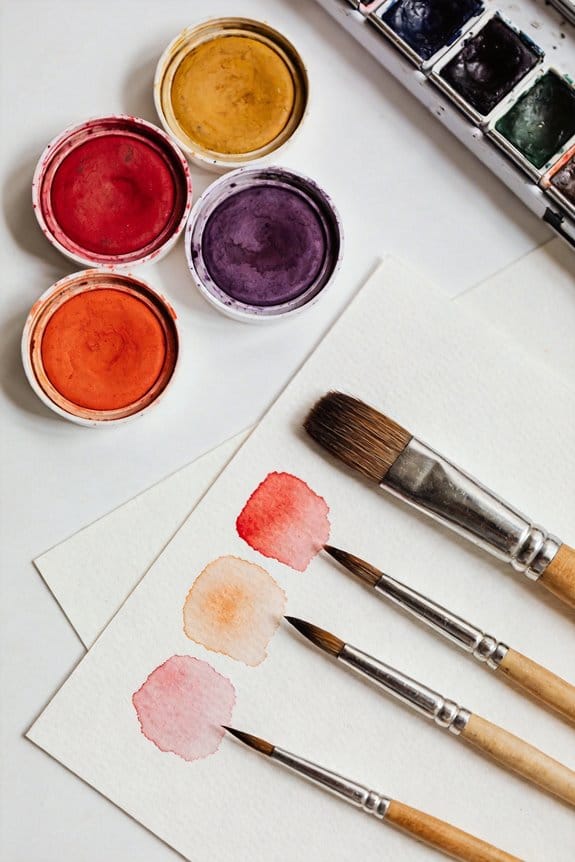
Granulation in watercolor painting is a technique that creates beautiful, mottled textures. It happens when heavier pigment particles clump together on the paper, often enhanced by rougher surfaces. Coarse pigments like Ultramarine and Cobalt produce stronger effects. The right amount of water is essential; too much can disperse pigments too widely, while less allows them to settle into textures. Experimenting with different pigments, water ratios, and paper types can lead to exciting discoveries in your artwork. If you stick around, you’ll find even more tips on enhancing your granulation techniques!
Key Takeaways
- Granulation occurs when pigment particles clump together, creating unique textures in watercolor paintings.
- Coarser inorganic pigments, like earth tones, enhance granulation effects compared to organic pigments.
- Paper texture and weight significantly influence granulation visibility; rough or heavy papers yield better results.
- The amount of water used affects granulation; more water can enhance the formation of pigment clusters.
- Experimenting with different pigments, brands, and layering techniques is essential to achieve desired granulation effects.
What Is Granulation in Watercolor Painting?
You may be interested


Ever looked at a watercolor painting and wondered how some artists achieve those stunning textures? Granulation is a pretty cool effect that happens when pigment particles clump together, giving your artwork a unique, mottled look. This effect is more pronounced with coarser and heavier pigments—think traditional earth tones, Ultramarine, and Cobalt.
To really kick up the granulation in your work, consider the paper you’re using. A rougher texture can make those textures pop, so don’t shy away from experimenting. And let’s talk water—adjusting how much you use can influence the final look.
One tip? Layering different colors can enhance the granulating effect even further. Mixing granulating pigments with non-granulating ones can create a depth that draws the viewer in. So, why does this matter? Because understanding these elements gives you the power to create stunning visual textures in your paintings.
In the end, granulation can add a delightful dimension to your artwork. Selecting the right watercolor paper type can also significantly impact how granulation appears on your work. So, what textures are you excited to try in your next painting?
Understanding Pigment Properties Impacting Granulation
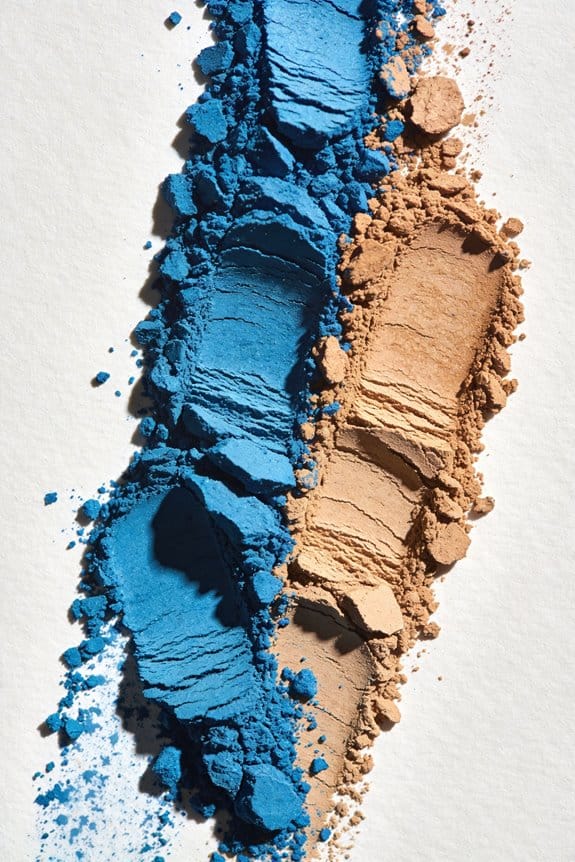
When you’re trying to create those stunning textures in watercolor, figuring out how pigments work can really make a difference. Granulation comes down to the size of the pigment particles; bigger particles tend to give you that intense granulation effect. In general, inorganic pigments, like earth tones, really show off this trait compared to organic pigments, which usually blend more smoothly.
Try this: mix your watercolors with a higher ratio of water to pigment. This way, the pigments can sink into the paper’s texture better, enhancing that granulating look you might be after. And let’s not forget about the paper you choose. Using rough-textured paper can create little nooks for the pigments to gather, making those textural effects stand out even more.
So, why does this matter? Because granulation can vary between different brands, even if you’re using the same pigment. It’s worth experimenting with various manufacturers to discover which ones produce the granulating effects that complement your style.
Truth is, finding the right combination might take some time, but that’s part of the fun of watercolor! Keep playing around with different pigments and papers, and see what works best for you. What textures are you hoping to achieve in your next painting?
Additionally, selecting watercolors with high pigment concentration can significantly improve the vibrancy and granulation of your artwork.
The Role of Water in Creating Granulation Effects
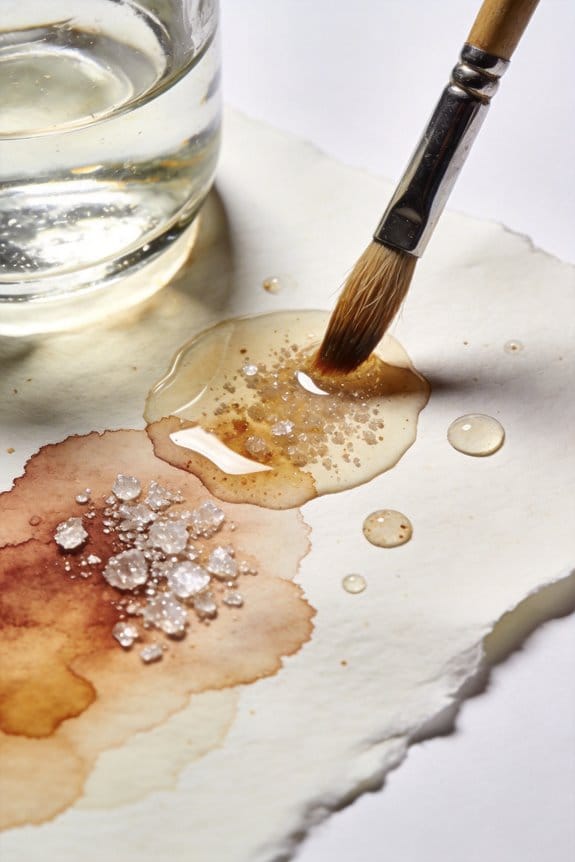
Ever notice how your watercolor paintings can look so different depending on how much water you use? The truth is, the amount of water can really change the granulation effects in your artwork. When you add more water, the pigment particles get dispersed unevenly, which means they settle nicely into the nooks and crannies of your watercolor paper. This is where the magic happens; you’ll start to see those larger pigment clusters forming that create that gorgeous mottled effect we all want.
You might be surprised to learn that hard water can give you a boost in granulation. The minerals in hard water react with your pigments, making the granulation stand out more compared to using distilled water. Give it a shot sometime and see if you notice the difference!
Plus, there’s a little trick that can enhance your results even further. Applying granulating paints in multiple wet layers allows the pigments to separate and settle even more, boosting that beautiful texture. By just playing around with the amount of water and whether it’s hard or soft, you can really dial up the visibility and intensity of granulation in your paintings.
So, why does this matter? If you’re aiming for that stunning, layered look in your watercolor art, keeping an eye on your water use is key. Next time you paint, think about experimenting with different water volumes. You might just discover a new favorite technique!
Using high-quality pigments specifically designed for watercolor paints can further enhance the granulation effects by providing better pigment separation and vibrancy.
Selecting Paper for Optimal Granulation
Selecting the right paper can seriously impact how your watercolor paintings turn out. Want that beautiful granulation effect? It’s all about the texture. Choose cold press or rough paper—they’re perfect for letting pigments settle into those tiny wells, creating gorgeous visual textures.
Weight matters, too. Papers between 190 lb and 300 lb (or 640 gsm to 800 gsm) can handle more water without buckling. This means better diffusion and smoother results. But think about what you want: less absorbent papers will give you sharper granulation contrasts, while more absorbent ones lead to softer finishes.
So, why does all this matter? The difference can elevate your work from good to stunning. Try experimenting with different brands and types of watercolor paper, and mix in various water application methods. You might find some unique granulation results that really cater to your artistic style.
In the end, choosing the right paper is key to achieving the look you want. Have you gotten the granulation effects you dream of? Why not grab some different papers and give it a go?
Also, consider using 100% cotton watercolor paper for superior absorption and longevity to enhance these effects.
Recommended Products

Premium Quality: The New York Central Watercolor Block is made on a slowly rotating cylinder mould, ensuring the best watercolor paper quality; It is ideal for both wet and dry media

Versatile Surface Options: New York Central Watercolor Paper offers rough, cold, and hot pressed surfaces; This 100% cotton watercolor paper is ideal for watercolor, gouache, ink, and fluid acrylics

Prized Paper - The long fibers in Arches natural white 100% cotton watercolor paper provide timeless beauty and an inimitable touch; this rich water color paper for artists is available in 2 sizes and 3 revered textures: cold press, hot press and rough
Techniques to Amplify Granulation Effects
Ever find yourself struggling to add some texture to your watercolor paintings? If so, you’re not alone. Granulation effects can take your work from average to absolutely captivating. Here are some practical ways to amp up those textures and make your artwork stand out.
To start, consider switching to rough or textured watercolor paper. This paper isn’t just a gimmick; it creates little wells where pigments can settle in interesting ways. Trust me, this small change can make a big difference in how your colors interact.
You might want to play around with how much water you mix with your paints. Adding more water will help pigments spread out, which can lead to those beautiful granulated effects when everything dries. And don’t forget about pigments themselves! Granulating colors like Ultramarine Blue paired with non-granulating ones can yield some really unique results.
Here’s the trick: sprinkle a bit of salt onto your wet paint. It sounds odd, but salt absorbs moisture and helps to create those eye-catching textures. Just make sure to wait until the paint is still wet, or it won’t work as well.
Layering also works wonders. Apply your washes and let each layer dry completely before adding more. This process doesn’t just build texture; it also deepens the tones in your piece. The best part? You’ll see how each layer adds to the overall visual experience.
Using different brush sizes can enhance granulation effects by allowing you to experiment with both detailed and bold textures throughout your painting.
Recommended Products


Prized Paper - The long fibers in Arches natural white 100% cotton watercolor paper provide timeless beauty and an inimitable touch; this rich water color paper for artists is available in 2 sizes and 3 revered textures: cold press, hot press and rough

Prized Paper - The long fibers in Arches natural white 100% cotton watercolor paper provide timeless beauty; this rich paper is available in 13 sizes and 3 revered textures: cold press, hot press and rough
Top Granulating Pigments to Create Unique Textures
Are you looking to add some unique textures to your watercolor paintings? It’s all about choosing the right pigments. Granulating colors like ultramarine blue and burnt sienna have larger particles that create those eye-catching textures on your paper. Earth pigments, like Goethite (Brown Ochre) and Buff Titanium, are fantastic for giving your work a natural feel, perfect for those nature-inspired pieces. And let’s not forget about Cobalt Green. It adds rich tones and has a beautiful granulation effect that’s hard to beat.
Want to enhance that texture? Try using a rough textured paper, and don’t skimp on the water. This combination boosts the pigment’s clumping behavior, making those unique textures pop even more. Plus, blending transparent colors, like Transparent Red Oxide, with your granulating pigments can give your artwork extra depth, ideal for capturing the essence of rust or lush foliage.
So, why does this matter? Because adding texture can turn your paintings from ordinary to extraordinary. You’ve got the tools at your disposal—experiment a little! The best part is that every choice brings something different to the table. Using water-based, blendable ink in your brush pen work can also complement granulated watercolor effects by adding vivid accents and smooth transitions.
In a nutshell, mix these pigments wisely, and you’ll create stunning effects that bring your visions to life. What textures are you excited to try in your next painting?
Recommended Products

Schmincke Horadam Aquarell Watercolor Pans - Set of 50, Wood Case, Super Granulation Colors, Half Pans

🎨 THE BRAND: Schmincke has been producing the best, finest artists' colors Made in Germany since 1881 and they are available in over 60 countries. The range includes watercolors, acrylics, oil colors, pastels, gouache colors, airbrush colors and much more.

Holbein Artists' Watercolor - Assorted Colors, Set of 60, 5 ml
How to Fix Common Granulation Problems
Are you struggling with uneven granulation in your watercolor paintings? It can be frustrating when that beautiful texture turns out all wrong. A few simple fixes can make a world of difference.
Try this: switch to cold press or rough paper. They really help bring out texture more than smooth surfaces. If you find your granulation is way too intense, consider using less water. Too much can lead to excess pigment settling and a look you didn’t want.
Mixing granulating pigments with non-granulating ones can be a lifesaver. This combo gives you control over the texture while still keeping things visually interesting. Have you thought about drying times? Slower drying enhances granulation, while quicker drying can tame it down a bit, depending on what you’re aiming for.
Another tip: use distilled water instead of hard water. Hard water can lead to more pigment clumping, so this small change can really improve your results.
Additionally, selecting watercolor papers with the right weight and texture, such as 140 lb cold press paper, can significantly influence how granulation appears on your artwork.
Truth is, these tweaks can help you get the smoothness you’re looking for. Which one will you try first?
Recommended Products
Prized Paper - The long fibers in Arches natural white 100% cotton watercolor paper provide timeless beauty and an inimitable touch; this rich water color paper for artists is available in 2 sizes and 3 revered textures: cold press, hot press and rough
Artists Love Canson XL! Trusted for decades by students, hobbyists, and art teachers thanks to dependable composition, high sheet counts and affordable prices

Prized Paper - The long fibers in Arches natural white 100% cotton watercolor paper provide timeless beauty and an inimitable touch; this rich water color paper for artists is available in 2 sizes and 3 revered textures: cold press, hot press and rough
Choosing the Right Granulation Medium
Choosing the right granulation medium can really enhance your watercolor paintings. If you’ve ever struggled to achieve that textured look, you’re not alone! The right medium can boost pigment particle size, which helps them clump together on the paper. This clumping makes pigments settle into the texture of the paper more effectively, giving your artwork a dynamic effect.
Some granulation mediums even come in a spray form, which you can apply directly onto wet paint. This can create some cool texture variation instantly. So, why does this matter? Different brands have different formulations, so it’s a good idea to experiment a bit.
Here are a few tips:
- Try a couple of different brands to see which one works best for you.
- Don’t be afraid to mix things up, especially when working on landscapes or abstract pieces.
By incorporating a granulation medium, you can add depth and interest to your work. Honestly, it can really give those paintings a little something extra. Also, using paints with high-quality pigments can significantly improve the granulation effect and overall vibrancy of your artwork.
Recommended Products

Preparation: Absorbent or semi-absorbent surfaces require no special prep before brushing on DANIEL SMITH Watercolor Ground. These include paper, canvas and other fabrics, wood, plaster, shells and hardboard. Non-absorbent surfaces such as metal, plastic or glass should be lightly abraded with sandpaper or steel wool before brushing on the Watercolor Ground

🎨 THE BRAND: Schmincke has been producing the best, finest artists' colors Made in Germany since 1881 and they are available in over 60 countries. The range includes watercolors, acrylics, oil colors, pastels, gouache colors, airbrush colors and much more.

Water Based Spray Paint 3 Pack
Unique Ways to Use Granulation in Watercolor Painting
Granulation can really bring your watercolor paintings to life in surprising ways. Ever wondered how to add depth and texture to your artwork? Combining granulating pigments like Buff Titanium and Goethite can create those rich, textured backgrounds that make your pieces pop.
Here’s the trick: increase the water when you apply your paint. This encourages the pigments to separate and enhances that granulation effect you’re after. It’s key to let each layer dry completely if you’re working with layering techniques. Doing this can lead to those complex granulation patterns that truly add dimension to your painting.
Also, consider the surface you’re painting on. Using rough-textured paper can amplify the granulation effect since the pigment settles into the uneven surfaces, creating even more interesting textures. And if you’re feeling adventurous, try incorporating salt into your washes. The salt crystals can pull moisture from the pigments, resulting in some dramatic patterns that are just stunning.
For the best results, using Arches Cold Press watercolor paper can enhance granulation due to its slightly textured surface which supports excellent pigment separation and absorption.
Frequently Asked Questions
Can Granulation Be Achieved With All Watercolor Pigments?
Not all watercolor pigments can achieve granulation; it depends on pigment composition and binder effects. We can explore texture variations and color mixing, while also considering our paint application techniques to enhance granulating properties.
How Does Humidity Affect Granulation in Watercolor Painting?
When humidity levels rise, our paints dance like a gentle rain. Higher humidity can prolong drying times, enhance granulating mediums, and influence binder types and pigment concentrations, leading to breathtaking textures we all adore in our work.
Is Granulation Permanent Once It’s Dried?
Yes, granulation’s permanent once it’s dried. We see how pigment settles, creating beautiful color separation and textured effects. Once our watercolor dries, those unique patterns remain, enhancing our artwork’s depth and character for years.
Can Granulation Create a Muddy Appearance in Paintings?
Yes, granulation effects can create a muddy appearance if color mixing isn’t managed well. With careful brush technique and understanding pigment transparency, we can avoid muddiness in our watercolors, ensuring vibrant, clean results using various painting mediums.
How Does Layering Impact the Visibility of Granulation?
Layering techniques can enhance granulation visibility by creating texture variations, with studies showing a 30% increase in color contrast. With careful attention to paint transparency, we can beautifully showcase those unique granulation effects.


