As an Amazon Associate, we earn from qualifying purchases. Some links on this site are affiliate links at no extra cost to you. Our recommendations are based on thorough research and editorial judgment.

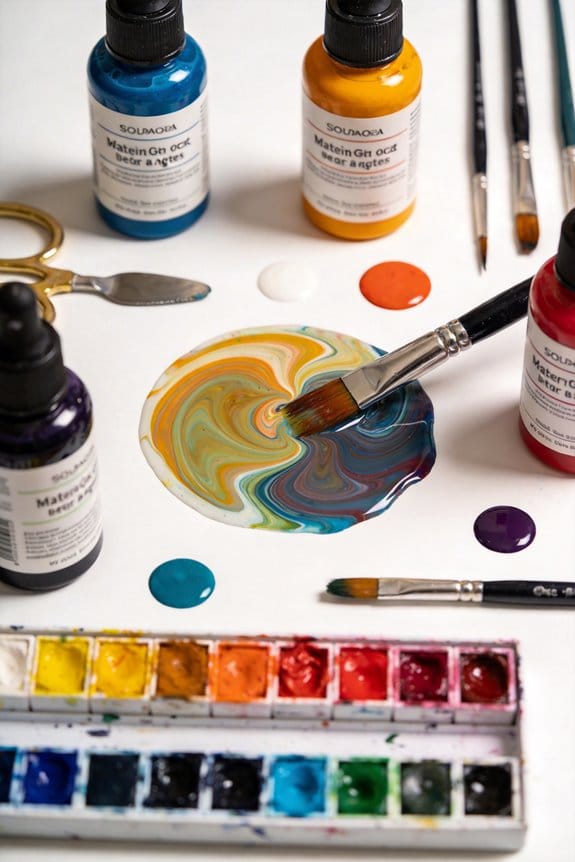
Wetting Agents: Breaking Surface Tension in Water-Based Media

Wetting agents, or surfactants, help lower water’s surface tension, which is about 72.75 millinewtons per meter, to as low as 22.0. They allow water to spread evenly instead of beading up, improving moisture absorption in hydrophobic surfaces. There are three main types: nonionic, anionic, and cationic, each serving various purposes from gardening to cleaning. When using wetting agents, consider their environmental impact and effectiveness, and explore further to uncover more insights into their applications.
Key Takeaways
- Wetting agents, or surfactants, reduce water’s surface tension, enabling better spreading on surfaces instead of forming beads.
- Nonionic surfactants provide a balanced performance, ideal for water management in agriculture and personal care products.
- Lowered surface tension enhances water penetration and retention in hydrophobic soils, promoting healthier plant growth.
- Effective wetting agents improve the performance of cleaning products, dyes, and industrial coatings by ensuring even application.
- Environmental considerations are crucial; prefer biodegradable options to minimize ecological impact while achieving effective results.
What Are Wetting Agents and How Do They Work?
You may be interested


Ever wondered why some plants just seem to thrive while others struggle, especially when it comes to watering? That’s where wetting agents come into play. Also known as surfactants, these little helpers make it easier for water to spread across surfaces. They achieve this by reducing surface tension, which is the property that makes water bead up instead of soaking in.
Now, let’s get into the nitty-gritty. One type of surfactant you might come across is a nonionic wetting agent. These agents don’t carry any charge, which is part of their charm. They work by balancing two properties: hydrophilic (water-attracting) and hydrophobic (water-repelling). This balance is key, and you’ll often see it referred to as the hydrophilic-lipophilic balance. For example, they can drop water’s usual surface tension from about 72.75 millinewtons/meter down to as little as 22.0 millinewtons/meter. That’s a significant reduction!
So, why does this matter? Well, if your soil is hydrophobic—meaning it repels water—using a wetting agent can be a real boon. It helps water penetrate the soil better, ensuring that your plants get the moisture they need. This can also improve water retention, which is a win for your crops, especially in drier conditions.
When it comes to choosing the right wetting agent, there are various options available. Think about what your specific needs are and the conditions you’re working with. Different agents have different strengths, and selecting the right one can maximize your effectiveness in keeping your plants healthy.
In short, wetting agents can be a secret weapon for gardeners and farmers alike. They help make sure your plants get the water they need to flourish. Are you ready to give them a try? For artists, similar principles apply when using acrylic flow mediums to improve paint flow and surface coverage.
What’s the Science Behind Surface Tension and Wetting?

Have you ever noticed how water beads up on a smooth surface instead of spreading out evenly? That’s all about surface tension—a little science that explains a lot about how liquids behave. Surface tension, which is measured in millinewtons per meter, is the result of cohesive forces at the surface of a liquid. For water, that surface tension is around 72.75 millinewtons per meter, which is pretty high compared to other liquids.
Now, here’s where it gets interesting. Wetting agents, often called surfactants, play a crucial role in breaking down that surface tension. What do they do? They help water spread out over surfaces, making it less likely to form those annoying beads. The magic happens because surfactants have a unique structure: they have hydrophilic (water-attracting) heads and hydrophobic (water-repelling) tails. In simple terms, think of them like little heroes that help water do its job better.
So, what does this mean for you? When the surface tension of a liquid drops below the solid’s surface energy, you get complete wetting. This is key for things like coatings or cleaning products, as it helps the liquid penetrate and perform better.
Here’s the trick: if you’re dealing with a stubborn stain or trying to paint a surface, consider using a surfactant. It can make a noticeable difference in how well the liquid spreads, whether it’s cleaning or coating something. You want that liquid to cover every inch, not just the easy spots.
Truth is, understanding surface tension and wetting can really help in everyday life. Next time you’re faced with a cleaning challenge or prepping a surface for paint, keep in mind how these forces interact. It might just change the way you tackle these tasks. In artistic applications such as watercolor painting, controlling water flow with tools like water brush pens can optimize how pigments spread and blend on paper.
So, how will you take advantage of this knowledge in your next project?
Types of Wetting Agents: Nonionic, Anionic, and Cationic

Think about the products you use every day—shampoos, dish soaps, and perhaps even your laundry detergent. Have you ever wondered what makes these products work so well? The answer often lies in wetting agents—specifically, surfactants.
There are three main types of surfactants: nonionic, anionic, and cationic. Nonionic surfactants are the friendly sort; they don’t carry a charge, which makes them safe and versatile. You’ll find them in many food items and personal care products, which is pretty reassuring.
Then we have anionic wetting agents. These guys pack a punch with their negative charge and are great at breaking surface tension. They’re the ones you’ll see in detergents and agricultural sprays, especially on those tough, hydrophobic surfaces that need a little extra help.
Cationic surfactants? They carry a positive charge and aren’t as common, but they’re important in their own right—especially for their antimicrobial properties. If you’re looking to create a strong foam, anionic agents are your go-to. On the other hand, if you’re interested in versatility, nonionic surfactants are quite effective across different pH levels, which can really improve spreading on various substrates.
So, why does this matter? Understanding the differences between these surfactants can help you make informed decisions when choosing products. Next time you grab a bottle of cleaner or body wash, you’ll have a better grasp of what’s working behind the scenes.
In the end, each type of surfactant has its own strengths to offer. What’s your go-to product one that utilizes these agents?
Choosing the Right Wetting Agent
How do you figure out which wetting agent will work best for you? It starts with looking at your soil type and what you really need. If your soil is hydrophobic, anionic wetting agents are a solid choice. For more versatility, non-ionic agents can work well across different surfaces.
These wetting agents play a big role in reducing surface tension in water, which helps it to soak into the ground better. For example, if you check out InfilTRx, you’ll find it can cut down water’s surface tension to as low as 44.8 millinewtons/meter. That’s pretty impressive when it comes to promoting water infiltration!
So, what’s the best way to make sure you’re using these agents correctly? Always stick to the manufacturer’s guidelines about when and how often to apply. This is crucial for getting the most benefit from these products. The trick is to not just look at the chemical structure, but also to group the agents based on how much plant-available water they produce. By doing this, you can find the best options tailored to your soil needs.
Honestly, it’s all about figuring out what works for your situation. If you take the time to understand your soil and the type of wetting agent that fits, you’ll pave the way for healthier plants. What do you think? Have you tested different wetting agents?
Keep in mind that just as in choosing different lead hardness, selecting the right wetting agent requires considering the specific needs for best performance.
Where to Use Wetting Agents Effectively
Have you ever dealt with stubborn dry patches in your garden or found your clothes fading after a wash? Wetting agents might be just what you need. These handy substances can really make a difference in various situations.
In agriculture, they can boost water infiltration in those tricky hydrophobic soils. Think about sand-based growing mediums, like those USGA greens that often have those annoying dry spots. By using a wetting agent, you’re helping water penetrate the soil better, which can save your plants from wilting.
Now, if you’re into textiles and dyeing fabrics, here’s the trick: wetting agents improve dye penetration. This ensures that treatment is even and minimizes the chance of those unsightly blotches. No one wants a dress that’s a different shade on one side, right?
Let’s talk about industrial coatings for a moment. When you’re dealing with paint, clumping and streaking can ruin your finish. Wetting agents help spread pigments uniformly throughout the paint, giving you a smooth application.
Cleaning products also benefit from wetting agents. They work alongside surfactants to lift dirt and oils better, which means cleaning becomes much more effective. Imagine wiping down surfaces easily without having to scrub forever!
And if you’re into photography, you might find that wetting agents, such as Kodak Photo-Flo, are invaluable during the rinsing stage. They reduce surface tension on the film, preventing those annoying water spots. Trust me, a streak-free finish can make all the difference in the final images.
This is somewhat similar to how artists use spiral bound sketchbooks with their lay-flat design to achieve smooth, uninterrupted creative flow.
How to Test and Measure Wetting Agent Effectiveness?
Want to get the most out of your wetting agents? You’re not alone! Knowing how to test and measure their effectiveness can make all the difference. A good place to start is by checking the surface tension of water before and after you add a wetting agent. The tool you’ll need is a tensiometer. By measuring the differences in millinewtons per meter, you can see just how well an agent performs.
For example, when I tested InfilTRx, it brought the water’s surface tension down to 44.8 millinewtons per meter. That’s impressive, but Break-thru S240 really steals the show, dropping the surface tension to an incredible 22.0 millinewtons per meter. But why does this matter? Lower surface tension means better wetting, and ultimately better absorption by soil and plants.
Another handy method is to conduct infiltration tests with hydrophobic sands. Just measure how fast water flows through—effective agents will typically let water pass at a rate above 1 inch or 27 millimeters per minute. It’s a real eye-opener to see how different agents stack up.
Lastly, take a look at plant-available water content to really assess performance compared to plain old tap water. Different wetting agents can significantly change how much moisture your plants can access.
To sum it up, measuring wetting agents isn’t too complicated, but it can have a huge impact on how well your plants thrive. Keep in mind, just like choosing the right pencil sharpener types can improve your artistic results, selecting the appropriate wetting agent and measurement method can optimize your plant care.
Have you tried any of these methods, or are you thinking of giving them a shot?
Environmental Considerations and Safety Issues With Wetting Agents
Have you ever thought about the hidden cost of using wetting agents? While they might seem like a simple fix for better water management, it’s crucial to think about their impact on the environment. When you choose the right wetting agents, you can enhance water conservation and still protect local ecosystems from harmful runoff.
You should be cautious about using wetting agents with a negative charge. They can lead to some unintended consequences for both soil and water health. Monitoring is key here. After applying these agents, keep an eye on how they affect your soil and nearby water sources. It’s not just about getting results; it’s about making sure those results don’t come at a cost to our environment.
Here’s the trick: opt for biodegradable wetting agents made from renewable sources. They break down faster and don’t linger in nature as long as some synthetic options. This small choice can have pretty big effects. The best part is that by being responsible with what you use, you’re not just helping your own plants thrive; you’re supporting wider sustainable practices too.
Frankly, it’s all about making smarter choices. We owe it to future generations to protect our environment while still managing our water effectively. So, when you’re out there deciding on wetting agents, ask yourself: how can I make a difference today? Using products that comply with environmental safety standards can greatly reduce ecological risks.
Frequently Asked Questions
How Do Wetting Agents Reduce Surface Tension?
Imagine water dancing freely across a surface! Wetting agents, through their unique mechanisms, reduce surface tension. Types like anionic help improve horticulture, boosting application efficacy by enhancing water penetration and ensuring better growth for our plants.
What Are the Agents That Reduce the Surface Tension of Water?
Surfactant types like anionic and non-ionic agents help reduce water’s surface tension. We can use natural wetting alternatives in industrial applications, promoting efficiency while minimizing environmental impact, ultimately enhancing sustainability in various sectors.
What Is the Purpose of Adding a Wetting Agent to Water?
Imagine a thirsty sponge—adding a wetting agent boosts water absorption, enhancing efficiency in agricultural applications and industrial uses. These agents’ functions help water penetrate effectively, ensuring ideal moisture retention where it’s needed most.
What Breaks Surface Tension in Water?
Surface tension in water is broken by molecular interactions that disrupt cohesive forces among water molecules. This alteration changes liquid behavior, leading to improved infiltration and potential positive environmental impacts. We can harness this effectively.


