As an Amazon Associate, we earn from qualifying purchases. Some links on this site are affiliate links at no extra cost to you. Our recommendations are based on thorough research and editorial judgment.

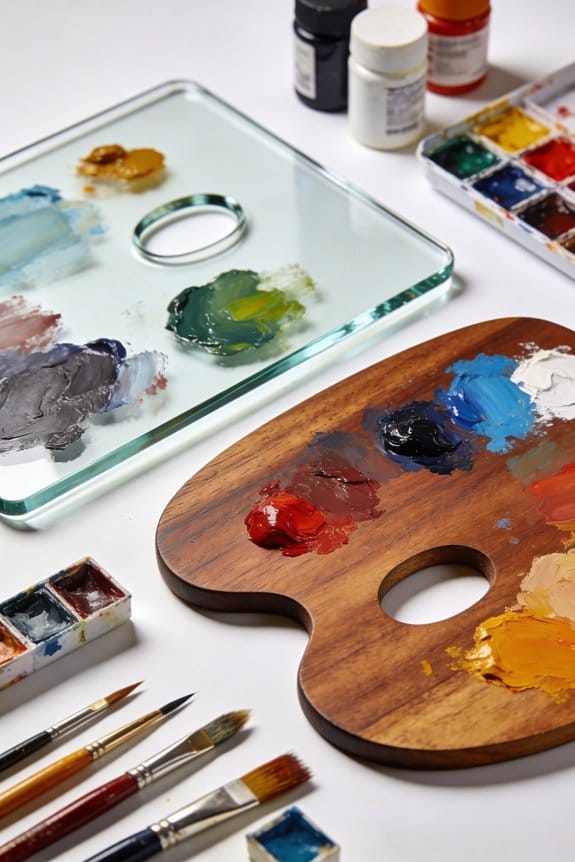
Glass vs. Wood Palettes: Cleaning and Maintenance

When we compare glass and wooden palettes, both have unique cleaning and maintenance needs. Glass palettes are easy to clean with a scraper and solvent; their non-porous surface prevents paint residue buildup. In contrast, wooden palettes need immediate cleaning to avoid hardened paint and require regular conditioning with oils like linseed to maintain their quality. Understanding these differences helps us choose the best palette for our painting style. Let’s explore more about each option and their care!
Key Takeaways
- Glass palettes are easy to clean, requiring only scraping and solvent application, while wooden palettes need immediate cleaning to prevent paint hardening.
- Wooden palettes require regular oil conditioning to maintain their surface, unlike glass palettes which don’t need such upkeep.
- Glass palettes have a non-porous surface that prevents paint residue; wooden palettes can absorb paint and require more intensive cleaning.
- Cleaning glass palettes involves simple scraping at a 45-degree angle, while wooden palettes may need metal scourers for stubborn paint bits.
- Wooden palettes develop a smooth finish over time, improving performance, whereas glass palettes maintain a consistent surface throughout their use.
Understanding Glass vs. Wooden Palettes: Key Differences
You may be interested


When you’re trying to figure out whether to go with a glass or wooden palette, there are some really important differences to consider. Glass palettes have this awesome ultra-smooth surface that’s super easy to clean. A quick scrape with a paint scraper and some solvent, and you’re good to go. On the other hand, wooden palettes can be a bit fussy. If you’re rough with them, they can get damaged, plus they need regular oil conditioning to keep them in top shape.
So, what’s the appeal of wooden palettes? They develop a unique patina with use, which adds character and charm. For artists who work with oil paints, the texture of a wooden palette can really enhance the painting experience. However, cleaning them is a bit more of a hassle compared to glass.
The best part is that glass palettes are practically indestructible and can be customized to whatever size you need. It’s like having a blank canvas that you can adapt to your workspace. Honestly, both types of palettes have their own pros and cons, so the choice really comes down to your personal preferences and how you paint.
In addition, wooden palettes often feature ergonomic designs, such as thumb holes to enhance comfort during use.
In the end, knowing these differences can help you pick the palette that suits your style best. Which type are you thinking about trying for your next project?
Why Choose a Glass Palette: Benefits for Easier Cleaning

Have you ever found yourself struggling to clean your palette after a painting session? It can be frustrating, especially when you’re trying to enjoy the creative process. That’s where a glass palette comes in handy.
Cleaning up is super easy with a glass palette. Unlike wooden ones that can soak up paint and leave behind residue, the smooth, non-porous surface of glass makes it a breeze to wipe everything off. You can scrape away any dried paint without worrying about damaging the surface since tempered glass is quite durable. Trust me, using sharp scrapers here won’t hurt the palette at all.
And let’s not forget about maintenance. With wood palettes, you might spend time conditioning them with special oils to keep them in good shape. Who wants to deal with that? The great thing about glass palettes is that you don’t have to put in that extra effort. Just clean it right after you’re done, and you’re set! This quick cleanup also means less chance of mold growth, which can be an issue with wood if it stays damp for too long.
Additionally, the non-porous surface of glass palettes prevents the absorption of oils and moisture, making cleaning even more efficient and hygienic.
Recommended Products


Grey Toned Tempered Glass Palette: Our grey glass palette for oil painting and acrylics is crafted from grey toned tempered glass, featuring smooth beveled edges, making it a perfect choice for both acrylic or oil painters. The grey tone helps in seeing values, allowing for precise color mixing and accurate color viewing
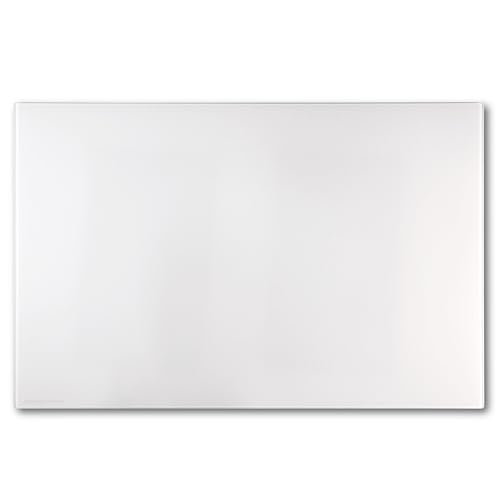
Ultra-clear tempered glass - This paint palette is made from 1/4" thick, low-iron, ultra-clear tempered glass, eliminating any greenish tint for accurate color representation.
Step-by-Step Guide to Cleaning and Maintaining Your Glass Palette

Cleaning your glass palette can feel like a hassle, but it doesn’t have to be. Ever get frustrated with stubborn paint that just won’t budge? Here’s a simple approach that’ll make it a breeze.
First off, secure that palette on a stable surface—don’t want it sliding around when you’re trying to clean! For those of you who work with acrylics, just spray it down with some water; if oil paints are your jam, grab some rubbing alcohol. After you apply the solution, let it hang out for a few minutes to give the paint a chance to soften. This step makes all the difference.
Once the paint is loosened, carefully use an Exacto knife held at a 45-degree angle to scrape it off. This angle helps prevent any scratches on your glass, which is a win. After scraping, grab a clean towel and wipe the surface to catch any leftover residue.
To keep your palette looking great, make it a point to clean it before each painting session. It’s a quick step that pays off. And if one side gets scratched up? Just flip it over and use the other side! That way, you can keep painting without the worry of needing a new palette too soon.
Remember that using fast-drying acrylics can help reduce the amount of paint buildup on your palette, making cleaning even easier.
Recommended Products

Grey Toned Tempered Glass Palette: Our grey glass palette for oil painting and acrylics is crafted from grey toned tempered glass, featuring smooth beveled edges, making it a perfect choice for both acrylic or oil painters. The grey tone helps in seeing values, allowing for precise color mixing and accurate color viewing
Spacious Storage Space: The large surface supplies a great space for you to place the ingredients and prepare food. 2 drawers with convenient handles provide an enclosed space to keep dust out for storing your cutlery. Besides, the open shelves offer many ways to keep your kitchen in order, with all cooking essentials within easy reach.

Substantial Construction: Founded atop a powder-coated steel bracket in a black finish, this drawing table features a tempered glass tabletop and a CARB P2 MDF side countertop for years of reliable use. The foam-padded stool is covered with quality PU leather and supported by metal legs, which can hold up to 120 kg/ 265 lb
Top Reasons to Use Wooden Palettes for Oil Painting
Have you ever struggled with a heavy palette while trying to focus on your painting? Wooden palettes might just be the solution you’re looking for. They’re incredibly lightweight, which is a relief during those long hours spent lost in creativity. Plus, the natural texture of wood really helps with color mixing. It allows you to create those subtle variations in your artwork that can make all the difference.
One of the cool things about wooden palettes is how they get better with time. As you use them, they develop a smooth finish that enhances their performance. The mid-value color of the wood is another great feature; it helps you see those delicate tonal differences much better. Balancing your light and dark hues becomes a little easier, right?
Here’s a tip: before diving into your painting session, try conditioning your wood palette with linseed oil. This little step not only simplifies cleanup afterward but can also help extend the life of your palette. When you’re finished, just grab some solvent and your palette knife to clean off any wet paint that’s left. Using quality tools, such as Kolinsky sable brushes, alongside your palette can further elevate your painting experience and precision.
Recommended Products

🎨 THE BRAND: Schmincke has been producing the best, finest artists' colors Made in Germany since 1881 and they are available in over 60 countries. The range includes watercolors, acrylics, oil colors, pastels, gouache colors, airbrush colors and much more.

This beautiful, luxurious Old Holland Master's Oil Color Set is packed full of everything you need but Canvas to start Painting from the moment you open it. HoUsed in a huge Italian Mabef Deluxe Wooden Sketch Box, in this set Includes a Wooden palette, mediums, brushes, palette knives, palette cups, sketching Materials, and an astonishing selection of thirty-four 40ml tubes of Old Holland Classic Oil Colors!

Extra-Large Studio Storage Cart: Designed for artists who need more room for paints, brushes, mediums and daily tools, this extra-large wooden art cart offers a larger working and storage area than standard studio carts while keeping everything organized and within reach.
How to Care for and Clean Your Wooden Palette Effectively
Keeping your wooden palettes in good shape is crucial if you want them to last. Ever notice how quickly paint can dry and harden? That’s why it’s so important to clean up right after you’re done painting. Grab a clean towel or rag and start scraping off any leftover paint. A palette knife works wonders here, and if the paint’s getting stubborn, a metal scourer can be a lifesaver for those pesky, partially dried bits.
When it comes to maintaining those palettes, don’t forget about conditioning. Using drying oils like linseed oil can really help stave off cracking and warping. Here’s a tip: try applying a thin layer of oil before you start painting. This creates a protective layer that makes it easier to clean up later on. And honestly, avoid using harsh chemicals! They can mess with the wood’s finish over time. For the best results, combine proper cleaning habits with regular maintenance to keep your wooden palette performing well for years.
Recommended Products

MODERN DINING CHIAR SET OF 2: Enhance the versatility of your attractive kitchen table with this kitchen dining set of 2 wooden dining chairs. Their classic design is guaranteed to add charm to any dining room. Elevate the look of your kitchen table with these elegant seating options that are always in style. Create precious memories with your loved ones while enjoying meals on this stunning dining room set.

EPA-registered, insecticidal exterior wood preservative prevents attacks from termites and other wood boring insects while protecting against rot and decay
Add 10% increments of Dye Stain Reducer to General Finishes Dye Stain Reducer or General Finishes Water Based Wood Stain until you achieve your desired color
Frequently Asked Questions
How Do You Clean a Wooden Palette?
To clean our wooden palette, we use DIY techniques like scraping excess paint quickly, applying linseed oil for preservation, and using soft rags. This helps maintain longevity, prevents staining, and enhances the wood finish effectively.
Are You Supposed to Clean Your Palette?
We must mind our palettes, practicing proper cleaning frequency to enhance palette longevity. Tackling paint residue prevents surface scratches and guarantees smooth color mixing, while considering artist preferences and the environmental impact of our chosen palette materials.
How Do You Clean a Glass Palette?
To clean a glass palette, we use a sharp scraper at a 45-degree angle, applying a suitable cleaning solution first. Regular cleaning guarantees stain removal and surface protection, enhancing our color mixing and durability for portable options.
Are You Supposed to Wash a Paint Palette?
We shouldn’t wash all palette types, especially with acrylic paints. Instead, we need effective cleanup tools to maintain paint longevity. Let’s consider surface texture, drying time, and usage tips to determine our maintenance frequency for each type.


