As an Amazon Associate, we earn from qualifying purchases. Some links on this site are affiliate links at no extra cost to you. Our recommendations are based on thorough research and editorial judgment.

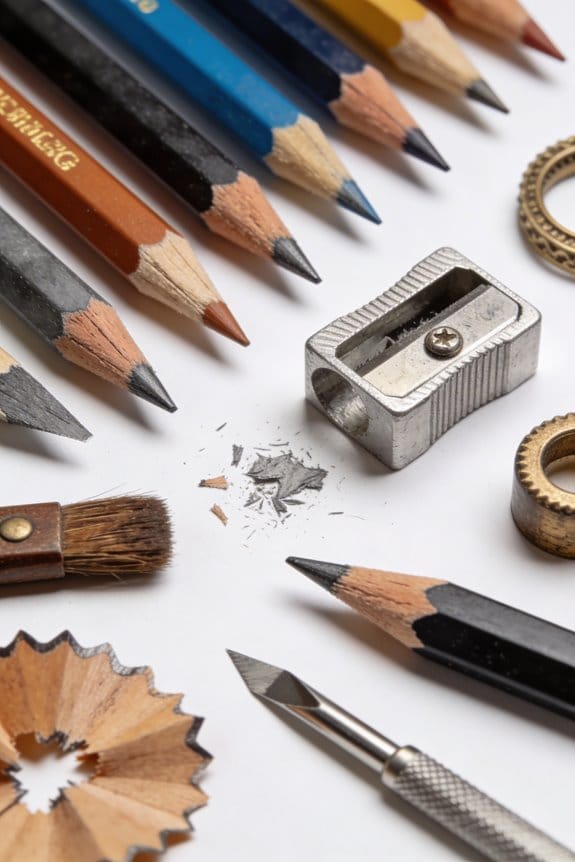
How to Sharpen Pencils for Classical Drawing Techniques

To sharpen pencils for classical drawing, we need a sharp blade and control. Start by holding the pencil with the wooden barrel facing us and the blade steady in the other hand. We should aim to expose about 1/2 inch of lead. By keeping the pencil nearly horizontal, we can create a fine point. If issues arise, like broken graphite, lighter pressure and a steady angle help. There’s more to explore about tools and techniques as we proceed.
Key Takeaways
- Use a solid crafts knife or safety razor blade for precision sharpening, aiming for a cone tip of about three centimeters long.
- Expose 1/2 inch to 1 inch of graphite, maintaining a nearly horizontal angle for better control and precision during sharpening.
- Regularly check and replace sharpening blades to prevent splintering and achieve a smooth taper on pencil tips for detailed drawing.
- Use fine grit sandpaper to refine pencil tips after sharpening, enhancing their ability to create fine lines and detailed work.
- Store and organize sharpening tools in a dedicated container to ensure safety and quick access when preparing for classical drawing techniques.
What You Need to Sharpen Your Pencils Right
You may be interested
Sharpening pencils might seem pretty straightforward, but the right tools can really amp up your experience. A solid crafts knife or safety razor blade makes all the difference. You want to create a sharp, precise tip, so don’t rush this part. Aim for a cone about three centimeters long and a lead that’s roughly one centimeter. This keeps a nice balance between usability and fragility.
One of my go-to tricks is using fine 220 grit sandpaper. It’s fantastic for refining the pencil tip and guarantees a smooth, tapered point. This is especially useful when you’re into detailed drawing work—every little detail counts, right?
Don’t forget to keep your sharpening surface clean and swap out your blades regularly. This can turn a chore into a much more enjoyable experience. So, why does this matter? The smoother your pencil, the better your drawing will be.
For artists seeking precision, considering a manual sharpener can offer greater control over the sharpening angle and tip shape.
Just remember, sharpening doesn’t have to be a hassle. With these tips, you’re on your way to creating a more effective drawing experience! What’s your favorite way to keep your pencils sharp?
Recommended Products

Includes 4" parer, 5" serrated, 7" Santoku, 8" chef, 8" bread, 4 x 4.5" steak knives, kitchen shears, sharpening steel and block

HUA Block Set Includes: 9in Honing Steel, 9in Offset Bread Knife, 8in Rocking Chef's Knife, 6in Santoku Knife, 6in Serrated Utility Knife, 5in Fine Edge Steak Knife, 3.5in Paring Knife, Shears, Knife Block 11 Slots

Set includes: 9" Honing Steel, 9" Bread Knife, 8" Chef's Knife, 7" Santoku Knife, (4) x 5" Fine-Edge Steak Knives, 5" Serrated Utility Knife, 3.5" Paring Knife, 9" Come-Apart Shears, Ash Wood Knife Block
Step-by-Step Guide to Removing the Wooden Barrel

Ever tried to remove the wooden barrel from a pencil and found it trickier than expected? You’re not alone! Here’s a straightforward method to make it easier.
Start by holding the pencil in your left hand and the razor blade in your right. One key is to keep that blade steady while you pull the pencil against it. Use your left thumb to help control the position—you want to have a steady grip. Work your way around the graphite or charcoal core gradually. Aim to expose about 1/2 inch to 3/4 inch if you’re using charcoal, or 1/2 inch to 1 inch for graphite.
Why is that pressure important? Applying even pressure helps prevent the wood from splintering. For a smoother finish, it’s best to use a fine razor blade or a craft knife. It might take a little practice, but you’ll get the hang of it and sharpen that pencil effectively in no time. Using blending tools can improve the smoothness of the charcoal after sharpening, enhancing your drawing technique.
Sharpening Techniques for a Precision Pencil Point

Have you ever struggled with getting that perfect pencil point? It sounds simple, but there’s a little more to it if you want precision. The trick is to hold the pencil in your left hand while keeping the blade steady in your right. Pull the pencil against the blade, using your left thumb to control the pressure.
For the best results, aim for about 1/2 inch to 3/4 inch of exposed charcoal and 1/2 inch to 1 inch of exposed graphite at the tip. The perfect point isn’t just about how sharp it is; it’s also about the shape. Here’s the trick: try using 220 grit fine sandpaper. Just apply light pressure as you roll the pencil for an even finish. Keeping the pencil nearly horizontal during sharpening will give you that precision you’re after.
So, why does this matter? Well, regular checks on your sharpening tools make all the difference. A consistently sharp blade is key to getting that ideal pencil point, both in shape and length. Additionally, using adjustable pencil extenders helps maintain control and comfort when working with shorter pencils or stubs.
Recommended Products

75% faster sharpening and 12x longer cutter life (cutters are also replaceable)

Break-resistant electric pencil sharpener creates precise tips to reduce lead breakage and frustrations
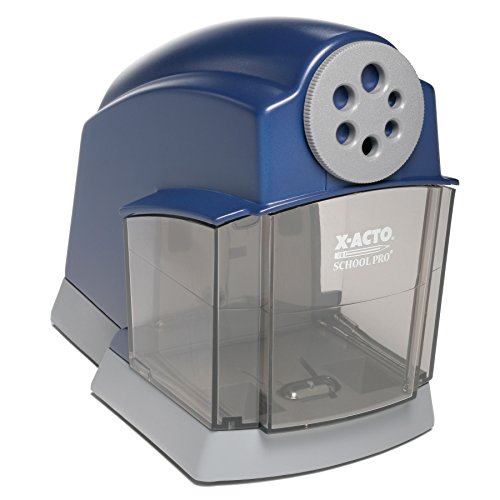
Designed by teachers
Troubleshooting Common Sharpening Issues
Pencil sharpening can sometimes feel like a real hassle, right? But don’t worry, it’s often pretty easy to sort out with just a few tweaks. If you keep noticing that the graphite core snaps while sharpening, it might be time to switch up your technique. Using a sharp blade and applying lighter pressure can make all the difference.
For those moments when your pencil ends up all lopsided, maintaining a steady angle of about 45 degrees between the pencil and the blade is key. This small adjustment can help create that nice, smooth taper everyone loves. If you find the wooden barrel is splintering, it’s super important to ensure your blade is sharp; a dull blade leads to messy cuts and frustration.
Worried about wasting your materials? Try to expose only about half an inch of lead; it keeps things tidy. And if the lead’s feeling too blunt, here’s the trick: roll the pencil gently between your fingers while you’re sharpening. This technique can help you achieve a finer point, which is especially useful for detailed sketches or life drawing. Using different lead thickness options can further enhance your drawing precision and shading capabilities.
Recommended Products
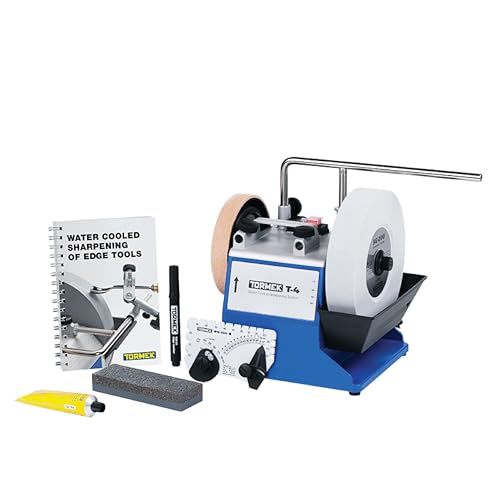

Oregon lawnmower blade grinder: This compact yet powerful mower blade grinder sharpens from large blade sizes to smaller lawnmower blades
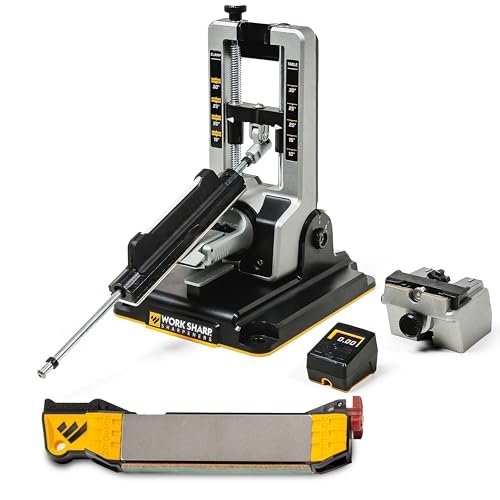
PROFESSIONAL KNIFE SHARPENING SYSTEM: A professional-level knife sharpener with metal construction that can be used for all knives at angles as low as 15 degrees and can even be used on small pen knives.
How to Store and Clean Your Pencil Sharpening Tools
Have you ever looked at your pencil sharpening tools and thought, “What a mess?” Keeping these little gadgets organized is more important than it seems. First off, using a dedicated container not only tidies up your workspace but also prevents those frustrating moments when something goes missing or gets damaged.
Regular cleaning is a must too. You don’t want a bunch of dust piling up on the tools you need. Try this: grab a small brush and gently wipe away any graphite or charcoal dust, especially in those tricky crevices. Honestly, it’ll make a world of difference.
Now, let’s talk about safety. It’s crucial to cover those sharp blades or tuck them away when they’re not in use. This simple step helps you avoid accidental cuts, which I’m sure we all want to steer clear of. Also, don’t forget about blade maintenance. Dull or worn-out blades can mess up an otherwise perfect sharpening job. Replace them promptly to keep everything running smoothly.
Now for an easy tip: label your sharpening tools if you have a few different types. It’s a small but effective way to quickly locate the one you need for that specific project. Frankly, it saves time and frustration.
To maintain vibrant performance and material safety, always choose non-toxic materials when selecting your colored pencils and sharpening accessories.
Recommended Products

Ideal for marking on glass, plastic, film, and most surfaces

Soft, thick cores are perfect for shading and shadows
Frequently Asked Questions
How to Sharpen Your Pencils for Drawing?
To sharpen our pencils for drawing, we prefer high-quality wooden types. We use a blade for initial sharpening, then refine with fine sandpaper, ensuring proper angles to enhance our control in various drawing techniques.
How to Artisanally Sharpen Pencils?
To artisanally sharpen pencils, we should favor specific pencil sharpening techniques, utilize ideal pencil angles, and choose preferred sharpening tools like fresh blades and fine sandpaper for the best results. Let’s create those perfect points together!
How Do Carpenters Sharpen Their Pencils?
We use specific pencil sharpening techniques, like a utility knife, to guarantee woodworking precision. By carefully removing the wooden barrel and refining with sandpaper, we create a perfect point for accurate markings during carpentry tasks.
Why Do Artists Sharpen Pencils With a Knife?
Did you know that 80% of professional artists prefer knife sharpening? It enhances our pencil control techniques, providing drawing precision benefits and emphasizing the importance of tool mastery for a more personalized drawing experience.


