As an Amazon Associate, we earn from qualifying purchases. Some links on this site are affiliate links at no extra cost to you. Our recommendations are based on thorough research and editorial judgment.

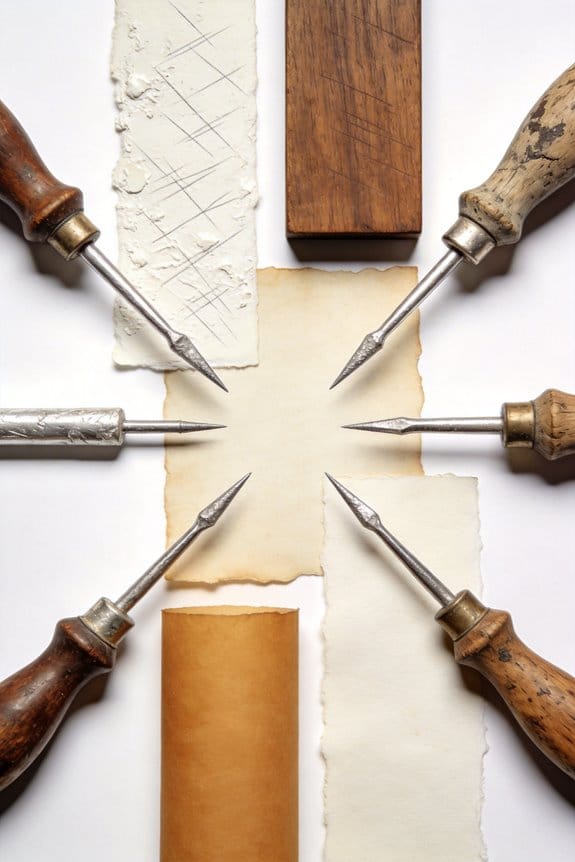
Silverpoint: The Ancient Technique Before Graphite

Silverpoint is an ancient drawing technique that started in the 12th century. Artists used a thin stylus made of silver on specially prepared surfaces, typically coated with gesso. This technique allows for precise, fine lines and unique tonal variations that change over time due to oxidation. It’s different from using graphite, as the marks can’t be erased easily, so precision is key. If you’re curious, there’s more to discover about this fascinating art form and its modern adaptations.
Key Takeaways
- Silverpoint dates back to the 12th century, initially used by medieval scribes for illuminated manuscripts before gaining popularity among Renaissance artists.
- This technique utilizes a silver stylus on gesso-prepared surfaces, producing fine lines that cannot be erased for precise detail.
- Renowned artists like Leonardo da Vinci and Albrecht Dürer famously employed silverpoint for intricate drawings, showcasing its unique tonal capabilities.
- The introduction of graphite pencils in the 16th century led to silverpoint’s decline, overshadowing its rich historical significance and unique qualities.
- Silverpoint is experiencing a revival today, with modern artists exploring variations in metallic materials and surfaces, reinvigorating the ancient technique.
The Origins of Silverpoint: A Historical Overview
You may be interested

Have you ever wondered about the tools artists used before the invention of pencils? Silverpoint might not be something you think about often, but it’s got a pretty cool history that really goes back to the 12th century. This method began with medieval scribes who created stunning illuminated manuscripts. They used thin silver wires to draw fine lines, perfect for intricate details.
Fast forward to the Renaissance, where this technique caught the eye of some incredible artists like Leonardo da Vinci and Albrecht Dürer. They loved how silver could produce soft, sepia tones through oxidation. While other metals like lead and gold were also in the mix, silver quickly became the top choice thanks to its superior quality.
Now, the trick here is understanding why silverpoint fell out of favor. By the 16th century, graphite pencils burst onto the scene, making it easier for artists to sketch and draw. So, why does this matter? It marks a significant shift in the world of drawing tools and techniques.
If you find yourself exploring different art mediums, silverpoint might be worth a try, if only for the history behind it. Get your hands on some thin silver wire, and you might discover a whole new way to express your creativity. Additionally, mastering traditional methods often involves understanding the use of different artistic mediums, which can enhance your skills and versatility.
So, what do you think—are you ready to dive into this historical art technique?
Notable Artists Who Used Silverpoint in Their Work
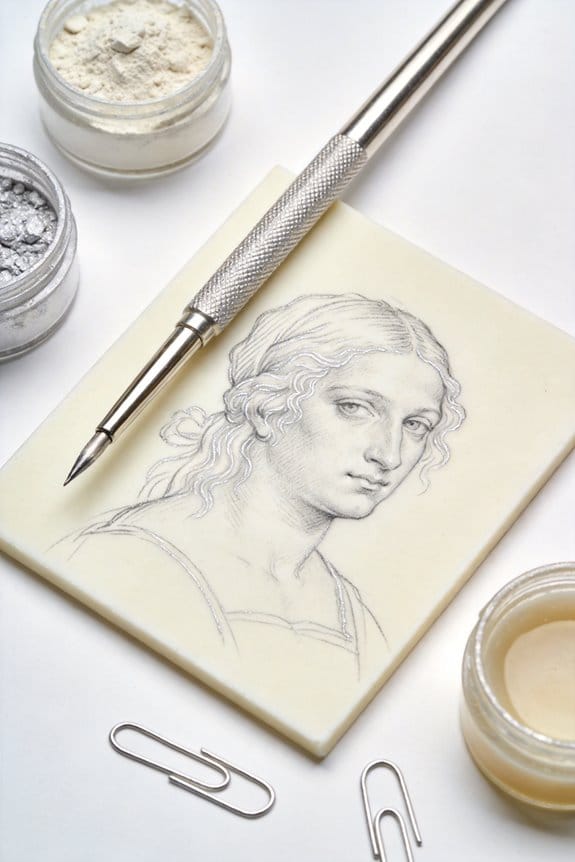
Isn’t it intriguing how different artists have managed to bring silverpoint to life over the years? This technique, which involves using a silver wire to create amazing line drawings, has found its way into the hands of some of the most renowned names in art history.
Take Albrecht Dürer, for example. He was known for his intricate line drawings that reflected precision and varied tonal qualities. Then there’s Leonardo da Vinci—his sketches, particularly those for “Madonna of the Rocks,” highlight how soft shading can add depth and detail in the most captivating way.
Jan van Eyck, one of the early innovators in oil painting, used silverpoint for his preparatory drawings. What’s cool is how he blended those fine lines with vibrant colors, setting a standard for the time. Raphael also got in on the action, employing silverpoint to create fine lines that conveyed dynamic textures in his studies.
So, why is this technique still praised today? The unique tonal qualities that develop through oxidation give silverpoint that classic allure, making it a staple among the works of the Old Masters. Modern artists now often complement such traditional techniques with digital tools like drawing tablets that offer pressure sensitivity to mimic natural hand movements.
Discover How Silverpoint Works
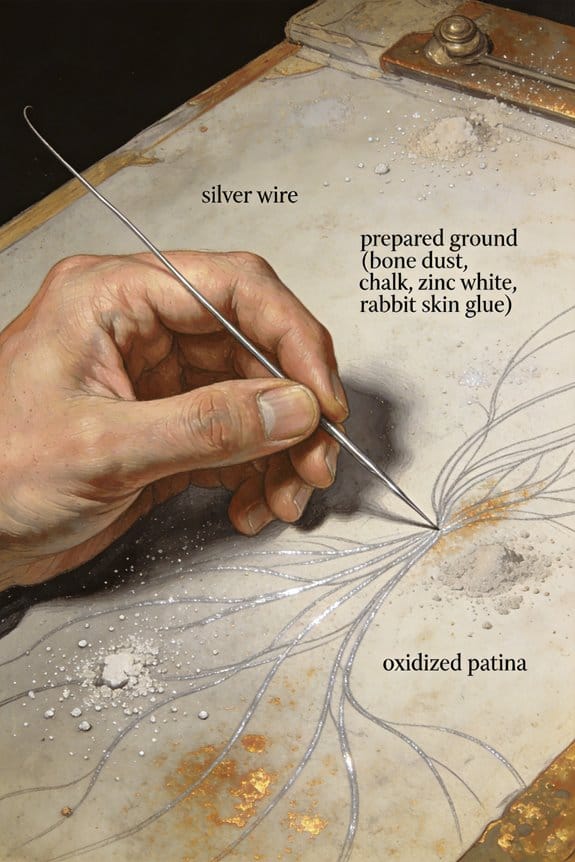
Ever looked at silverpoint drawings and wondered how they get that soft, shiny look? If you’re diving into silverpoint techniques, it can feel a bit overwhelming at first, but I promise it’s more straightforward than it seems.
To kick things off, you use a thin stylus made of silver or another metal. This stylus glides across a special surface, usually paper that’s coated with gesso. It’s not just any paper; this gesso creates a rough texture with materials like bone ash or chalk, which is crucial for getting the metal particles to stick.
Now, here’s the thing: unlike with pencil drawings, you can’t easily erase silverpoint marks. So, you have to be pretty precise with your lines. Think of it as a lesson in mindfulness; every stroke counts. As your drawing develops, it takes on a unique, silvery glow that can shift to a warm brown over time due to oxidation. Pretty cool, right? And the metal choice really matters—copper will turn a greenish hue, while gold stays shiny.
The best part is that each piece you create tells a story not only through the image but through its evolving color. Honestly, once you get the hang of the technique, you might find it holds a lovely charm that’s hard to resist. Got any questions about getting started? Give silverpoint a try, and see what unique pieces you can create! For artists interested in exploring different mediums, understanding viscosity and flow can help develop smooth, precise applications in your work.
Recommended Products

Fine art poly-cotton canvas characterized by bright white and metallic glow

100% rag fine art paper

Ancient Drawing Technique: Explore silverpoint, an ancient drawing medium used by Medieval scribes and artists, with a modern twist.
What Makes Silverpoint Drawings Unique?
Have you ever struggled to create the perfect line in your drawing? If so, you might want to explore silverpoint drawings, which have some truly unique features that set them apart from other mediums.
First off, silverpoint is all about fine lines and subtle shading. Unlike graphite or charcoal, which often yield darker and bolder strokes, silverpoint gives a distinct surface texture that’s both delicate and intricate. This technique involves using a metal stylus—usually made of silver—to draw on a specially prepared surface that has a slightly abrasive quality. This helps the metal to transfer smoothly, allowing for incredible details in your work.
One big thing to note is that silverpoint can be pretty unforgiving. Once you make a mark, there’s no erasing it, so precision is key! You’ll find that it demands a certain level of focus in every stroke. And here’s an interesting touch: over time, the silver oxidizes and transitions from shiny silver to warm brown tones, which can really add depth and character to your artwork.
If you’re feeling adventurous, consider mixing it up by using different metals like copper. Each metal brings its own unique color and effect, which opens up a whole new world of creative possibilities. So, why does this matter? Well, experimenting with different tools helps you discover what resonates with your personal style as an artist.
For artists working with intricate details on dark surfaces, using fine tip pens with opaque ink can complement silverpoint techniques and enhance overall artwork.
Recommended Products

ELEGANT AND SOPHISTICATED - This Inkless Gold Stylus Pen combines a luxurious solid walnut wood insert with an metal body with gold finish. This Luxury Stylus Pen comes with an elegant desk stand

🇮🇹ELEGANT AND SOPHISTICATED - This inkless pen boasts a harmonious blend of advanced technology, diverse materials, and refined, sleek lines, resulting in a truly individualistic piece. Perfect for making a statement, CAMBIANO will impress your guests. #inklesspen

Premium Titanium Build: Durable, corrosion-resistant, and incredibly lightweight for comfortable everyday carry.
Current Trends in Silverpoint Practice
Are you curious about how silverpoint is making a comeback? It’s fascinating to see this traditional technique being reinterpreted by today’s artists. They’re not just mimicking the Old Masters; they’re blending classic methods with modern twists, creating a fresh approach to silverpoint.
If you’re new to silverpoint or thinking about diving in, you’re in luck! There are tons of workshops popping up that cater to all skill levels. No matter if you’re just starting out or a seasoned artist, there’s a space for you to explore this delicate medium. Plus, with acrylic gesso-coated papers now available, you can use silverpoint on all kinds of surfaces, which opens up a whole new world of possibilities.
So, why is this important? Artists are now playing around with metals like copper and gold, which not only adds stunning color variations but also pushes the boundaries of what silverpoint can be. It’s really exciting to see such innovation while honoring the past.
Don’t forget, social media and online communities are great for connecting with other metalpoint fans. You can share techniques, get inspired, and learn from one another. Those connections can be extremely valuable as you navigate through your silverpoint journey.
To sum it up, silverpoint is more than just a historical art form; it’s evolving and staying relevant in today’s creative landscape. Additionally, applying a primer such as acrylic gesso can enhance the adhesion of silverpoint metal marks on prepared surfaces. It might just be the perfect time for you to give it a try. What are you waiting for?
Exploring Silverpoint Variations With Other Metals
Ever wondered how you can spice up your silverpoint artwork? It’s all about exploring different metals beyond just silver. Sure, silver’s great, but branching out to copper, gold, platinum, and even brass can seriously enhance your creations.
Let’s break down what each of these metals can bring to the table. When copper oxidizes, it offers a unique greenish hue that can add depth to your pieces. Silver, on the other hand, darkens to a warm brownish-black over time, which can create a rich, vintage feel. If you’re after consistency, gold and platinum are perfect because they maintain their color throughout your drawing. As for brass, while it might not be as popular, it provides a light black oxidation and its firm texture makes it perfect for specific techniques.
The different softness levels of these metals also play a significant role. Softer metals are easier to work with for detailed lines, while harder ones give you different opportunities to experiment. So, why does this matter? It opens up a world of potential for your silverpoint work and can help you carve out a unique style that’s all your own.
Want to try something new? Grab a couple of these metals and see how they blend with your current techniques. Honestly, you might just find that switching things up adds a fresh perspective to your artwork. In the end, each metal tells its own story through your drawings. What’s your next project going to look like with a different metallic twist? To keep your art supplies organized and easily accessible, consider investing in paint organizer racks that maximize space and simplify your creative process.
Essential Tools for Silverpoint Drawing
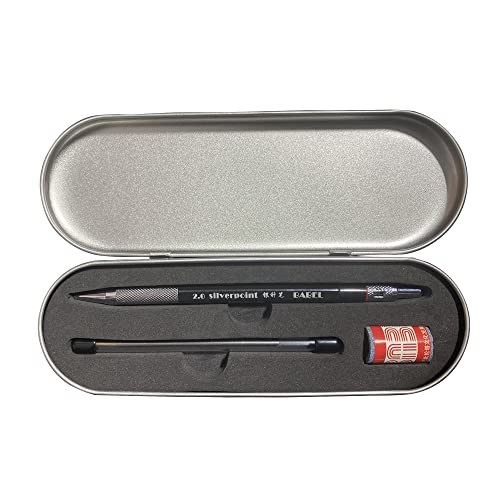
Creating silverpoint drawings can seem tricky, but with the right tools, it’s totally manageable. Ever wonder what you’ll need to get started? First off, you’ll need a silverpoint instrument. This is typically a slender silver wire fitted into a stylus, which makes it easy to create those delicate lines.
Next up, let’s talk about your drawing surface. It’s crucial to prepare it correctly. You’ll want to add a few coats of an abrasive ground, like bone ash or chalk. This helps the silver move smoothly and leaves a nice mark. If you’re looking for something more modern, gesso-coated watercolor paper works great as a base and usually takes about 24 hours to dry.
Honestly, if you’re on a budget, don’t worry about splurging on fancy tools. A mechanical pencil filled with sterling silver wire can do the trick just as well. This way, silverpoint becomes way more accessible for everyone.
For best results, using tools with ergonomically designed handles can improve comfort and precision during detailed work.
Recommended Products

[NO HASSLE] BoxWave Stylus Pen Compatible With Simbans PicassoTab 10. No pairing needed! Simply press the button to turn it on, and the AccuPoint Active Stylus emits quick ELECTRONIC PULSES to interact with your screen, so you can write with natural writing positions. ⭐ *** PLEASE NOTE, PICASSOTAB 10 DEVICE NOT INCLUDED ***

[NO HASSLE] BoxWave Stylus Pen Compatible With Nintendo Switch OLED Model. No pairing needed! Simply press the button to turn it on, and the AccuPoint Active Stylus emits quick ELECTRONIC PULSES to interact with your screen, so you can write with natural writing positions. ⭐ *** PLEASE NOTE, SWITCH OLED MODEL DEVICE NOT INCLUDED ***
Tips for Mastering Silverpoint Techniques
Mastering silverpoint techniques can feel pretty challenging at first. Ever tried drawing with a metal that won’t let you erase your mistakes? It’s definitely a unique experience! If you’re ready to dive in, start with a prepared surface that’s got the right ground mix—something like bone ash and gum-water works wonders. This blend helps the metal transfer nicely and boosts your mark-making skills.
Here’s the trick: keep a light touch while you’re drawing. Since silverpoint doesn’t allow for erasing, you’ll want to be confident in every stroke you make. It can help to experiment with different metals too. Have you thought about using copper or gold? The softness of these materials can really change how your final piece looks.
Layering multiple coatings of your ground can work to your advantage as well. You’ll find that this can lead to smoother, more fluid lines in your drawings. Don’t forget, when you’re working with gesso-coated paper, let it dry for at least 24 hours before you start. This simple preparation is key to getting those impressive results you’re aiming for. For best results, consider using non-toxic and safe materials to ensure a comfortable and environmentally friendly workspace.
Recommended Products
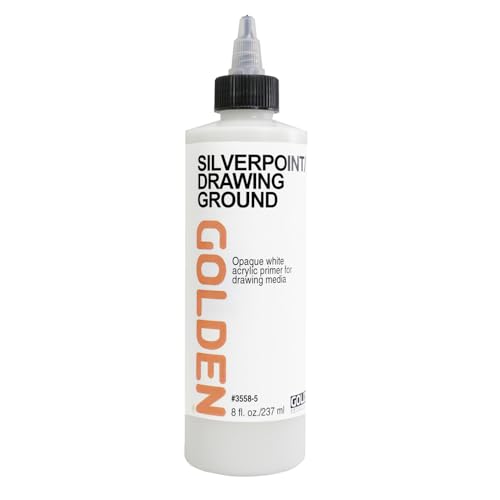
Silverpoint Drawing Ground is an opaque, white acrylic primer for metal point and other drawing media It is designed for fine detail and line work on a permanent, lightfast,...
Frequently Asked Questions
What Is Silverpoint and When Was It First Used?
Imagine the past, where silver danced over paper. Silverpoint, a historical technique, emerged in the 12th century, allowing artists like Dürer and da Vinci to create delicate works that transformed over time, showcasing their unique beauty.
Did Da Vinci Use Silverpoint?
Yes, Da Vinci used silverpoint as one of his tools. We can see how he mastered its delicate lines and soft tones, showcasing his incredible detail and artistry in many of his sketches.
What Is the Silver Point Technique?
The silverpoint technique involves drawing with a thin silver wire on a specially prepared surface. It demands artistic precision, allowing us to create fine details and subtle shading, producing unique, timeless artwork that gradually develops character.
Does Silverpoint Tarnish Over Time?
Yes, silverpoint does tarnish over time. The tarnish effects create a unique, warm brown tone that adds character to our artwork. We must embrace this irreversible change, as it’s part of the silverpoint journey.


